Independent comparisons. We may earn from shop links. More info

How to plant a herb spiral

Updated: October 2026

You already own the structure, whether that is steel rings on the patio, a pyramid by the back door, or a brick coil from last month, and the compost bags are waiting in the sun. Planting is where many spirals fail, because one rich mix goes everywhere and mint is left to run. This page covers UK zones, grit, settling time and containment. It assumes you already chose the shape on our [herb spiral comparison](/hub/plant-accessories/herb-spiral). It does not rank the kits.

You already own the structure, whether that is steel rings on the patio, a pyramid by the back door, or a brick coil from last month, and the compost bags are waiting in the sun.

Our top picks

On this page

Dry top and cooler foot

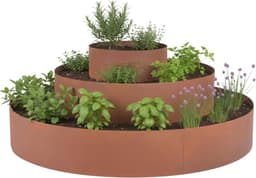
UK advice, including British Beekeepers Association notes, puts rosemary, thyme and sage on the warmest, driest crown, and parsley and coriander lower. On a masonry coil that is the top of the stone. On steel rings it is the inner ring and the sunny rim, not a third storey from height-per-ring marketing. A kit only twenty centimetres high can still vary compost by ring. It is not a metre-high dry peak. Do not use one compost from crown to base. Mediterranean herbs want a free-draining mix. Parsley tolerates more moisture if water can leave. Bullets that name herbs by tier are listing copy, not a spacing plan. Set plants out in their pots first and turn the structure toward the sunniest arc. Chives and dill can sit in the middle. Ignore compass roses drawn for another climate.

Grit, peat-free compost and the 20 cm limit

RHS container advice is a peat-free, loam-based compost with up to twenty-five per cent coarse grit, moist but never soggy. Put more grit in the upper rings and a little more body where parsley sits. Pure garden soil in a shallow steel bed slumps and seals unless you already know it drains. The RHS wants a rosemary pot at least thirty centimetres deep. A twenty-centimetre shell is shorter than that. A grit-heavy mix and cover from winter rain can keep a small rosemary alive, and it remains the riskiest plant in the ring. Fill in layers, stop short of the rim, and expect a peat-free mix to settle before you top it up.

Mint, cardboard and a week to settle

Mint must be contained. The RHS advises its own container, or a bottomless pot sunk so the rim sits slightly above the soil. In a steel kit, stand that pot on the lower ring or beside it. Parsley and coriander can share the cooler side once mint cannot run. On a masonry coil, Garden Organic sheet A37 suggests cardboard under the fill, then firming in layers, and about a week before planting so voids can collapse. A shallow ring settles faster: water once, wait, and top up. Spring into early summer is kinder than cold, saturated compost. Feed leafy herbs if they pale. Do not rich-feed rosemary, and do not treat the unreconciled 25.13 litre field as a dose.

Holes, winter wet and when to stop

Look for holes before you fill. The ring listings do not state them. The pyramid text, at research time, said there were none and recommended drilling. Grit will not empty a sealed base. If water ponds, stop and make an exit. Winter wet kills more container rosemary than frost alone. The RHS suggests a rain shadow or cover in cold, wet spells, and feet so water can leave. A pond for water mint appears in some British Beekeepers Association examples and is not required. Skip it where standing water adds load. Stop if the wall is only twenty centimetres and the list is mostly woody herbs, if mint is already escaping, or if the slab cannot take the filled weight. A mixed culinary patch in a shallow ring is possible. Calling that ring a tall dry coil is not.

Plant the zones you actually have

If the crown is sunny and the base can drain, put rosemary, thyme and sage high and parsley, chives and dill lower, with more grit at the top. If the wall is only twenty centimetres, keep rosemary in a deeper pot. Mint gets its own pot. Water, wait, and top up a fresh fill before you call it finished. If the structure cannot give you those conditions, change the structure.

Common questions

Which herbs go at the top, and which go at the foot?
Rosemary, thyme and sage on the sunniest, best-drained crown. Parsley, coriander, chives and dill lower down. Adjust for your aspect and for whether you have a stone peak or only concentric rings.
How do I stop mint taking the bed?
Grow mint in its own pot, or sink a bottomless pot with the rim proud of the soil. Do not plant bare-root mint loose in a shared ring.
How long should the soil settle?
About a week on a freshly filled masonry spiral, which is the Garden Organic note. A small ring settles faster. Still water it, wait, and top up before the final planting.
What do I do if the planter has no drainage holes?
Make exits before you fill, test them with a watering can, then plant. Grit on its own will not empty a sealed base.
When should I plant in the UK?
Spring into early summer is the safer window, once frost and waterlogging ease. Avoid planting into sodden compost in winter.
Does a pond belong on every spiral?
No. A pond is optional for water mint or watercress on a large coil. It is not a requirement for a patio ring kit.

Related pages

Sources

Public UK sources used for this comparison. Shelf prices, stars and review counts are the amazon.co.uk figures captured for these three listings on 20 October 2026.

  1. RHS: herbs in containers (retrieved 20 October 2026)
  2. RHS: grow your own rosemary (retrieved 20 October 2026)
  3. RHS: growing herbs (retrieved 20 October 2026)
  4. British Beekeepers Association: building a herb spiral (retrieved 20 October 2026)
  5. Garden Organic A37: making a herb spiral (retrieved 20 October 2026)
  6. Planning Portal: decking and raised platforms (retrieved 20 October 2026)
  7. Consumer Rights Act 2015, section 22 (retrieved 20 October 2026)
  8. amazon.co.uk listings for the three herb spirals (retrieved 20 October 2026)