Independent comparisons. We may earn from shop links. More info

Terracotta vs plastic pots: choose the wall, then the hole

Updated: October 2026

You keep killing the same plant in two opposite ways: a fern that sits wet, or a cactus that turns to crisps in a 6.5 cm cup on a bright sill. Terracotta vs plastic pots is that watering habit, not a brand contest. Unglazed clay evaporates through the wall. Polypropylene holds water. Glaze and paint sit in the middle. The [clay pots comparison](/hub/plant-accessories/clay-pots) still rows the amazon.co.uk clay packs; this page is the material fork before you care about pack count. We did not run a lab trial.

You keep killing the same plant in two opposite ways: a fern that sits wet, or a cactus that turns to crisps in a 6.5 cm cup on a bright sill. Terracotta vs plastic pots is that watering habit, not a brand contest.

Our top picks

On this page

The wall is the watering machine

The Royal Horticultural Society puts it plainly: unglazed terracotta is porous and dries faster; plastic is lighter and does not dry as easily. The British Cactus and Succulent Society adds that plastic can keep compost wet unless the mix is open, while unglazed clay loses water through the wall and may keep the root-ball a little cooler. Neither material works without a hole. A sealed decorative cup is a vase. If you overwater, clay is the more forgiving wall, because surplus can leave through the sides as well as the base. If you forget a 6.5 cm pot for three days in July, plastic is the more forgiving wall, because the same volume of compost stays wet longer. That is the whole machine. It is not a moral ranking of natural against cheap. A thin amazon mini pack of clay will still dry out faster than a thick 12 cm plastic nursery pot, simply because there is less mix inside.

When clay wins, when plastic wins

A Guardian houseplant clinic in May 2025 draws the same line the RHS does, with plants named. Terracotta for plants that dislike sitting wet: cacti, many succulents, anything you have drowned before. Plastic or glazed ceramic for moisture lovers: ferns, calatheas, anything that wilts the moment the mix dries. Clay wins on a UK windowsill when you water generously and the plant wants a dry spell. A cactus in unfinished Green Thumbz 10 cm, with a hole and a gritty mix, can survive your Saturday soak. The same cactus in a plastic cup with no hole, sat in a saucer of water, is the usual corpse.

Painted, lacquered, glazed

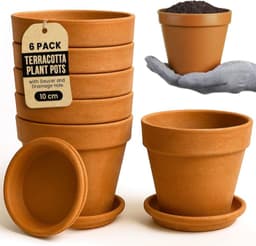
Finish can cancel the terracotta benefit. A glazed ceramic wall behaves like plastic: moisture stays in the compost and leaves mainly through the hole, if there is one. Paint and lacquer sit on the same spectrum. In this amazon set the unfinished Green Thumbz 10 cm six-pack is the clearer porous wall. vensovo’s 20-pack lists a lacquered finish. Green Thumbz 16 × 6.5 cm is painted. Those minis may still have a hole; they will not dry like raw earthenware. Do not read terracotta in a title as unglazed. vensovo’s plant-sized six-packs are unfinished or unglazed in the spec; the 3 inch twenty-pack is not the same finish. A craft pack with a paint set, such as JIESHEPR or Annyswit, is sold to be coated. Once you paint it, you have chosen the plastic-like wall on purpose. That is fine for a wedding favour. It is a poor way to rescue a cactus you kept drowning in plastic, because you have just sealed the clay. How you punch a knock-out sits on how to plant in terracotta pots.

One recommendation with a condition

Pick unglazed clay if you overwater, you want a small succulent or cactus, and you will check the hole. In this set that points at unfinished Green Thumbz 10 cm when the plant is already near 10 cm, or at T4U 6.5 cm when the job is a cutting. Pick plastic if you underwater, you grow ferns or other moisture lovers, you need a light pot on a high shelf, or you want the plant outdoors in a UK winter without hunting frost-proof clay. Plastic nursery pots are not scored in the clay table. They are the other fork. The condition is the hole, in both materials. Painted and lacquered minis in this folder count as the plastic-like wall even when the title says terracotta. Frost is not a reason to choose clay; it is a reason to choose frost-proof ware or to bring pots in, If you already know you want clay, go back to centimetres and saucers on the clay pots buying guide rather than buying a 3 cm pack because it is the natural option.

Common questions

Which is better if I overwater?
Unglazed terracotta, with a hole, for plants that dislike wet compost. The wall evaporates. Plastic holds the mistake. A cactus in unfinished 10 cm clay is the usual example. A fern still wants moisture; do not move a fern into clay to punish yourself for watering.
Which is better if I forget to water a 6.5 cm pot?
Plastic. A 6.5 cm unglazed pot such as T4U dries fast, especially on a bright UK sill in summer. Plastic at the same size keeps the mix wet longer. Clay is a poor choice if your habit is to forget, even when the plant is a succulent.
Does glaze cancel the terracotta benefit?
Yes, for drying. A glazed wall behaves like plastic: water leaves through the hole, not through the sides. Use glazed ceramic for moisture lovers, still with drainage, as the Guardian clinic suggests. Do not buy glaze expecting the terracotta dry-down.
Are painted mini pots still porous?
Less so, and sometimes hardly. Green Thumbz 16-pack is painted; vensovo’s 20-pack is lacquered in the finish field. Treat those as closer to plastic than to unfinished Green Thumbz 10 cm. A paint-set pack is meant to be coated.
Which is lighter on a shelf?
Plastic, by a wide margin. Green Thumbz 10 cm is 1.96 kg for six before compost and water. Clay also chips. If the shelf is high or the balcony load is tight, plastic is the lighter wall, provided it still drains.

Related pages

Sources

Public UK sources used for this comparison. Shelf prices, stars and review counts are the amazon.co.uk figures captured for these nine listings. Last checked 19 October 2026.

  1. RHS, Growing plants in containers (retrieved 19 October 2026)
  2. RHS, Winter containers (retrieved 19 October 2026)
  3. RHS, Preventing winter damage (retrieved 19 October 2026)
  4. British Cactus and Succulent Society, Containers (retrieved 19 October 2026)
  5. GOV.UK, General Product Safety Regulations 2005 (retrieved 19 October 2026)
  6. Consumer Rights Act 2015, section 9 (retrieved 19 October 2026)
  7. BBC Gardeners' World, Choose pots and containers (retrieved 19 October 2026)
  8. Ideal Home, How to clean terracotta pots (retrieved 19 October 2026)