Independent comparisons. We may earn from shop links. More info

Reed versus bamboo: what UK listings mean by "bamboo tubes"

Updated: October 2026

You noticed the category or hub title says bamboo tubes while the product title in your basket says natural reed or wheat stalk. That mismatch is normal on amazon.co.uk for this slug. It is not a sign you mis-clicked. Our [Bamboo tubes](/hub/plant-accessories/bamboo-tubes) comparison keeps seven listings: five nesting refills that are mostly reed or stem, plus two fountain water channels that do list bamboo in the material row. This page compares materials on a single axis, breathable plant stems versus true bamboo chutes, without repeating the full [buying guide](/hub/plant-accessories/bamboo-tubes/sub/bamboo-tubes-buying-guide). Water-channel plumbing stays on the [water channel](/hub/plant-accessories/bamboo-tubes/sub/bamboo-tubes-water-channel) page. Seasonal hotel swaps stay on [bee hotel refill](/hub/plant-accessories/bamboo-tubes/sub/bamboo-tubes-bee-hotel-refill).

You noticed the category or hub title says bamboo tubes while the product title in your basket says natural reed or wheat stalk. That mismatch is normal on amazon.co.uk for this slug. It is not a sign you mis-clicked.

Our top picks

On this page

Why the category name overshoots the material line

Marketplace categories group tube-shaped garden accessories under one slug. Sellers keyword-match bamboo because shoppers search it, even when the listing is hollow reed for insect hotels. In our retained set, GANAZONO, MAGICLULU, TOYANDONA, and Beavorty market reed straws. BOBOZHONG markets wheat stalks. Only CALLARON and BESPORTBLE confirm bamboo, and they confirm it for water features, not for bee tunnels. Specialist UK wildlife retailers still sell machined bamboo nesting sleeves with controlled bores. Those rarely appear in this amazon.co.uk batch despite the hub name. If you specifically want bamboo bee tubes, you may need to leave this comparison and shop mason sleeves of the kind Ark Wildlife lists, while still checking bore against charity guidance.

Reed and wheat stem as nesting media

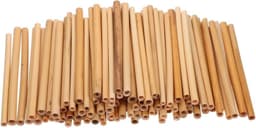
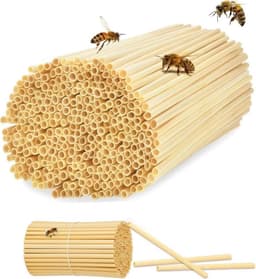
Reed straws are cut plant stems with a natural hollow. Wildlife Gardening Forum summaries emphasise breathable natural materials over sealed plastic. Reed can work when the internal diameter and a fifteen-centimetre depth match the target species, entrances are smooth, and the rear is closed. Downsides include batch variability, so one MAGICLULU pack may run narrower than another, and splinters if the cuts are rough. UK reviews praise clean reed on MAGICLULU and TOYANDONA. They complain when five to eight millimetre claims still fit poorly in imported hotels. Wheat-stem packs such as BOBOZHONG trade an even lower cost per tube, with three to five millimetre inner claims and a twenty-centimetre cuttable length. Agricultural stem walls may differ from reed stiffness. Biodegradability marketing appears in the bullets. A narrow bore suits smaller solitary species, or DIY blocks you drill yourself, not every hotel front labelled for mason bees. Listing honesty wobbles. GANAZONO’s bullets say reed while a material type row says cardboard. Buyers should open the bundle and confirm hollow plant stems. BOBOZHONG’s title mentions cardboard beekeeper supplies while the bullets insist on wheat stalks. Treat the photos and the first straw in your hand as the ground truth, not the category breadcrumb.

Bamboo in this comparison: water, not nests

Where bamboo appears with an accurate material row here, it is on fifty-centimetre water-channel pairs for fountains or décor. Bamboo walls are thicker and split differently from reed straws. They are not sold as hundred-count nesting inserts in this table. Using a fountain chute as a bee tunnel would fail on length, rear sealing, and bore, besides wasting a chute that starts above £21. True bamboo bee sleeves, when you find them elsewhere, offer rigid, repeatable bores and durability. They still need annual management and shelter. Reed refills remain valid if they are sized correctly. Bamboo is not automatically better for bees without a match to the species and the hotel design.

Choosing material for your intent

Choose reed or wheat refills when you own a modular insect hotel, have measured the existing holes, and want biodegradable inserts you replace every year or two. Start with sizing on the buying guide. GANAZONO is our top pick among refills here for Garden placement, not because reed beat bamboo in a lab. Choose bamboo water channels when you are building a recirculating feature and need visible spouts. Bamboo matters there for the look of outdoor décor. Pair the chute with your own pump. Shop specialist bamboo nesting sleeves when you need a tight mason bore and cannot risk five to eight millimetre reed variance. Those listings may not live under this slug. Avoid plastic straws labelled for crafts or parties. Charities discourage non-breathable inserts in hotels even if the diameter looks right.

Breathability, longevity, and management

Reed and wheat stems degrade with moisture and UV. Plan replacement on the charity schedule. Bamboo channels algae-stain and may split if they freeze full of water. Neither material removes your job of sheltering hotels from rain, or of discarding parasitised tubes. Reviews in this set do not prove that reed occupancy beats wheat stem, or the reverse. Sample sizes are tiny. TOYANDONA’s one UK occupancy anecdote refers to reed, not wheat. BOBOZHONG’s best value label reflects the count, not material superiority.

When the listing title still says bamboo bee tubes

Search algorithms reward the word bamboo, so titles stack bamboo insect hotel tubes above reed bullets. That is why TOYANDONA’s copy says natural reeds while the category sheet says bamboo, and why Beavorty can cite UK beekeepers in the marketing without changing the stem material. Your filter should be the product type, bee nesting refill versus water channel, then the material line, not the hub breadcrumb alone. If both say reed, believe reed unless the opened package shows otherwise. If you need machined bamboo sleeves with a tight tolerance, expect to shop outside this seven-listing table at a wildlife specialist, then come back only to compare prices on reed refills you might mix into the same hotel for smaller species. A cardboard material row that clashes with reed bullets, as on GANAZONO, is a data-quality warning, not a second product category. Split one straw. If the wall looks like spirally wound paper, return it. If it is a plant stem, install it like any other reed refill after you have checked the bore.

Common questions

Are GANAZONO tubes bamboo?
The listing copy describes natural reed, not bamboo. The category sheet is broader than the material line.
Is BOBOZHONG reed or wheat?
The bullets describe natural wheat stalks with a cuttable twenty-centimetre length. It is not a bamboo nesting product.
Which products here are actually bamboo?
CALLARON and BESPORTBLE water channels list bamboo as the material. The bee refills in the same table are reed or wheat stem.
Does reed work for mason bees?
It can, when the internal bore and the depth match the species. Red mason bees are often associated with about eight to ten millimetres. Many packs here quote narrower ranges. Measure before you buy.
Should I avoid reed because the hub says bamboo?
No. Judge bore, depth, the rear seal, and shelter. The hub name is a search bucket, not a materials certificate.
Where do I pick a specific pack?
See best bee nesting tubes for the top pick and best value among refills. The channels are a separate product.
Can I use bamboo fountain chutes as refills?
No. They are the wrong length, they are open for plumbing rather than closed at the rear, and they are not sold as nesting media in this comparison.

Related pages

Sources

Public UK sources used for this page. Shelf prices, stars and review counts are the amazon.co.uk figures captured for these listings. Last checked 22 October 2026.

  1. Bumblebee Conservation Trust — solitary bee nest boxes (retrieved 22 October 2026)
  2. Wildlife Gardening Forum — bee hotels (retrieved 22 October 2026)
  3. Bumblebee Conservation Trust — winter husbandry (retrieved 22 October 2026)
  4. Ark Wildlife — mason bee tubes (retrieved 22 October 2026)
  5. Primrose — shishi-odoshi overview (retrieved 22 October 2026)