Independent comparisons. We may earn from shop links. More info

Vole repellent for a lawn or for bulbs

Updated: October 2026

You are looking at a soft lawn with small heaps, a bed where the tulips and crocuses never came up, or bark taken off a young tree. A vole repellent for a lawn or for bulbs fits only the lawn, and only as a solar stake in open grass. Mesh and a stem guard are the other answers, and neither is in the ten amazon.co.uk listings on the [vole repellent comparison](/hub/pest-control/vole-repellent). This was written on 16 October 2026 from RHS, Which? and GOV.UK, using listings captured on 15 October 2026. We did not run a garden trial.

You are looking at a soft lawn with small heaps, a bed where the tulips and crocuses never came up, or bark taken off a young tree.

Our top picks

On this page

Read the damage before you buy

Three kinds of damage share a shopping word, and they do not share a product. RHS describes a soft lawn and small heaps as voles tunnelling just under the surface, so the turf feels uneven. A molehill is excavated soil, and moles do not eat plants, so that heap does not prove the bulbs have gone. On a UK lawn, use the RHS signs, including those small heaps. RHS and Which? single out new crocus and tulip bulbs in their first autumn and winter. Bark shows as paired grooves low on a woody stem, often in winter. If the hole is in a pond bank or a ditch bank, stop, because it may be a water vole. The legal sequence is on the vole repellent buying guide. A dry lawn with small heaps can still lead to a stake. Eaten bulbs and stripped bark need a barrier instead.

A lawn is the stake case

A solar stake in this set is a ground spike for open grass in full sun. It is not a lid for a bulb trench, and no listing here is a trial on tulips. RHS says an electronic mole device may only move the animal sideways. It is a poor outcome if the animal moves into the crocus bed beside the stake. The panel needs sun. A spike under a dense shrub is the wrong place compared with an open patch that sees the sky. Listings often print a huge range beside a tighter placement line. Follow the tighter line, and take spacing from the how to use a vole repellent page. If the loss is bulbs or bark, leave the stake in the basket. It will not cover a buried tulip or wrap a young stem.

Bulbs and bark need a barrier

Which? describes wire of about 6 mm over buried bulbs and around stems, with the edge slightly underground. On a pot it uses about 6.5 mm. No listing in this comparison sells that mesh. Bark damage is a winter problem low on the stem. GOV.UK says field voles work mostly below about 20 cm and rarely climb. Which? still offers a plastic guard pushed a few centimetres into the soil. GOV.UK does not recommend spiral guards, because they fragment and are hard to remove. This set sells neither mesh nor a spiral. Keep the stem base clear. Which? says to mow and not to mulch with cut grass, because that cover shelters voles. If the tree is on a ditch bank, do not bury a guard into that bank.

Smell is not a substitute for mesh

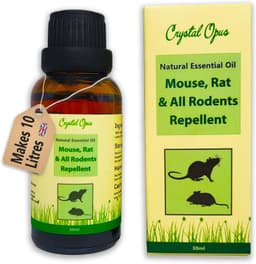
A pouch and a peppermint concentrate are smells for a border or a shed, not a cage around a bulb. KQPNMJ, about £15.99 for eight, is placed rather than charged. Crystal Opus, about £9.99 for 30 ml, is the only listing here that says indoor and outdoor. One spray on a tulip, or a pouch in the planting hole, still leaves the underground gap open. Do not aim Crystal Opus at bats or hedgehogs. A bullet on that listing names them, so mesh is the safer barrier where those animals already live, because mesh does not spread a scent. No file in the set shows an HSE authorisation number, and natural on the label is not an approval. Buy a stake only for shallow runs in open lawn.

Common questions

Is a soft lawn with small heaps a vole or a mole?
RHS treats a soft lawn and small heaps as voles just under the surface. A molehill is excavated soil, and moles do not eat plants. Heaps on a pond or ditch bank mean you stop, in case the animal is a water vole.
Will a solar stake stop voles eating tulips?
A solar stake here is for open lawn in the sun. It does not cover a bulb trench, and these listings show no test on tulips. Which? points to wire of about 6 mm over the bulbs. RHS says an electronic device may only move the animal toward the bed.
What mesh size do UK sources give for bulbs?
Which? gives wire of about 6 mm over buried bulbs and around stems, slightly underground, and about 6.5 mm on a pot. None of the ten amazon.co.uk listings here is that mesh.
Are spiral guards still a good idea on a young tree?
Which? still describes a plastic guard a few centimetres below the soil. GOV.UK says spirals can stop voles, though it does not recommend them, because they are hard to remove and they fragment. This set sells no spiral.
Should I mow or leave long grass where voles are active?
Which? says to mow, and not to mulch with the clippings, because that cover suits voles. GOV.UK says the same of long grass and mulch mats around a tree. Mowing does not replace mesh of about 6 mm on a new tulip. Leave a vegetated ditch bank uncut until you have advice.
When is the damage a water vole, rather than a garden vole?
Stop if the burrow is in a pond bank or a ditch bank. A water vole is the larger animal beside water, not the small vole under a dry lawn. GOV.UK protects it in England and Wales under the Wildlife and Countryside Act 1981, including reckless damage to a shelter. NatureScot covers shelter and disturbance in Scotland. Ask Natural England or a professional before you block the hole.

Related pages

Sources

Public UK sources and the amazon.co.uk listings in this set, last checked on 15 October 2026.

  1. GOV.UK water vole planning advice (retrieved 15.10.2026)
  2. NatureScot protected species: water voles (retrieved 15.10.2026)
  3. GOV.UK foxes, moles and mink (retrieved 15.10.2026)
  4. HSE biocidal product types (retrieved 15.10.2026)
  5. RHS mice and voles (retrieved 15.10.2026)
  6. RHS moles (retrieved 15.10.2026)
  7. Wildlife Trusts field vole (retrieved 15.10.2026)
  8. Which? voles in the garden (retrieved 15.10.2026)