Independent comparisons. We may earn from shop links. More info

How to set a vole trap

Updated: October 2026

You have a tunnel trap or a wire trap, a soft line in the lawn, and you want to know how to set a vole trap. The useful set is a shallow, straight run, covered against light and draught and checked by the next day. A molehill or a ditch bank is a different job, and these steps sit beside the main [vole control](/hub/pest-control/vole-control) comparison. If you have not chosen a device, use the [vole trap buying guide](/hub/pest-control/vole-control/sub/vole-control-buying-guide).

You have a tunnel trap or a wire trap, a soft line in the lawn, and you want to know how to set a vole trap. The useful set is a shallow, straight run, covered against light and draught and checked by the next day.

Our top picks

On this page

Find a run you are allowed to trap

Press the turf before you cut a square. A run for these traps is shallow and straight: your foot gives on it, and a probe drops into a level passage. SWISSINNO’s notes keep that run to no more than about 15 cm deep. GOV.UK places a mole trap at least 150 mm down in a main tunnel. If you open a fresh hill, the tunnel trap fills with earth and fires empty. Stop if the holes are in a vegetated bank by a pond, a ditch or a slow stream. A water vole cannot be ruled out from the lawn alone, so read water vole or field vole and leave the trap in the shed. These steps do not treat a SuperCat as an approved spring trap. The Wildlife Trusts say the field vole is absent from Northern Ireland.

Set a tunnel snap

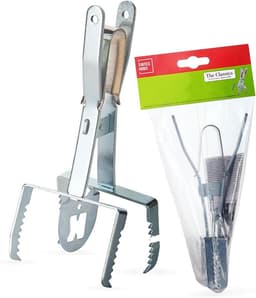
On a SWISSINNO Vole Trap PRO SuperCat, probe until the tool drops into a straight, level run, cut an opening of about 6 cm, and seat the cutter about 2 cm into the floor. Pull the handle up, then cover the trap with grass or leaves so light and draught stay out. There is no bait. The cutter is sold separately if the box holds only the trap, and the listing asks for a check inside a day. One proved run is a better start than extra traps on untouched lawn. Noctra reviews describe one side firing while the other is still being set, so keep your fingers off both openings until the handle stays up.

Set a wire trap, and do not trust the scissor paragraph

A wire trap is a tube you slide into the passage, rather than a cutter in a 6 cm hole. Place it 5 to 7 cm into a straight passage, with bait on the trigger ring only if you want it, then cover with turf or leaves. Do not copy that bait onto a SuperCat, which is set with no lure. UK reviews say the body is long for a vole run and that loose earth can pass the trigger. The scissor listing prints that same wire paragraph as its recommended use. UK reviews describe a latch that will not hold and a spring that can catch fingers. If the latch slips in your hand, retire the trap rather than pinching the jaws open. Ignore the 5 to 7 cm line unless you are holding a wire tube. Once the animal is one you may trap, choose the device on the best vole trap page.

The morning after

Look the next day, and at least once a day while the trap stays set. A Friday set left until Monday is how an animal is left injured. The Wild Mammals (Protection) Act 1996 does not treat pest control as permission to leave an injured animal. Open a SuperCat the day the handle drops. Soil in an empty trap means the ground tripped the pan, a molehill or a soil cover. Move the trap to a passage where the probe drops cleanly. A run found only at 150 mm is GOV.UK’s mole depth, so leave this vole trap out of that hole. Call a pest controller for a live catch you cannot deal with the same day, or if the bank might still be a water vole. If you do not want a killing trap, compare stakes and scent on the vole trap vs ultrasonic repeller page.

Common questions

How do I find the run?
Press until the turf gives, then probe until the tool drops into a level passage. SuperCat bullets put that straight run no deeper than about 15 cm. A hill of loose soil is a mole sign, and GOV.UK sets mole traps at least 150 mm down.
How big is the hole for a SuperCat?
Cut an opening of about 6 cm and seat the cutter about 2 cm into the floor of a straight, level run. SWISSINNO’s English instructions describe that cut, and the amazon.co.uk bullets keep the run within about 15 cm. The cutter is often sold separately, so measure if it was not in the box.
Do I need bait?
Set a SuperCat with no bait. The hole, the raised handle and the cover are the whole method. A wire trap may take bait on the trigger ring, and you still cover the entrance.
Why is the trap full of soil and empty?
Loose soil tripped the mechanism. The set was in a molehill, deeper than about 15 cm, covered with soil, or earth passed the trigger of a wire trap. Move to a straight stretch where the probe drops cleanly.
How often do I check?
Check a SuperCat by the next day, and check any trap that remains set at least once a day. GOV.UK uses that daily minimum for mole traps. If you cannot make the visit, do not set the trap.
What if something is alive in the trap?
Do not wait for another visit. The Wild Mammals (Protection) Act 1996 still applies during pest control, so an injured animal is not a job to postpone. Call a pest controller the same day if you cannot deal with the catch.

Related pages

Sources

Public UK sources from the research digest, last checked on 17.10.2026.

  1. GOV.UK water vole planning advice (retrieved 17.10.2026)
  2. NatureScot water vole protection (retrieved 17.10.2026)
  3. Natural Resources Wales water vole licensing (retrieved 17.10.2026)
  4. Pests Act 1954 section 8 (retrieved 17.10.2026)
  5. Small Ground Vermin Traps Order 1958 (retrieved 17.10.2026)
  6. GOV.UK foxes, moles and mink (retrieved 17.10.2026)
  7. RHS mice and voles (retrieved 17.10.2026)
  8. Wildlife Trusts field vole (retrieved 17.10.2026)