Natural silverfish spray vs insecticide: which job you are buying
You want something gentler than a biocide, and the amazon.co.uk titles say natural, non-toxic and killer in the same breath. A natural silverfish spray vs insecticide choice is a scented bottle with no stated active, or a residual insecticide with a named one. Those are different jobs. If the listing says it kills, do not treat it as a harmless natural. If it only deters, do not treat it as a clear-out. The [silverfish spray comparison](/hub/pest-control/silverfish-spray) is the table. Listings and the advertising rules were read on 16 October 2026. There is no public UK trial of these oil bottles against the insecticide sprays. We did not invent one.
You want something gentler than a biocide, and the amazon.co.uk titles say natural, non-toxic and killer in the same breath.
You want something gentler than a biocide, and the amazon.co.uk titles say natural, non-toxic and killer in the same breath. A natural silverfish spray vs insecticide choice is a scented bottle with no stated active, or a residual insecticide with a named one. Those are different jobs. If the listing says it kills, do not treat it as a harmless natural. If it only deters, do not treat it as a clear-out. The silverfish spray comparison is the table. Listings and the advertising rules were read on 16 October 2026. There is no public UK trial of these oil bottles against the insecticide sprays. We did not invent one.
Our top picks
| Badge | Product | Job on the listing | Active on listing | Residual or reapply | Note | Price | Offer |
|---|---|---|---|---|---|---|---|
| Best overall |  NOPE! NOPE! CP Silverfish Killer Spray, pack of 2 | Residual insecticide, silverfish named | Cypermethrin | Up to 3 months, listing claim | 8.4 | about £27.98 | View offer |
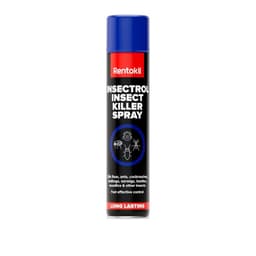
| Preis-Tipp |  Rentokil Rentokil Insectrol Insect Killer Spray 600 ml | Crawling-insect aerosol | Not printed on this listing | Residual barrier, no week count | 5.9 | about £10 | View offer |
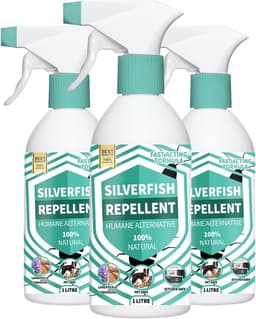
| Alternative |  UK GROW UK GROW silverfish repellent spray, 1 litre | Oil deterrent, no HSE number | Not stated | Every 2–3 weeks | 5.3 | about £18.99 | View offer |

On this page
What the oil bottles in this set actually are
Words the advert must not lean on
When a residual insecticide fits
A conditional choice
Common questions
Why can’t the page repeat “non-toxic” and “pet safe”?
Will lavender oil clear a bathroom infestation?
What did buyers of the oil bottles actually report?
Does “chemical-free” mean it is not a biocide?
What should I do if I want neither?
Related pages
Sources
Public sources from the research digest, checked on 16.10.2026. Shelf prices are the amazon.co.uk listings in this set.
- Exeter City Council — Silverfish (retrieved 16.10.2026)
- Middlesbrough Council — Silverfish (retrieved 16.10.2026)
- Lancaster City Council — Silverfish (PDF) (retrieved 16.10.2026)
- Gateshead Council — Silverfish (retrieved 16.10.2026)
- HSE — Biocide advertisement requirements (retrieved 16.10.2026)
- Regulation (EU) No 528/2012, Article 72 (retrieved 16.10.2026)
- BPCA PestWatch — Silverfish and grey silverfish (retrieved 16.10.2026)
- NOPE! CP sheet — HSE No. 10815 (retrieved 16.10.2026)