Independent comparisons. We may earn from shop links. More info

How to apply mosquito spray so the coat actually covers you

Updated: 23 October 2026

You already have a skin repellent in your hand, and the usual failure is a thin stripe on the forearm, a face you skipped, and sun cream trapped underneath. UK travel guidance assumes a full test dose when it talks about hours, and travellers often put on about half of that. This page is the sequence: how much, sunscreen, face and clothes, then when to put more on. The listings are on the [mosquito spray comparison](/hub/pest-control/mosquito-spray). We used public UK sources dated 21 October 2026 and did not film a wear trial. A qualifying purchase can earn a commission at no extra cost to you.

You already have a skin repellent in your hand, and the usual failure is a thin stripe on the forearm, a face you skipped, and sun cream trapped underneath.

Our top picks

On this page

How much to use

Cover ankles under cropped trousers, the back of the neck, wrists below a sleeve, and the tops of feet in sandals. UKMEAG notes that label duration is measured from a full test dose and that people commonly apply about half. The up to 6 hours or up to 8 hours on a bottle is a test condition. Choosing 50% DEET or icaridin is on DEET or picaridin. Spread enough that exposed skin looks lightly wetted, then rub it in, and stop before it pools in a watch strap. Fit for Travel says not to use DEET above 50% on skin. Raid's aerosol is a room killer. Keep it off skin.

Sunscreen, then repellent

When you need both, sunscreen goes on first and the repellent goes on after. UKMEAG says to use SPF 30 to 50 because DEET can reduce the sun protection you thought you had. If you reapply later, the repellent usually goes back on top. From dusk to dawn you can skip the cream. The Lifesystems bullets say sun cream first, and add that DEET may reduce SPF by 30-40%. That percentage is the brand's figure, not a UKMEAG statistic. Give the sunscreen a few minutes, then apply the repellent. After a swim, start again with the same order.

Face, children, and clothes

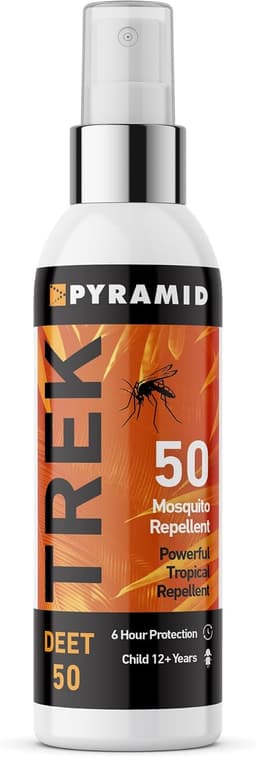
Fit for Travel says to spray onto your hands and then wipe the face, avoiding the eyes and the mouth. A pump is easier to aim onto a palm than a wide aerosol. TravelHealthPro says not to put repellent on a child's hands, because hands go into mouths and eyes. Apply it to their exposed skin yourself, leave palms clear, and keep it off broken skin and sunburn. Pyramid's carton says 12 and over. If the child's age and the carton disagree, ask a pharmacist. Under 2 months, ask a clinician. Clothes are a second step. DEET may melt synthetic fibres and is not described as damaging wool, linen, or cotton. Test a hidden seam, and keep it off glasses and phone cases. Autan's bullets say spray onto skin or onto hands. They do not answer clothes.

Reapply, then wash off

Reapply when the coat is gone. Fit for Travel tells you to put more on after swimming, washing, or heavy sweat. UKMEAG adds the signal: when mosquitoes start to land, within the label. A sea swim means the ankles you dried are bare again, even if the can still says six or eight hours. Wash the product off when you are indoors for the night. If you go back outside, apply again. A fly killer is a different step. Wilson says it deters and does not kill. Skin Shield has 15 reviews and no hour figure.

If you are still bitten

A bite on one ankle and a clear wrist usually means a missed patch, a rubbed-off coat, or a can that was citronella or an indoor aerosol. Move to a stated 50% DEET or a picaridin spray you tolerate, and cover the skin you actually expose. Standing water is a breeding site to empty. If you are choosing the bottle, the buying order is on the mosquito spray buying guide. The NHS insect bites and stings page covers a bite that swells badly or comes with feeling unwell. Breathing difficulty is urgent: NHS 111 or 999. Fever after a risk-area trip needs a clinician. The spray does not treat malaria.

Common questions

Do you put sun cream or mosquito spray on first?
Sunscreen first, then the repellent, when you need both. UKMEAG suggests SPF 30 to 50. From dusk to dawn, apply the repellent on its own. A 30-40% SPF drop is Lifesystems' own bullet, not the government figure.
Can I spray my face from the bottle?
Spray your hands, then wipe the face, and keep the product out of your eyes and mouth. Use the same method for a pump or an aerosol. Do not put repellent on a child's hands.
How often do I reapply?
After a swim, a wash, or heavy sweat, and when mosquitoes start to land, inside the label. The hours on the front assume a full test dose. Travellers often apply about half.
Can I spray clothes?
Skin is the main coat. DEET can damage synthetic fibres and some plastics. Wool, linen, and cotton are not described that way. Autan's saved bullets do not answer clothes. An indoor fly spray is not a clothing treatment.
Why do I still get bitten?
Often one area was missed, the product sweated off, or the can was citronella or a room killer. Check ankles, feet, and the hairline. None of these sprays is a guarantee of zero bites.
What about children's hands?
Do not put repellent on children's hands. Apply it to exposed skin yourself and keep palms free. If the carton says 12+ and the child is younger, ask a pharmacist.
When do I stop and get medical help?
If a bite worsens, you feel unwell, or breathing is difficult, use the NHS insect-bites page, and 999 for a severe allergic reaction. Fever after a malaria-risk trip needs a clinician.

Related pages

Sources

Public UK sources used for this comparison. Shelf prices, stars and review counts are the amazon.co.uk figures captured for these seven listings. Last checked 22 October 2026.

  1. GOV.UK mosquito bite avoidance for travellers (retrieved 22 October 2026)
  2. GOV.UK UKMEAG bite prevention (2026) (retrieved 22 October 2026)
  3. TravelHealthPro insect and tick bite avoidance (retrieved 22 October 2026)
  4. NHS malaria (retrieved 22 October 2026)
  5. NHS insect bites and stings (retrieved 22 October 2026)
  6. Fit for Travel mosquito bite avoidance (retrieved 22 October 2026)
  7. HSE non-approval ebulletin, product type 19 (retrieved 22 October 2026)
  8. GOV.UK hand luggage liquids (retrieved 22 October 2026)