Independent comparisons. We may earn from shop links. More info

DEET vs picaridin: which strength to pack

Updated: 23 October 2026

You are standing between a 50% DEET spray and a bottle that says DEET-free, and the labels are not using the same percentage. Choose 50% DEET when you tolerate it and the trip justifies the first-line repellent. Choose about 20% icaridin when you will not use DEET. DEET-free on its own is not a strength. The products that match those two lines are on the [mosquito spray comparison](/hub/pest-control/mosquito-spray). We set this against GOV.UK travel pages and saved amazon.co.uk listings as of 21 October 2026. A qualifying purchase can earn a commission at no extra cost to you.

You are standing between a 50% DEET spray and a bottle that says DEET-free, and the labels are not using the same percentage. Choose 50% DEET when you tolerate it and the trip justifies the first-line repellent.

Our top picks

On this page

The strengths that matter

UKMEAG, in the 2026 bite-prevention guidance, puts 50% DEET first. It treats icaridin as comparable to DEET when both are at 20%, and says use 20% icaridin where malaria is a risk. There is no extra duration from DEET above 50%. A 50% DEET bottle and a 20% icaridin bottle are the two strengths the UK documents discuss. How that choice sits in a wider shop is on the mosquito spray buying guide. Citronella is DEET-free and is not on that list. Both sprays here reduce bites. They do not prevent malaria, dengue, Zika, or yellow fever.

Smell, grease, and plastics

Reviews of the 50% DEET bottles keep returning to a thick or oily coat and marks on light clothes. One Pyramid review says plastic melted. TravelHealthPro warns that DEET can damage some plastics and synthetic fibres, and does not describe wool, linen, or cotton that way. Icaridin is what people in these reviews reach for when DEET irritates them. Autan still has reviews that report bites anyway, and one describes a dry-skin reaction. The short GOV.UK page is explicit about 50% DEET in pregnancy and breastfeeding. It does not give picaridin that sentence. If you are pregnant and DEET is a problem, ask a pharmacist or the travel clinic.

The bottles in this set

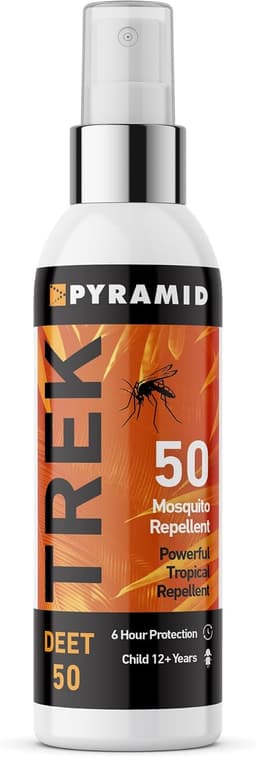
Pyramid Trek 50 is 100 ml at £9.99, 4.4 from 5,101 reviews, 50% DEET, up to 6 hours, ages 12 and over. Lifesystems Expedition is 50 ml at £8.95, 4.5 from 1,300 reviews, also 50% DEET, up to 8 hours, children aged 2 and over, and the listing calls the pump carry-on compliant. The details block prints ASIN B082JHVDWJ against URL ASIN B082JJ5N9V. Autan, B088RTJXHS, is the picaridin side: £8.50 for 100 ml, 4.5 from 2,234 reviews, DEET-free, over 2 years. Bullets give up to 8 hours for common mosquitoes, 6 for tiger mosquitoes, and 4 for biting flies and ticks. The short bullets omit the percentage. The amazon.co.uk description states 20% icaridin. The named picks are on the best mosquito repellent spray page. The listings put them on different sides of the UK rule.

When you are pregnant or buying for a child

GOV.UK describes 50% DEET as suitable in pregnancy and while breastfeeding, and for babies over 2 months. Under 2 months, ask a clinician. If a DEET label sets a higher minimum age, UKMEAG says follow the label. Pyramid says 12+. Lifesystems says 2 years and over. Ask a pharmacist rather than correcting a 12+ carton from a page. Autan's over-2 line is a picaridin label. The explicit pregnancy wording in the short guide is about 50% DEET. Skin Shield's from-6-months line is citronella, with 15 reviews. For a baby, the pharmacist is the stop.

A straight answer

If you tolerate DEET, take 50% DEET: Pyramid Trek 50 for 100 ml when the user is 12 or over, or Lifesystems for the 50 ml pump and a 2+ label. If you will not use DEET, take the Autan pump and check that the bottle states about 20% icaridin. A citronella blend is not the same protection. Raid knocks down flies and wasps in a room. Consistent use of the active you will actually wear beats a bottle left in the bag. That still does not upgrade citronella into 20% icaridin. On a malaria-risk trip, the clinic's tablet advice stays in force.

Common questions

Is 20% picaridin as strong as 50% DEET?
UKMEAG says icaridin is comparable to DEET when both are at 20%, and it still lists 50% DEET first. Use 20% icaridin if that is the active you choose. There is no extra DEET duration above 50%.
Which do I take to a malaria-risk country?
Take 50% DEET if you tolerate it, or about 20% icaridin if you do not. Fit for Travel keeps IR3535 out of malaria areas. The spray does not replace tablets or a net. Ask the clinic before you travel.
Which is kinder to watches and clothes?
DEET is the one with the plastics and synthetics warning, and with reviews here about melted plastic and sticky nail polish. Keep either product off glasses, phones, and watch straps. Wool, linen, and cotton are not described as damaged by DEET.
What if DEET stings or smells?
Switch to a picaridin spray at about 20%, and check Autan's label for the percentage the bullets omit. A dry-skin reaction still appears in at least one Autan review. Citronella is not the fallback UKMEAG lists.
What do the labels here actually say?
Pyramid: 50% DEET, up to 6 hours, ages 12+, 100 ml, £9.99. Lifesystems: 50% DEET, up to 8 hours, age 2+, 50 ml, £8.95. Autan: DEET-free, over 2 years, 100 ml, £8.50, with 20% icaridin in the description rather than the short bullets.
Can I use either in pregnancy?
The explicit GOV.UK line we are using is about 50% DEET in pregnancy and breastfeeding. We are not claiming picaridin has that sentence. If you cannot tolerate DEET while pregnant, ask a pharmacist. Under 2 months, ask a clinician.
Is citronella a third option on this page?
No. Citronella blends sit outside the 50% DEET and 20% icaridin comparison. UK guidance calls them short-lasting and not well enough evidenced.

Related pages

Sources

Public UK sources used for this comparison. Shelf prices, stars and review counts are the amazon.co.uk figures captured for these seven listings. Last checked 22 October 2026.

  1. GOV.UK mosquito bite avoidance for travellers (retrieved 22 October 2026)
  2. GOV.UK UKMEAG bite prevention (2026) (retrieved 22 October 2026)
  3. TravelHealthPro insect and tick bite avoidance (retrieved 22 October 2026)
  4. NHS malaria (retrieved 22 October 2026)
  5. NHS insect bites and stings (retrieved 22 October 2026)
  6. Fit for Travel mosquito bite avoidance (retrieved 22 October 2026)
  7. HSE non-approval ebulletin, product type 19 (retrieved 22 October 2026)
  8. GOV.UK hand luggage liquids (retrieved 22 October 2026)