Skin care incontinence pads: keep urine off the skin
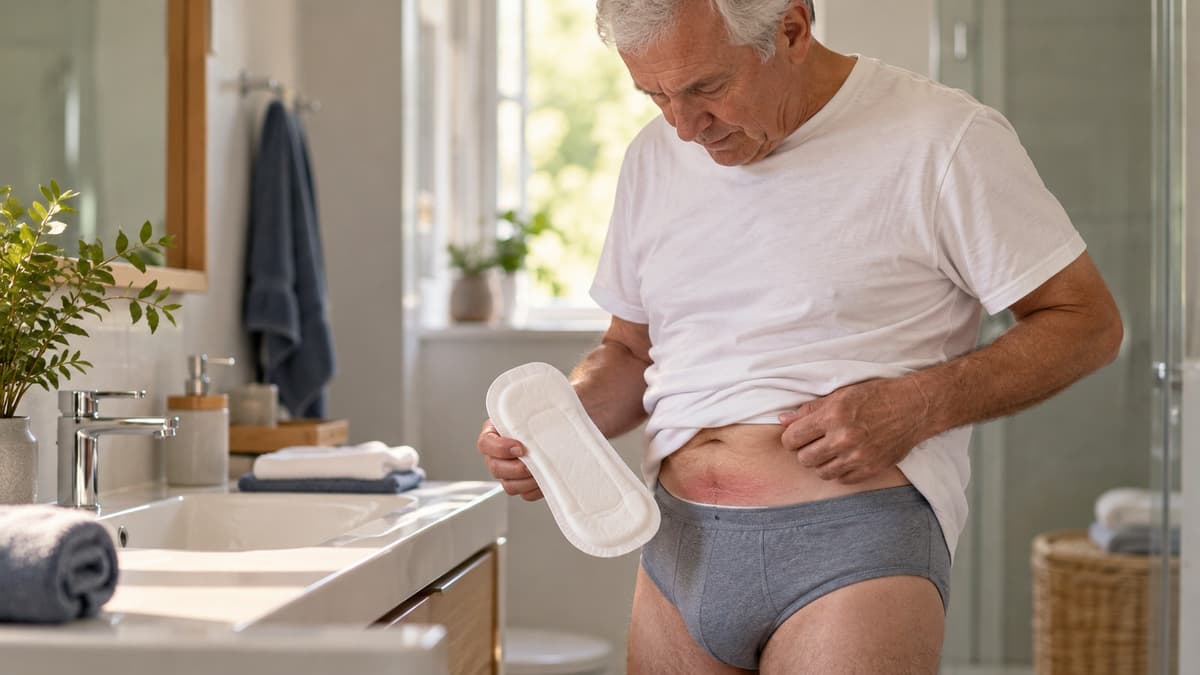
Change a soiled pad promptly, skip talc, and keep barrier cream to a thin layer. A dry topsheet is not proof the skin is fine. Broken skin needs a nurse.
On this page

You take the pad off and the side that faced you still feels dry, yet the skin under your briefs is pink and sore. The surface has moved urine into the core while that skin stayed warm and covered. Skin care incontinence pads starts at that change, the one you are already standing in the bathroom to make.
The NHS products page describes a hydrophobic topsheet that draws urine away so the skin is meant to stay drier. Bladder & Bowel Community says change a soiled pad promptly to limit sore skin. A dry feel is a product surface. It is not proof the skin is healthy, and it is not a reason to leave a wet pad on.
If the skin is already broken, or a place you sit or lie on stays wet, ask a nurse. This is product-care guidance for the pad you wear. It is not a diagnosis, and it does not name a cream.
Shelf figures are captured amazon.co.uk prices for the top pick on our men's incontinence pad comparison. Lisa M. updated this in October 2026 from those listings and the care notes below. There was no wear test on skin. A qualifying purchase can earn a commission at no extra cost to you.
In short
Change a soiled pad promptly, then clean and dry the skin before the next pad goes on. Skip talc. Use barrier cream only if the skin needs it, and only in a thin layer, so the pad can still absorb. A topsheet that feels dry is not proof the skin is fine. Broken skin, or a wet pressure area, needs a nurse.
A dry topsheet is not healthy skin
A men's guard covers a small area at the front. If it shifts, urine misses the core and sits in the groin fold. The middle of the topsheet can feel dry while the edge has been damp for hours. How a cup sits in close-fitting briefs is on the how to wear incontinence pads for men page. A guard in loose boxers fails the leak and the skin together.
The top pick is the TENA Men Level 2 pack of 60, a male cup for medium bladder weakness, at £26.94, about £0.45 a pad. The listing claims an adhesive strip, odour control, individual wraps, 12 hours of absorbency, nonwoven fabric, and alcohol free. amazon.co.uk shows 4.6 from 15,273 ratings, and some review text describes pull-up pants, so the stars are not a skin score. The listing says the pad is not water resistant.
ABENA San Premium 6 is a unisex insert, not a male guard. The title states 1,600 ml, at £15.46 for 34 pads, about £0.46 each, and it claims a wetness indicator. More coverage can mean more skin under a warm layer. The stripe does not inspect that skin.
When to change a wet pad
Change a soiled pad promptly to limit sore skin. That covers a pad that is wet through, smelly, or sat in after a larger leak. It does not mean a new pad after every toilet visit when the core is still dry and the skin was fine. A single contained drip is not an instruction to start again.
Fullness sits in the guide to how often to change an incontinence pad. A listed wear time and a skin-safe gap are different numbers. You can have sore skin from pads long before the pad reaches the capacity on the box.
The Level 2 listing prints 12 hours of absorbency. That is a product-page figure, not a skin timetable. If you wake wet, change the pad. If the edge feels damp, change it at the next toilet.
At the change, the Absorbent Hygiene Product Manufacturers Association points to clean and dry skin, with cream only if necessary. A carer follows local policy.
- Take a soiled pad off as soon as you reasonably can, including if you wake wet.
- Clean and dry the skin, including the groin fold, before cream and before the next pad.
- Use barrier cream only if the skin needs it, in a layer thin enough that the pad can still take urine.
- Leave talc off the skin and off the pad.
- Fit the next guard in close-fitting briefs so it covers the leak.
- If the skin is broken, or a pressure area is wet, ask a nurse.
That order is product care. It does not treat the cause of the leak. When to see a GP for incontinence in men sets blood, pain, and a stream that will not start beside an ordinary drip. A pad can hold the drip. It does not decide the call.
Talc, barrier cream, and wipes
Do not use talc. TENA's fitting sheet says it reduces absorbency, so urine stays nearer the skin. Powder also collects in folds, against the clean, dry skin AHPMA expects at a change.
Barrier cream and pads share a change only in a narrow limit. Use cream only if necessary, and only sparingly, so the pad still works. A thick coat, or cream on the topsheet, blocks the layer that should let urine through. You should still see skin.
This page does not name a cream or a dose. If a nurse has told you which product to use, keep it thin enough that the pad absorbs. A new tub is not an assessment. Carers follow local policy.
Pat the skin dry after a wipe. Perfume or a wet film means the job is unfinished. Alcohol free on the Level 2 line describes that pad, not every wipe. A pad on damp or slippery skin moves, and the leak misses the core.
If faeces are in the pad, change it promptly. A male guard is a weak shape for a bowel leak. Pants and slips are a different garment, in the pants and slips comparison. They still start with clean, dry skin, and they still stop when the skin is broken.
What the pack claim skips
TENA Men Level 2 claims to be fragrance-free. The Level 3 bullets do not state a fragrance, so do not assume the next level or a wipe is unscented. Fragrance-free is not a promise against sore skin from pads when the skin stays wet, the pad shifts, or cream blocks the surface.
A wetness indicator is not a skin tool. ABENA San Premium 6 claims one. The TENA guards here do not, unless a listing says so. A stripe shows fluid in the pad, not whether the skin is intact. A quiet stripe can mean a dry pad, or urine that missed the pad and is on your skin.
Odour control is about smell, not skin. Individual wraps are a storage claim. Reviewers say wraps protected pads in a damaged box. A wrap does nothing for the skin under the pad you are wearing. A soiled pad is finished, not a liner you rinse and reuse.
When sore skin needs a nurse
Broken skin, or a wet pressure area, needs a nurse. A fresh pad and thinner cream are the wrong next step once the skin is broken, or a place under pressure has stayed wet.
Broken skin, or a wet pressure area, needs a nurse. This page will not grade a rash, name a stage, or tell you to start a medicated cream.
Product care covers the wash, the dry, no talc, and a thin layer of cream only when someone appropriate has said it is needed. If you are a carer, follow local policy. A tub from a shop does not override a care plan.
Redness with the skin still whole is a reason to change a soiled pad sooner and to check the guard has not slipped. Note whether it sits under the pad, under the adhesive, or in a fold the pad missed. Blood, pain, or being unable to pass urine belongs with a GP. Change the shape if urine misses a small cup. Ask a nurse when the skin is broken.
Common questions
Should I change as soon as I have passed urine?
Can I use talc under an incontinence pad?
Will barrier cream stop a pad working?
The pad feels dry on top but my skin is red. What now?
Is a wetness indicator a skin tool?
Are fragrance-free claims on these pads consistent?
What should a carer do at a pad change?

Lisa M. is the editor for Home & living at productscompared.co.uk. Comparisons in this category are checked against amazon.co.uk listings, review evidence and public UK sources.
Related articles

How often to change an incontinence pad: when full
When a pad is full or smelly enough to change, and why a listed hour count is not a skin timetable.

When to see a GP for incontinence men: what is urgent
Blood, pain, or a stream that will not start, set beside an ordinary drip a pad can hold.

Incontinence pads or pants for men: which to wear
A guard in close-fitting briefs for lighter leaks, and pull-up pants when urine is heavier or faeces are involved.