How often to change an incontinence pad: when full

Change an incontinence pad when full or smelly, not after every wee. An 8-hour listing is not a work shift, and NHS supply is often capped at four a day.
On this page

You put a fresh pad in at seven because the amazon.co.uk listing said eight hours, and by early afternoon the cup is heavy and a patch has reached your thigh. How often to change an incontinence pad follows the pad you are wearing: change it when it is full or nearly full, when it smells, or when your skin stays wet. The first drip after the loo is not that moment.
Bladder and Bowel UK tells readers to change once a pad is full or nearly full, and describes a usual supply maximum of four disposable products a day, with local rules that differ. An hour figure in a listing is a catalogue field. It does not prove the pad will last a shift, a night, or until the next delivery.
Lisa M. updated this in October 2026. Prices and hour fields come from captured amazon.co.uk listings in our incontinence pad comparison. We did not wear the pads in a lab. A qualifying purchase through our links can earn us a commission at no extra cost to you.
In short
Change an incontinence pad when the core is full or nearly full, when it smells, or when skin stays wet. Leave a light drip in place rather than changing after every wee. Treat an 8-hour or 12-hour listing as a shop attribute. Treat four pads a day as a usual NHS supply cap that varies by area, not as a target you have to hit.
Change when the pad is full
A pad has done its job when the core has taken the urine and your briefs and trousers stay clean. That point arrives at different hours. A teaspoon after the urinal may never fill a male guard before you shower. A gush when you stand, or the weeks after a catheter comes out, can fill the same shape before lunch. The change follows the core, the edge, and your skin.
The Absorbent Hygiene Product Manufacturers Association expects you to follow the product in your hand, including a wetness indicator where one is printed. There is no single minute for every guard, shaped pad, and pull-up. Clean the skin at the change and let it dry before the next pad. Urine left under a fresh pad is how soreness starts.
Smell is a reason on its own. Odour control on TENA Men Level 2 is a feature for urine held in the core. It is not a reason to keep a pad that already smells on the bus. Faeces end the wear immediately. A male cup is the wrong shape for a bowel leak. If that leak is regular, the next garment is a pull-up or a slip in the TENA pants and slips comparison.
If the edge is already damp, the core cannot take more. If skin is broken, weeping, or painful, change the pad and speak to a continence nurse or your GP. The skin care notes for pad wearers cover what to do at the change. A thin supply bag is never a reason to stay in a soiled pad.
What the hour fields do not prove
On the captured amazon.co.uk attributes, TENA Men Level 2, 60 pads (ASIN B06XYJC7DT) is listed at 12 hours. Both TENA Men Level 3 packs, the 48-count and the 96-count, are listed at 8. Abena Man Formula 2, San Premium 6, and Basic San 4 are listed at 8. Both WhyWorry packs have no hours field, so there is nothing there to turn into a timetable.
A man with a drip only after urinating can still be comfortable at eight hours in close-fitting briefs. A man whose Level 3 is soaked by mid-morning has not missed a promise. The field was never a shift length. The hours also run against the idea that a higher level lasts longer: Level 2 carries 12, and Level 3 carries 8.
Captured comments on a Level 3 pack show the spread. One person managed on one pad a day for mild leakage. Another needed three or four changes because the flow was heavier. Those are shopper comments, not a wear trial. Level 2 was £26.94 for 60, about £0.45 a pad, with 4.6 from 15,273 ratings. Some review text describes pull-up pants, so the count is not this cup alone. The 96-count Level 3 was £27.95, about £0.29 a pad.
Sort by the leak you wrote down this week, then change on fullness. The buying notes for these pads separate a drip from a heavier flow before any model number.
The usual four-a-day supply
Bladder and Bowel UK describes four disposable pads a day as a usual maximum once a continence service has assessed you. Areas do not all use the same number. NHS pads come through local services, often after a nurse has seen the pattern of leaks. Running out before the next delivery is a reason to be reassessed. It is a poor reason to leave a soaked pad on until the bag arrives.
Four is a ceiling in that guidance, not a dose. One light pad from morning until bed does not become four because a letter says four. A fifth pad before supper means the product and the leak are out of step. Say so to the service. A top-up from amazon.co.uk covers the days you are short.
The monthly sum moves with the changes. Three pads a day is 90 pads in a 30-day month: about £26 on the 96-count TENA Men Level 3, and about £40 on TENA Men Level 2, using the captured unit prices. Four a day is four-thirds of that arithmetic, nearer £35 and about £53. That is multiplication, not a prescription, and the shelf price can move. The monthly cost of men's pads sets the other packs out the same way.
Note the time a pad goes on, the time it comes off, and whether you changed for fullness, smell, skin, or habit. A few ordinary days beat a packet that says 8 hours. Blood in the urine, pain on passing urine, or being unable to pass urine needs a GP the same day or NHS 111. How local supply is arranged is in incontinence pads on the NHS.
How you tell a pad is full
A wetness indicator is a mark that changes when the core is wet. The manufacturers' association points you to it when the product has one. In this set that claim sits with San Premium 6, not with the male guards. TENA Men Level 2, both Level 3 packs, Abena Man, and WhyWorry do not give you a colour change. In a cubicle you use weight, the edge, smell, and your clothes.
A dry cup is thin. A swollen cup that tugs the adhesive is holding urine. If it feels heavy, change it. Damp at the leg, a line on the briefs, or a mark on trousers means the core has overflowed. NHS advice is that the topsheet is meant to feel drier, so a dry outside is not an empty pad. Used pads go in a bin, not the toilet.
The fit steps for a men's pad cover which way up the cup goes, and why loose boxers miss the drip. A groin leak after an hour can be poor fit, not a full core. A pad on at 7:00 may still be light at 11:00 and due off at 14:30. A post-wee drip may be one pad. The early weeks after prostate surgery may be four. Those times are a check, not a rota.
Two pads are not a longer wear
A second pad inside the first feels like doubling the hours. It does not. TENA's fitting guidance tells you not to stack pads. Two cups add bulk, shift the adhesive, and can fold a channel so urine runs onto your thigh while both cores look half dry. You have used two products from a four-a-day supply and you are still wet.
If one pad is routinely full earlier than you wanted, move from a lighter guard to a Level 3 guard. A leak that soaks any cup by mid-morning needs pull-up pants or a shaped pad in fixation pants, not two guards stacked together.
Leave a pad on all day only when it is still short of full and the skin is calm. If four a day is not enough, speak to the continence service and buy a top-up for the gap. If four is more than the leak needs, use the number your checks justify.
Common questions
Is an 8-hour listing a full shift?
Should I change a pad after every visit to the toilet?
What if the NHS only allows four pads a day?
How do I know a pad is full if there is no wetness indicator?
Does a heavier pad mean fewer changes?
Can I use two pads to last longer?
Can I leave a men's pad on all day?

Lisa M. is the editor for Home & living at productscompared.co.uk. Comparisons in this category are checked against amazon.co.uk listings, review evidence and public UK sources.
Related articles

What men's incontinence pads cost per month
See how three or four changes a day turn a pack price into a monthly sum.

Can you get incontinence pads on the NHS?
A usual cap is four pads a day after a local assessment, and areas do differ.
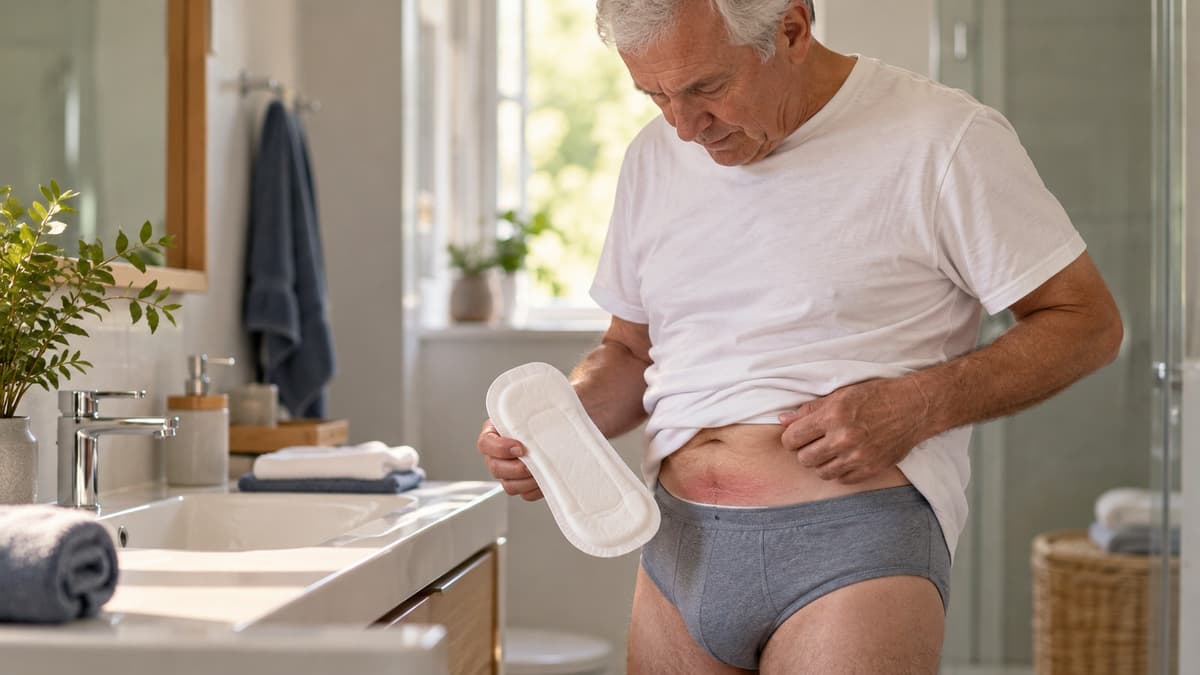
Skin care when you wear incontinence pads
Change a soiled pad, and know when sore skin needs a nurse rather than a cream.