Independent comparisons. We may earn from shop links. More info

Food-safe wood wax: what UK buyers should check

Updated: October 2026

A chopping board may look dry, but reaching for ordinary furniture polish can turn a maintenance job into a food-contact problem. A food-safe wood wax must be intended and documented for surfaces that touch food; beeswax in the ingredient list does not prove that the finished mixture is suitable. This distinction rules out Howard Feed-N-Wax for boards because its maker says it is not food safe, even though it contains beeswax. Our [wood wax comparison](/hub/paints-and-varnishes/wood-wax) includes furniture and repair products as well as one cream marketed towards boards. This page focuses only on chopping boards, spoons, butcher blocks and similar items.

A chopping board may look dry, but reaching for ordinary furniture polish can turn a maintenance job into a food-contact problem.

Our top picks

On this page

Beeswax in the tin is not the legal test

In Great Britain, food-contact materials remain subject to assimilated Regulation (EC) No 1935/2004. In plain language, a material used normally or foreseeably in contact with food must not transfer substances in amounts that could harm health, unacceptably change the food’s composition, or alter its taste or smell. Good manufacturing practice is part of the framework. The rule concerns the finished material in use, not whether one ingredient sounds natural. A polish can contain beeswax alongside oils, solvents, fragrance or other ingredients with a different intended purpose. “Natural”, “non-toxic” and “safe and healthy” are broad marketing phrases; none is a substitute for a clear food-contact claim from the responsible business. For furniture rather than food surfaces, use the wood wax buying guide.

Feed-N-Wax is not for food

Howard Feed-N-Wax is a clear example of why the product name and ingredients are not enough. In our amazon.co.uk snapshot, the 473 ml bottle cost £15.99 and held 4.7 stars from 40,068 reviews. None of that makes it suitable for a chopping board. Howard’s own FAQ states that Feed-N-Wax is not food safe, and its brochure says the product is not intended for food-preparation surfaces. The maker directs customers towards separate cutting-board products. That is decisive for this use: do not apply Feed-N-Wax to a butcher block, wooden spoon or the cutting face of a board. If you already own Feed-N-Wax, reserve it for compatible interior furniture. Our best wood wax picks explain why it ranks well for that narrower job and who should skip it.
Howard Howard Feed-N-Wax 473 ml

Testsieger

Howard Howard Feed-N-Wax 473 ml
9.0/10about £15.99

A board-focused listing still needs evidence

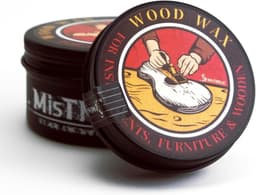
MisTNOisE 100 g is the only product in this comparison explicitly marketed towards cutting boards and tableware. Its listing names beeswax, palm wax, sunflower oil, vitamin E and carnauba wax, with a thin-spread-and-buff method. At the researched point it cost £7.89 and showed 4.7 stars, but that rating came from only 22 reviews and some sampled reviews were not in English. The available listing did not include a declaration showing food-contact compliance, while it also told users not to ingest the product. “Do not ingest” does not necessarily prohibit a correctly cured food-contact coating, but combined with missing documentation it leaves the buyer without a clear basis for confidence. The responsible wording is therefore that the cream is aimed at boards, not that it is proven suitable.

Mineral oil, beeswax and an already-waxed board

UK board makers commonly sell conditioners based on food-grade mineral oil and filtered beeswax. The oil penetrates dry timber and the wax helps create a renewable surface feel. That pattern can help you understand the product type, but it is not permission to mix any mineral oil with any beeswax or use any furniture tin on food wood. If ordinary furniture wax is already on a chopping board, stop using the board for food until you have identified the product and asked its maker what to do. Practical restoration reports often suggest cleaning and sanding back to bare wood before applying a suitable board finish, but that is reported workshop practice, not an official government decontamination method.

Common questions

Is beeswax automatically safe on a chopping board?
No. Suitability applies to the finished product and its intended use, not to one familiar ingredient. A furniture polish may combine beeswax with oils, solvents or fragrance and still be excluded from food-preparation surfaces. Look for a specific food-contact claim and supporting product information.
Can I use Howard Feed-N-Wax on a butcher block?
No. Howard states that Feed-N-Wax is not food safe and its brochure says it is not intended for food-preparation surfaces. Use a separate treatment specifically intended for chopping boards or butcher blocks, following its cure and cleaning instructions.
What does UK food-contact law require?
Assimilated Regulation 1935/2004 requires food-contact materials, under normal or foreseeable use, not to transfer substances at levels that endanger health or unacceptably change food composition, taste or smell. Good manufacturing practice also applies. A marketplace phrase such as “natural beeswax” does not answer those requirements.
Is MisTNOisE cream certified for boards?
The listing aims the 100 g cream at cutting boards and tableware, but the researched raw data contained no compliance document. It also says not to ingest. Ask the seller for clear food-contact information before using it on a board; do not treat the title or 22 reviews as certification.
What do UK board conditioners contain?
Many use food-grade mineral oil with beeswax, creating a penetrating conditioner with a renewable wax component. That is a common pattern, not a universal formula. Check the stated grade, intended use, full ingredient information and directions for the exact product you buy.
Is orange oil unsafe and mineral oil safe?
Those ingredient names alone do not settle the question. Howard’s orange-oil furniture gel is expressly not food safe, while board conditioners often specify food-grade mineral oil. Grade, formulation, manufacture and intended use all matter; avoid turning a product-level decision into a blanket rule about one oil.
What if furniture wax is already on my board?
Stop food use and identify the wax. Ask the manufacturer for removal guidance. Cleaning and sanding back to bare wood is reported practical advice, but it is not a guaranteed government decontamination method, particularly where an unknown product has penetrated end grain.

Related pages

Sources

Public UK sources and maker pages used for the limits on this page. Prices, stars and review counts are the amazon.co.uk listing figures for the ten products compared here.

  1. VOC in Paints, Varnishes and Vehicle Refinishing Products Regulations 2012 (retrieved 17 October 2026)
  2. GOV.UK — food contact materials authorisation guidance (retrieved 17 October 2026)
  3. HSE — The GB CLP Regulation (retrieved 17 October 2026)
  4. HSE CIS27 — Solvents (retrieved 17 October 2026)
  5. Ronseal — how to wax furniture (retrieved 17 October 2026)
  6. Colron beeswax (retrieved 17 October 2026)
  7. Howard Products — Feed-N-Wax food-safe FAQ (retrieved 17 October 2026)
  8. Gilboys — how to use beeswax polish (retrieved 17 October 2026)