Independent comparisons. We may earn from shop links. More info

Wood floor cleaner buying guide for UK homes

Updated: October 2026

Choosing a bottle for engineered oak should start with the finish under your feet, not the fragrance on the label. This wood floor cleaner buying guide puts the decisions in a practical order: identify the finish, choose a usable format, check the surface wording and dose, then compare price. Our [wood floor cleaner comparison](/hub/paints-and-varnishes/wood-floor-cleaner) covers the current amazon.co.uk listings and prices; this guide explains how to decide which type belongs in your home. If you cannot establish whether the floor is lacquered, oiled or laminate, pause before testing a cleaner across the whole room.

Choosing a bottle for engineered oak should start with the finish under your feet, not the fragrance on the label.

Our top picks

On this page

Name the finish before the brand

“Wood floor” can describe several surfaces that need different care. Lacquer or polyurethane forms a film over the timber, so routine care normally means a pH-neutral cleaner and a well-wrung mop. Oil or hardwax oil sits in and close to the grain; it usually has a matching wash for regular cleaning and may later need maintenance oil. Laminate is different again: its visible oak pattern is a printed wear layer over a fibreboard core, not a timber finish that can be nourished. Paperwork is the safest identifier. Check the installer’s quotation, leftover finish tin, care sheet or manufacturer name before relying on appearance. A water bead can be a clue—an intact film finish may hold it more clearly, while oil can darken—but old wax, worn areas and mixed refinishing make that an unreliable test. The oiled or lacquered cleaner guide explains the distinction in more detail. If the boards merely look like oak, use the laminate cleaner guide before buying an oil-rich product.

Spray, squeeze bottle or concentrate

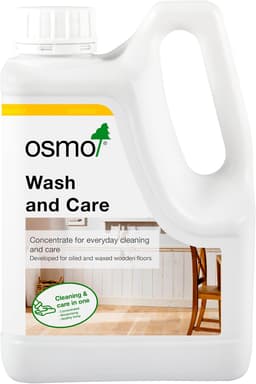
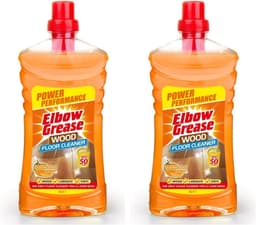
Concentrate usually offers better usable volume, provided you measure it. Osmo’s product sheet gives about 15 ml of Wash and Care per 2 litres of water; that is a product-specific dose, not a universal capful. The Elbow Grease concentrate listing presents two lines—up to 50 litres from each one-litre bottle and two caps in 5 litres. Because cap size and listing text can change, the instructions on the bottle delivered should settle the dose. More cleaner does not mean a cleaner floor: excess surfactant can dry as a tacky film and attract fresh marks. Choose the format you will dose correctly every week, then follow the wood-floor cleaning method with a barely damp pad.

What the label must say

Look first for the surface and finish words. “Wood”, “oiled wood floor” and “wood, laminate and vinyl” are not interchangeable promises. A pH-neutral claim is useful for routine cleaning of many sealed floors, but it does not prove suitability for every oil system or damaged coating. Equally, a product described as nourishing is not automatically appropriate for lacquer, and a wood-oil wash cannot feed a laminate wear layer. Read the usage line and warnings as carefully as the front label. Great Britain’s detergent and chemical-labelling rules require relevant ingredient and hazard information, but the absence of a dramatic pictogram is not permission to ignore the directions.

Price only after the match

In the 16 October 2026 listing set, entry prices sit at roughly £3 to £7, mid-range bottles at about £9 to £13, and larger or specialist products at around £18 to £37. Those bands describe this shelf, not the whole UK market. The £3 Elbow Grease twin-pack looks compelling, but it is not a saving if its fragrance, dose or surface wording does not suit your floor. Likewise, a £17.98 Osmo concentrate can be economical over time because its dose is small, despite the higher bottle price.

Common questions

Do I buy a concentrate or a ready-to-use spray?
Choose a spray for controlled use in a smaller room and a concentrate when you regularly clean a larger compatible area and will measure accurately. A concentrate can be cheaper per clean, but only at the printed dose. Ready-to-use products should not be diluted unless their label specifically tells you to.
What if I cannot tell oil from lacquer?
Check the fitting invoice, care sheet, spare boards or finish container and ask the installer if possible. A water-bead test is only a hint, not proof. Until the finish is confirmed, dry-clean the floor and avoid a whole-room experiment with an oil soap, polish or maintenance product.
Is a pH-neutral claim enough?
No. It is a useful characteristic for many sealed floors, but the cleaner must also name the relevant surface or finish. A neutral liquid labelled for lacquered wood may still be the wrong maintenance product for an oiled system, and “wood” alone does not automatically include laminate.
Why do two doses appear on one listing?
Retail listings may combine old and new copy or describe yield in one place and capfuls in another. Elbow Grease prints both “up to 50 litres” and “two caps in 5 litres”. Follow the current label on the bottle you receive and ask the manufacturer if it remains unclear.
Does GREENGUARD Gold replace the hazard label?
No. GREENGUARD Gold addresses emissions from a product under certification criteria. It does not establish that a cleaner cannot irritate eyes, trigger fragrance sensitivity or harm a pet that walks through wet liquid. Follow the usage and safety label every time.
When is a £3 bottle a false economy?
It is false economy when the finish does not match, the dose is unclear enough to cause residue, or the pack will sit unused because the fragrance is unsuitable. A cheap concentrate can be good value, but correcting a sticky floor or damaged finish costs far more than choosing a matched cleaner.

Related pages

Sources

Public UK sources for the label and floor-care points on this page. Prices, stars and review counts are from the amazon.co.uk listings on 16 October 2026.

  1. HSE — GB CLP (retrieved 16 October 2026)
  2. HSE — Detergents (retrieved 16 October 2026)
  3. HSE — Cleaning products and the corrosive pictogram (retrieved 16 October 2026)
  4. GOV.UK — Submitting chemicals information to the National Poisons Information Service (retrieved 16 October 2026)
  5. Bona — Wood floor cleaner technical data sheet (retrieved 16 October 2026)
  6. Osmo UK — Wash and Care product information (retrieved 16 October 2026)
  7. V4 Woodflooring — Lacquered wood floor care (retrieved 16 October 2026)
  8. Tarkett UK — How to maintain and clean wood flooring (retrieved 16 October 2026)