Independent comparisons. We may earn from shop links. More info

Night briquettes for a log burner: keeping embers until morning

Updated: October 2026

You load the stove before bed, but the useful result is not a fiercely hot room at midnight. It is a controlled, low-output burn that leaves enough glow to revive at breakfast. Night briquettes for a log burner are designed for that job, although neither the word “night” nor an “up to eight hours” claim guarantees success in every stove. This guide explains how to bank them on established embers, what to expect from the bark briquette in our [wood briquettes comparison](/hub/paints-and-varnishes/wood-briquettes), and why the air supply must remain restricted rather than sealed.

You load the stove before bed, but the useful result is not a fiercely hot room at midnight. It is a controlled, low-output burn that leaves enough glow to revive at breakfast.

Our top picks

On this page

What an overnight briquette is for

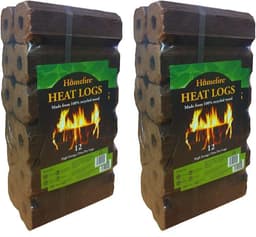
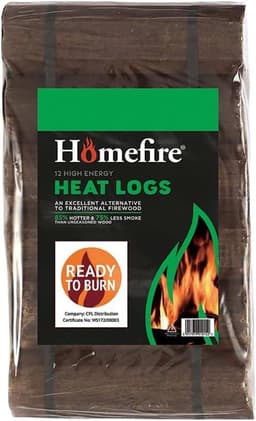
An overnight briquette is intended to smoulder steadily and preserve a bed of embers, not deliver the lively flame and rapid heat of an ordinary heat log. Bark-based blocks are dense and slow-burning. If your priority is quick warmth during the evening, the choices on our best wood briquettes page are a better fit. A Pini Kay briquette or holed heat log can look substantial but still burn too hot and too quickly for banking. Reviews of heat logs in the same seven-product comparison set describe overnight attempts lasting roughly one to three hours. Search results often present Lekto’s “up to eight hours” statement, but Lekto is not among the seven retained products, and that claim does not prove how long another brand will burn.

Embers first, then a low air setting

Start with an established fire and let the normal fuel burn down to a broad, hot ember bed. Open the air while the briquette catches, then reduce it gradually once the surface is burning. For lighting from cold, use our separate guide to burning wood briquettes. The overnight setting should be low, but it should not seal the stove. Closing every vent can produce poor burning, more deposits and potentially dangerous combustion gases. Follow the stove manufacturer’s instructions and learn the response while you are awake. Retailer guidance commonly mentions two or three bark blocks, but that is not a fixed recipe for the British Woodfuel product. Stay within your stove’s permitted fuel load and avoid packing against the glass or baffle.

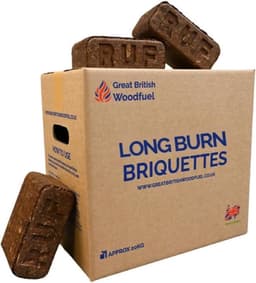
The bark box in this comparison

The retained overnight option is the British Woodfuel long-burn box, ASIN B0DQL6HMKP. At the research date, its amazon.co.uk listing showed £21.95 for 20 blocks, 4.2 stars from 36 reviews and stated 4.50–5 kWh/kg. It also claimed “up to eight hours”, but the unstated box weight prevents a sound price-per-kilogram comparison. Across 13 UK reviews examined for this comparison, some buyers reported a glow remaining in the morning when the blocks were banked as directed. Others mentioned low heat and more ash, while one reported a difficult start and about four hours. The evidence supports a conditional conclusion: the product may hold a stove overnight, but it is not an eight-hour room-heating promise. British Woodfuel is not the same product as Lekto. Do not transfer another manufacturer’s block count or burn time to this box. Our wood briquettes buying guide explains the trade-offs between bark blocks and heat logs.

Overnight burning without sealing the stove

Keep a working carbon monoxide alarm in the correct position, and never treat it as a substitute for a sound appliance and flue. HETAS warns about slumbering fires and advises sweeping chimneys serving wood-burning appliances at least twice a year. Local smoke-control rules still apply at night. GOV.UK advises checking whether your address is in a smoke control area and whether the appliance and fuel combination is permitted. An open fire is a poor match because its airflow cannot be controlled like a closed stove. Treat the first attempt as a daytime rehearsal. If the appliance manual prohibits slumber burning, that instruction ends the experiment. Products Compared may earn a commission from a qualifying purchase at no extra cost to you.

Common questions

What is a night briquette made of?
Night briquettes are commonly compressed softwood bark or a bark-rich wood mixture. Their density and composition are intended to support a slower, lower-output burn than ordinary heat logs. Check the actual packaging, because “overnight” describes the intended use rather than one standard recipe shared by every brand.
Will a Pini Kay or holed heat log last until morning?
It may leave some residue in a particular stove, but it is generally designed for stronger, shorter heat rather than overnight banking. Reviews in this comparison set describe some heat-log attempts lasting only one to three hours. Choose a bark night block when retaining embers is the main goal.
How should I set the air controls?
Let the briquette catch with adequate air, then reduce the supply gradually to a low setting specified or permitted by your stove manufacturer. Do not close every vent. The correct position varies with appliance design and chimney draught, so establish it during an observed daytime trial.
How many night briquettes should I put on?
There is no safe universal number. Some general retailer methods use two or three blocks, but the British Woodfuel evidence does not justify repeating that as its fixed dose. Stay within the appliance manual’s loading limits and account for the physical size and expansion of the blocks.
Do night briquettes heat the room all night?
They are principally meant to retain a low glow and make the morning restart easier. Some heat is released, but reviews of the British Woodfuel blocks repeatedly characterise the output as low. Choose a conventional heat log if evening warmth matters more than surviving embers.
Can I use night briquettes on an open fire?
Do not assume so. An open fire cannot restrict and manage combustion air like a closed stove, and overnight-briquette retailer guidance excludes that use. Follow the fuel label and appliance guidance; if either does not clearly permit the combination, choose another method rather than improvising.
Is it dangerous to close the vents completely?
Yes, starving a burning fuel load of air can cause incomplete combustion, increased deposits and carbon monoxide. Keep the air low rather than sealed, maintain the flue and use a working carbon monoxide alarm. If you cannot achieve a stable burn within the manufacturer’s instructions, do not leave the stove running overnight.

Related pages

Sources

Public UK sources for the moisture rule, smoke control, calorific values and sweeping advice. Prices, stars and review counts are the saved amazon.co.uk lines for the seven listings. Seller burn times are not measured results.

  1. Air Quality (Domestic Solid Fuels Standards) (England) Regulations 2020 (retrieved 17 October 2026)
  2. Selling wood for domestic use in England (retrieved 17 October 2026)
  3. Ready to Burn — consumers (retrieved 17 October 2026)
  4. Smoke control areas: the rules (retrieved 17 October 2026)
  5. HETAS — wood, coal and smokeless fuel (retrieved 17 October 2026)
  6. Forest Research — typical calorific values (retrieved 17 October 2026)
  7. ISO 17225-3:2021 — graded wood briquettes (retrieved 17 October 2026)
  8. Defra Burn Better (retrieved 17 October 2026)