Independent comparisons. We may earn from shop links. More info

Wood briquettes buying guide for UK stove owners

Updated: October 2026

You are buying one bag for a log burner, but the shelf offers heat logs, Pini Kay briquettes and dense night blocks as if they were interchangeable. This wood briquettes buying guide helps you choose the behaviour you need before comparing brands. Start with the [seven wood briquettes in our main comparison](/hub/paints-and-varnishes/wood-briquettes), then check the fuel type, the Ready to Burn evidence and your appliance instructions. By the end, you should know whether you need quick room heat, a longer controlled burn or embers that may last into the morning, and which claims on an amazon.co.uk listing deserve a closer look.

You are buying one bag for a log burner, but the shelf offers heat logs, Pini Kay briquettes and dense night blocks as if they were interchangeable.

Our top picks

On this page

Heat log, Pini Kay or night block

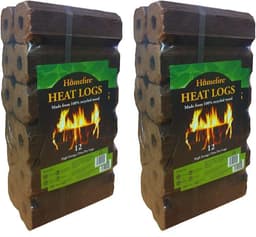
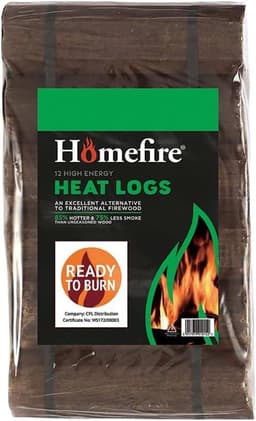
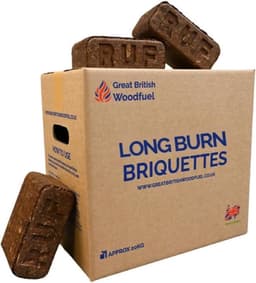
Ordinary heat logs are compressed sawdust blocks intended to provide useful room heat without taking up as much storage space as loose logs. Pini Kay briquettes are also compressed wood, but their recognisable angular shape and central hole give them a different burning profile. They are generally chosen when you want a lively, hot burn rather than slow overnight banking. If that is your priority, the best wood briquettes guide matches products from the retained seven-bag set to specific jobs. Night briquettes are usually denser bark-based blocks designed to burn more slowly and preserve embers. Buy them for controlled duration, not because you expect the strongest flames for eight hours. Read the dedicated night briquettes guide if morning embers are the deciding factor.

Ready to Burn and the WS number

In England, wood briquettes sold in retail quantities below 2 cubic metres fall within the wood-fuel rules and should carry the Ready to Burn mark with a certification number. The scheme indicates moisture content of 20% or less and includes checks that briquettes are made from clean virgin wood or an equivalent clean wood source. On a marketplace listing, look for the logo and a visible WS certification number rather than accepting an unsupported phrase such as “ready to burn”. None of the seven retained amazon.co.uk listings in this comparison showed a WS number at the time of research, so the accurate result for those pages is “not shown”, not “certified”.

Smoke control and dry storage

Ready to Burn does not mean smokeless and does not by itself make wood briquettes an authorised fuel in a smoke control area. GOV.UK states that wood is not an authorised fuel; you may burn it in a smoke control area only in an appliance that is exempt for that fuel and used according to its conditions. Check your postcode and appliance on the official smoke-control guidance before buying a large quantity. Keep the bag dry indoors: HETAS advises against leaving briquettes in an open log store, where compressed blocks can take up moisture and break down.

What this amazon.co.uk shelf costs

In the researched seven-product shelf, entry-level bags were roughly £9–£11, the middle band was about £15–£19, and the top was around £22. These are shelf-price bands rather than a promise that one type is cheaper to run. Compare the price per kilogram using the quantity you can verify, but inspect conflicting fields first. One Ecoblaze listing placed 10 kg in the title while its unit count indicated 14,000 g. A Roastie-Toastie listing showed 20 kg in the title but 14.5 kg as the item weight. The briquettes versus kiln-dried logs guide explains when compact fuel earns its premium and when familiar logs remain the more practical choice. This guide is based on amazon.co.uk listing information and public UK guidance, not a laboratory burn test. Products Compared may earn a commission from a qualifying purchase at no extra cost to you.

Common questions

Are heat logs the same product as wood briquettes?
Heat logs are a type of wood briquette: both are compressed wood fuel. The broader term also covers shapes and formulations intended for different jobs, including Pini Kay briquettes and bark-based night blocks. Treating every briquette as the same can lead you to buy a fast, hot fuel when you wanted a slow banked fire.
Should I buy Pini Kay or a night briquette?
Choose Pini Kay when you value a hotter, more responsive evening burn. Choose a night briquette when your aim is slower burning and retained embers rather than strong flames. Neither choice guarantees a stated duration because stove size, fuel load, chimney draw and air control all affect the result.
Does Ready to Burn mean the fuel is smokeless?
No. For wood briquettes, Ready to Burn concerns low moisture and clean wood-fuel requirements; it does not turn wood into an authorised smokeless fuel. The same logo can appear under a different scheme for manufactured solid mineral fuel, so check the certification category instead of relying on the logo alone.
Can I burn ordinary wood briquettes in a smoke control area?
Only if your appliance is exempt for burning that fuel and you follow its stated conditions. Wood is not an authorised fuel simply because it is dry or Ready to Burn. Use the GOV.UK smoke-control checker and the appliance’s exemption and manual before ordering briquettes for a controlled area.
What is a fair amazon.co.uk price for a small bag?
The researched shelf ranged from about £9–£11 at entry level, through roughly £15–£19, to around £22. Compare the verified kilograms, delivery terms and fuel type before deciding that a lower shelf price is better value. Current amazon.co.uk prices can change, so these are reference bands rather than fixed offers.
Why do two weight figures appear on one listing?
Amazon titles, item-weight fields and unit counts may be supplied or updated separately, so they can conflict. Do not choose whichever number produces the cheapest price per kilogram. If the title and structured field disagree, treat the pack size as unconfirmed and ask the seller what quantity the current order contains.
Is “100% recycled wood” enough evidence that it is safe to burn?
No. The phrase does not tell you whether painted, treated or contaminated wood has been excluded. Look for Ready to Burn wood-fuel certification with a WS number and check the manufacturer’s material information. If that evidence is absent, do not infer clean fuel from a recycling claim alone.

Related pages

Sources

Public UK sources for the moisture rule, smoke control, calorific values and sweeping advice. Prices, stars and review counts are the saved amazon.co.uk lines for the seven listings. Seller burn times are not measured results.

  1. Air Quality (Domestic Solid Fuels Standards) (England) Regulations 2020 (retrieved 17 October 2026)
  2. Selling wood for domestic use in England (retrieved 17 October 2026)
  3. Ready to Burn — consumers (retrieved 17 October 2026)
  4. Smoke control areas: the rules (retrieved 17 October 2026)
  5. HETAS — wood, coal and smokeless fuel (retrieved 17 October 2026)
  6. Forest Research — typical calorific values (retrieved 17 October 2026)
  7. ISO 17225-3:2021 — graded wood briquettes (retrieved 17 October 2026)
  8. Defra Burn Better (retrieved 17 October 2026)