Independent comparisons. We may earn from shop links. More info

How to use stain block primer

Updated: October 2026

The tin is on the pasting table, the brown ring is still visible, and you want to know the order of work before the first brush goes in. How to use stain block primer comes down to four checks: the surface is hard and dry, the stain coat is opaque, the topcoat covers the whole plane, and the brush cleaner matches the binder. This page does not rank products. Which tin to buy sits on the [stain block primer comparison](/hub/paints-and-varnishes/stain-block-primer) and in the [buying guide](/hub/paints-and-varnishes/stain-block-primer/sub/stain-block-primer-buying-guide). The Products Compared editorial team used amazon.co.uk listings and UK guidance on 16 October 2026. No laboratory test was run. A qualifying purchase can earn a commission.

The tin is on the pasting table, the brown ring is still visible, and you want to know the order of work before the first brush goes in.

Our top picks

Zinsser Zinsser Cover Stain 1 litre

Best overall

Zinsser Zinsser Cover Stain 1 litre
9.4/10about £17.48
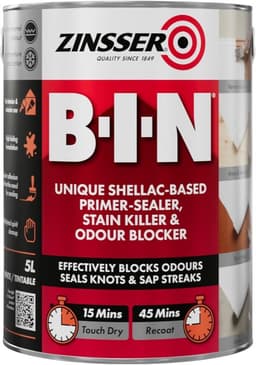
Zinsser Zinsser B-I-N 5 litre

Alternative

Zinsser Zinsser B-I-N 5 litre
8.3/10about £96.95
On this page

Check it is dry enough to paint

Stop if the ceiling is soft, cool, dripping, or still growing. A stain block hides a historic mark. It does not finish a leak, and painting a live stain covers the evidence a plumber would use. Zinsser UK’s guide for undecorated water-stained surfaces says the moisture content should not exceed 12% before B-I-N, and loose material should come off first. Checkatrade’s leak advice is the same in plain language: do not paint damp plasterboard, and isolate electrics if water has reached them. Press the board. If it gives, leave the tin shut. A hard, dry, sharp-edged tide mark after a repair is the surface this sequence is for. If you are still deciding whether the ring is historic, read paint over water stains before you mix anything.

Prepare the mark

Scrape or sand only the loose, flaking paint. A sound film can stay. Wash grease, nicotine film, or kitchen splashes with a degreaser or sugar soap suited to the surface, then let it dry again. Dust left in the grain will print through a thin shellac coat, which UK reviewers already describe as thin on B-I-N. Knots and sap streaks are a special case. Cover Stain’s data sheet tells you to spot-prime them with B-I-N first, then prime the whole board with Cover Stain. Painting the oil primer straight over a weeping knot is the mistake that brings tannin back through the gloss. Mask what you cannot clean, and open the window before you open a solvent tin. Keep the lid on the can when you are not loading the brush. HSE sheet INDG273 and the brush and roller sheet OCE2 treat ventilation and rag disposal as part of the job, not as an optional extra.

Coat until the mark is opaque

Brush or roll the stain block over the mark and a little past it, and look at the colour when the film is dry, not when it is wet. If you can still see the brown, apply another coat of the same product. Do not switch to emulsion to “see if it holds”. Emulsion is what failed the first time.

Topcoat, clean-up, and fresh air

A sealed patch in the middle of an old ceiling flashes under a raking light even when the brown has gone. Use a high-hiding emulsion or the gloss system you already planned. One UK Cover Stain reviewer left the primer much longer than the attribute before emulsion. Do not rinse an oil primer under the tap and hope. Keep the window open while solvent films are drying, and do not sleep in a room that still smells of the 5 litre tin. The aerosol needs the same fresh air, at a smaller scale. If the plaster is soft, the electrics are wet, or you suspect rising damp, stop and call a leak specialist or a decorator rather than buying a second chemistry. Knot-versus-oil choices, if you have not bought yet, are in Zinsser B-I-N vs Cover Stain.

Common questions

Do I paint the stain only, or the whole ceiling?
Prime the mark until it is opaque, and take the primer a little past the edge. Then topcoat the whole ceiling or wall. A disc of emulsion on the ring is how the patch flashes and how the edge often brings the mark back. The primer can stay local. The finish paint should not.
How many coats of stain block?
Plan one coat, then another wherever the stain still shows when the first is dry. Johnstone's owners needed several coats on heavy ceiling marks. Zinsser says some stains need a second coat. Bartoline’s directions say two or three thin spray coats. More primer will not help a ceiling that is still wet.
Can I emulsion the same day?
Only once the primer is dry and opaque. B-I-N’s UK page points to about 45 minutes. Cover Stain’s UK page points to about 2 hours, while the 1 litre attribute calls 2 hours a full cure, which clashes with longer Zinsser cure times. Polar’s bullets say 6 hours and the attribute says 4. If the room still smells, wait.
What do I clean the brush with?
White spirit for Cover Stain. Denatured alcohol or an ammonia solution for B-I-N. Soapy water for water-based tins, including Polar. Johnstone's does not state a cleaner in the amazon attributes, and the mixed binder lines mean you should read the tin in your hand. Do not pile solvent rags in a corner.
What if the plaster is soft?
Stop. Soft or dripping board is a leak, not a primer job. Stain block will not harden it, and paint can hide a mark that is still spreading. Isolate wet electrics and fix the cause. Paint when the repair is hard and dry. Above 12% moisture is outside the Zinsser figure for B-I-N on water stains.
When should a decorator or a leak specialist take over?
Call a leak specialist for a dripping ceiling, a growing stain, wet electrics, or suspected rising damp. Get advice before large-scale sanding of pre-1960s paint, or before spraying solvent beyond a small household spot. A dry tide mark or a ventilated smoke-stained room can still be a careful DIY job.

Related pages

Sources

Public UK sources for the primer rules, ventilation and manufacturer figures on this page. Prices, stars and review counts are the amazon.co.uk listing lines in this batch.

  1. SI 2012/1715 — VOC in paints and varnishes (retrieved 17 October 2026)
  2. HSE INDG273 — Solvents and ventilation (retrieved 17 October 2026)
  3. Zinsser UK — B-I-N (retrieved 17 October 2026)
  4. Zinsser UK — Cover Stain (retrieved 17 October 2026)
  5. Zinsser UK — Water-stained surfaces (retrieved 17 October 2026)
  6. Checkatrade — Water leaking from a ceiling (retrieved 17 October 2026)
  7. Johnstone’s 750 ml retailer notes (retrieved 17 October 2026)
  8. B&Q — Bartoline stain blocker spray directions (retrieved 17 October 2026)