Independent comparisons. We may earn from shop links. More info

How to apply silicate paint

Updated: 23 October 2026

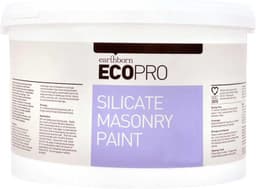
Standing by a brick gable or a rendered terrace with a 5 L tub of Earthborn Ecopro, the first job is the primer sequence for the wall underneath. Potassium silicate cures by reacting with a mineral substrate, not by drying into a plastic skin, so the wrong primer, a cold wall or tap water in the kettle spoils the bond. This page is the preparation, the coat order, the drying windows and the stop points. The four tins are on the [silicate paint comparison](/hub/paints-and-varnishes/silicate-paint). Peter F. updated this page on 23 October 2026. Our amazon.co.uk links may earn a commission at no extra cost to you.

Standing by a brick gable or a rendered terrace with a 5 L tub of Earthborn Ecopro, the first job is the primer sequence for the wall underneath.

Our top picks

On this page

Check the wall before you open the tin

Inspect for loose mortar, algae, surface salts and damp. Silicate paint needs a sound, clean, salt-free mineral base such as stone, brick, concrete or cured render. It will not bond to wood, metal, plastic, glass or a silicone water-repellent, and Earthborn Silicate Primer is unsuitable for engineered brick. Scrub off chalky limewash, distemper or other water-soluble coatings. Rising damp is a building repair before any painting. Pack and primer choice sit in the silicate paint buying guide and in best silicate paint. On Earthborn’s 2026 sheet, air and surface stay above 8°C, the wall is shielded from direct sun, rain and cold for at least 24 hours, and masonry moisture reads under 15%. Older reseller PDFs still quote 20%. Follow the 2026 under-15% limit for these tins unless a specifier directs otherwise. Keim’s notes are a different window: 5–30°C, no rain or immediate likelihood of rain, and moisture to about 5 mm at no greater than 18% by volume. Do not average the two makers. Fresh lime waits are on silicate paint for lime render.

Bare mineral walls

Unpainted stone, absorbent brick and cured mineral render use the two-part mineral system so the binder can petrify in the pores. Primer thinner is water. Paint thinner is Silicate Primer. Tap water in Earthborn Silicate Masonry Paint weakens the binder before it touches the wall. If the job needs more than one tub, box the tins and stir before and during work. Brush or roll one thin, even coat of Earthborn Silicate Primer and keep a wet edge. Never put this primer through a spray gun. Wait about 12 hours at 20°C and 65% relative humidity. The primer adds about sd 0.002 m. Thin the first coat of masonry paint by 10–20% with Silicate Primer and work a full bay to a natural break. Leave that coat 6–12 hours past its 1-hour touch-dry stage, at the same temperature and humidity, then brush or roll an undiluted second coat the other way, still holding a wet edge. Roll back into a drying edge and the join cures as a lap mark. Uneven shade while a mineral coat lightens is normal, so do not over-roll a damp patch. A wall that is still acrylic is a different first tin, and that decision is silicate paint vs acrylic.

Walls that already have a coating

Older sheets, written before Bonding Primer, said conventional masonry paint had to come off completely. Under Earthborn’s 2026 system you can bridge sound old acrylic or unknown paint with Earthborn Bonding Primer. Never thin the paint with water. The bridge is less vapour-open than the Silicate Primer route. On sound existing paint, brush or roll one full coat of Bonding Primer, about 4–7 m² per litre, touch dry in about 1 hour and ready to overcoat in 4–6 hours, then two undiluted coats of Silicate Masonry Paint 6–12 hours apart. Do not use Bonding Primer on fresh lime plaster or on highly absorbent untreated mineral walls. If the old paint is sound mineral silicate and the bare patches are mineral, Silicate Primer can go across both. If the old paint is unknown, roll Bonding Primer across everything, or spot-prime bare mineral with Silicate Primer before a full Bonding Primer coat.

Glass, spray, and where you stop

Potassium silicate reacts with silica in glass, ceramics and metal. Mask windows, sills, metal pipes and woodwork before you open a tin, and wash stray splashes off at once before they etch the pane. The 2022 safety data sheet says the potassium silicate fraction irritates skin and eyes, so wear goggles and gloves. If a splash enters your eyes, rinse with water and get medical advice. Clean brushes and rollers with water. Let leftover paint dry solid rather than pouring it away, and recycle empty tins where you can. On a large elevation, Earthborn Silicate Masonry Paint, never the Silicate Primer, can go through an airless sprayer at a minimum of 120 bar, at least 2.5 L/min, 250–300 g/m², and a 0.68 mm nozzle maximum (0.58 mm recommended). Stop and call a professional if the wall has live rising damp, if a pre-1960s coating may contain lead, if the facade is listed and needs consent, or if the job needs high scaffolding or spray gear you do not know.

Common questions

What is the coat order on a bare mineral wall?
On clean, bare mineral masonry under Earthborn’s 2026 system, apply one thin, even coat of Earthborn Silicate Primer by brush or roller and let it dry for about 12 hours at 20°C and 65% relative humidity. Next, apply a first coat of Earthborn Silicate Masonry Paint thinned 10–20% with Silicate Primer. After 6–12 hours, finish with one full, undiluted coat in the opposite direction.
What changes if the wall already has acrylic paint on it?
If the existing acrylic or unknown masonry paint is sound, Earthborn’s 2026 system uses one full coat of Earthborn Bonding Primer instead of Silicate Primer. Bonding Primer covers about 4–7 m² per litre, dries to the touch in about 1 hour and takes paint after 4–6 hours, followed by two undiluted coats of Silicate Masonry Paint.
Can I thin the first coat of silicate paint with water?
No. You must never thin Earthborn Silicate Masonry Paint with water. When the first coat on a bare mineral wall needs 10–20% dilution, thin the paint only with Earthborn Silicate Primer. Water is the thinner only for the Silicate Primer itself, and for washing tools afterwards.
How warm and how dry does the wall need to be?
Under Earthborn’s 2026 sheets, air and wall temperatures must stay above 8°C, wall moisture must be under 15%, and the surface must avoid rain, cold and direct sun for at least 24 hours. Keim’s instructions are a separate window for Keim tins: 5–30°C with no rain or immediate likelihood of rain, and near-surface moisture to 5 mm no greater than 18% by volume.
Can I apply silicate primer and paint with a spray gun?
Never put Earthborn Silicate Primer through a spray gun. Apply it only by brush or roller in thin, even coats. Earthborn Silicate Masonry Paint can go through an airless sprayer if the machine delivers at least 120 bar and 2.5 L/min through a 0.58 mm recommended nozzle (0.68 mm maximum) at 250–300 g/m².
Why does a drying wall look patchy, and should I roll back over it?
Silicate coatings often look uneven while moisture leaves pores of different depth, and the film lightens as it dries. Do not over-roll or touch up damp patches while the coat cures. Working back into a half-set mineral layer disturbs the bond and leaves marks.

Related pages

Sources

Public sources from the research digest, last checked on 22 October 2026. Shelf prices and the one star line are the amazon.co.uk figures in the display file, dated 21 October 2026. The price band is this set, not a market average. No listing was lab-tested.

  1. VOC Regulations 2012 (retrieved 22 October 2026)
  2. Keim: silicate paints (retrieved 22 October 2026)
  3. Keim Soldalit (retrieved 22 October 2026)
  4. Keim application notes (retrieved 22 October 2026)
  5. Earthborn Silicate Masonry Paint data sheet 2026 (retrieved 22 October 2026)
  6. Earthborn FAQs (retrieved 22 October 2026)
  7. Earthborn silicate paint safety data sheet 2022 (retrieved 22 October 2026)
  8. Historic England: redecorate (retrieved 22 October 2026)