Independent comparisons. We may earn from shop links. More info

How to apply hard wax oil

Updated: October 2026

If you are about to coat a bare wooden floor, the most common failure is not choosing the wrong brush but leaving too much finish on the boards. Learning how to apply hard wax oil means preparing evenly, laying two thin coats and following the drying time on your exact tin. Our [hard wax oil comparison](/hub/paints-and-varnishes/hard-wax-oil) helps you choose the product; this guide deals with the work after it arrives. Plan the room so you can maintain ventilation, keep people and pets off the surface, and leave rugs outside until the finish has cured. Most importantly, decide how you will make oily cloths safe before opening the tin.

If you are about to coat a bare wooden floor, the most common failure is not choosing the wrong brush but leaving too much finish on the boards.

Our top picks

On this page

Prepare the wood and the room

Hard wax oil needs clean, dry, bare timber. Remove old paint, varnish or incompatible finish rather than expecting oil to penetrate through it. Fill or repair defects with a material accepted by the finish maker, then sand the whole connected area evenly. A patch sanded to a different grit can absorb oil differently and remain visible after both coats. The correct final grit depends on the system. Osmo specifies P120–150 for floors, while Fiddes says P150. Vacuum thoroughly and remove residual dust without soaking the boards. Powered sanding produces fine wood dust. The Health and Safety Executive advises effective extraction and suitable respiratory protection. Employ a professional for a whole house, awkward staircase or an unknown old coating. Stir thoroughly.

Put on a genuinely thin coat

Apply the product with the grain using the tool named by the maker, such as a short-pile roller, floor brush or lint-free cloth for small areas. The aim is a thin, even layer, not a glossy wet film sitting on the timber. Brush out ridges, pools beside skirting and heavy overlaps, then wipe excess where the product instructions require it. A thick coat can remain tacky, wrinkle or turn whitish with a Raw product while the surface appears dry. Whether to sand between coats is product-specific. Osmo, Fiddes and Treatex do not share Libéron's instruction to use 240 grit between coats.

Wait for the brand's drying time

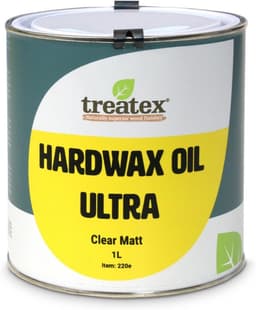
Drying times are not interchangeable. Osmo Polyx-Oil 3032 Clear states 8–10 hours under suitable ventilation, while Osmo Raw and coloured products state about 24 hours. Fiddes gives 4–6 hours, Treatex gives 3–6 hours, and Libéron gives eight hours before the second coat and 24 hours after it. These are maker figures, not guarantees for a cold October room. A cool board, poor airflow, high humidity or a thick application can extend the wait. If the first coat is tacky, do not trap it under another. Pack and timetable choices sit in the hard wax oil buying guide.

Use the room carefully and handle cloths safely

Dry enough for another coat is not the same as fully cured. Osmo gives roughly 10–14 days before normal use in its floor guidance. Treatex allows careful use after eight hours and rugs after 72 hours. Libéron advises avoiding standing water for about three weeks. Follow the exact schedule on your tin. Do not cover uncured oil with rugs, cardboard taped down or plastic. Oil-soaked cloths deserve separate planning because drying oils release heat as they oxidise. UK fire services warn that piled or folded linseed-oil cloths can self-heat and ignite; hard wax oil makers issue similar disposal cautions. Never leave used cloths bunched in a bucket, bag or workshop corner. Follow the tin's disposal directions: commonly, cloths are laid individually flat outdoors to dry safely away from buildings and combustibles, or fully soaked in water and sealed in a suitable metal container before disposal under local rules. For food-contact checks, see hard wax oil for kitchen worktops.

Common questions

What grit should I sand to before hard wax oil?
Use the range printed for your product. Osmo specifies P120–150 for floors and Fiddes specifies P150. Sand the connected surface consistently, extract the dust and vacuum carefully. Going much finer can reduce absorption, while leaving coarse scratches makes them stand out once the grain darkens.
Do I sand between coats?
Only when the maker instructs you to. Libéron calls for a light 240-grit sanding between coats, while the Osmo, Fiddes and Treatex systems covered here use different directions. Combining rules from two brands can damage the first coat or create an uneven colour.
How thin should a coat be?
Thin enough that the timber is evenly wetted without pools, ridges or a paint-like film. Spread a small load well and inspect across the light. Stated coverage is a useful warning: if you consume far more than the maker's figure on smooth prepared wood, the coat may be too heavy or the timber unusually absorbent.
When can I walk on the floor or replace rugs?
Use the exact maker schedule. Treatex states careful use after eight hours and rugs after 72 hours, while Osmo gives a longer cure window and advises against rugs during cure. Dry-to-touch does not mean fully hardened, so keep coverings off and minimise traffic.
Can I apply hard wax oil over varnish?
Not as a normal shortcut. Varnish blocks the oil from penetrating consistently, so the old film generally needs to be sanded back to clean bare timber. Read hard wax oil versus varnish before changing systems.
Why is the finish still sticky?
The usual causes are too much product, low temperature, weak ventilation or insufficient time. Do not add another coat over tackiness. Check the label, improve airflow safely and contact the manufacturer if the finish remains sticky after suitable conditions and an extended wait.
When should I call a floor professional?
Bring in a professional for a whole-house refinish, difficult stairs, badly uneven boards, uncertain old coatings or a floor that needs heavy machinery. Professional sanding is also sensible when you cannot control dust or maintain a consistent finish across a large open area.

Related pages

Sources

Public UK sources used for the VOC, food-contact and sanding-dust points on this page. Prices, stars and review counts are from the amazon.co.uk listings in the mid-October 2026 extracts.

  1. SI 2012/1715 — VOC in paints, varnishes and vehicle refinishing products (retrieved 16 October 2026)
  2. Osmo UK — Polyx-Oil Original product information (retrieved 16 October 2026)
  3. Osmo UK — Polyx-Oil Effect Raw product information (retrieved 16 October 2026)
  4. Fiddes — Hard wax oil (retrieved 16 October 2026)
  5. Treatex — Hardwax Oil Ultra (retrieved 16 October 2026)
  6. Libéron — Hard wax oil (retrieved 16 October 2026)
  7. HSE — Cutting and sanding wood (retrieved 16 October 2026)
  8. Osmo UK — TopOil (retrieved 16 October 2026)