Independent comparisons. We may earn from shop links. More info

How to varnish furniture

Updated: 23 October 2026

You have a water-based tin and an indoor table or cabinet, and the surface is still soft on Sunday. How to varnish furniture, with these tins, is mostly waiting and a light brush. Prices are on the [furniture varnish comparison](/hub/paints-and-varnishes/furniture-varnish). Clean the wood, lay thin coats, then tell touch-dry from cured. Sheen and pack size are on the [furniture varnish buying guide](/hub/paints-and-varnishes/furniture-varnish/sub/furniture-varnish-buying-guide). We used the maker sheets on 21 October 2026 and did not varnish a piece. A qualifying purchase can earn a commission at no extra cost to you.

You have a water-based tin and an indoor table or cabinet, and the surface is still soft on Sunday. How to varnish furniture, with these tins, is mostly waiting and a light brush.

Our top picks

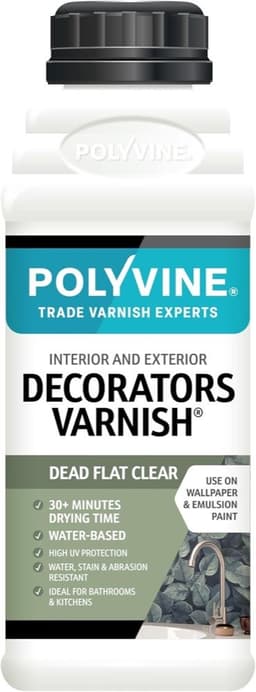
Polyvine Polyvine dead flat 500 ml

Best overall

Polyvine Polyvine dead flat 500 ml
9.4/10about £16.48
Ronseal Ronseal matt clear 750 ml

Best value

Ronseal Ronseal matt clear 750 ml
8.8/10about £16.65
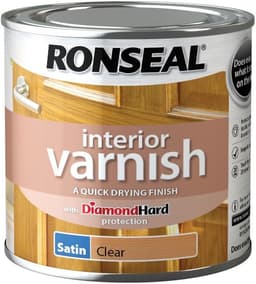
Ronseal Ronseal satin clear 250 ml

Alternative

Ronseal Ronseal satin clear 250 ml
8.1/10about £10.67
On this page

Prepare the wood

Ronseal’s May 2013 sheet starts with a white-spirit wipe for wax and grease, then a synthetic brush. White spirit is the cleaner, not the varnish. Do not use steel wool. The Ronseal trade quick-dry sheet, a different product, says 120 grit then 240 grit before the last coat. Do not treat its 24 hour cure as the cure for the £10.67 satin clear. Wear a mask while you sand. If the piece is chalk paint or emulsion, read varnish over chalk paint. Polyvine says about 10% water on porous surfaces. Do not copy that onto a Ronseal or Varathane tin that does not print it.

Put the varnish on

Stir the tin. Do not shake it. Wickes and Polyvine say shaking leaves pinholes. Brush with the grain and keep a wet edge. Ronseal’s sheet says the coat looks milky and that you should not over-brush it. UK reviews of the satin clear and of Varathane describe that milky liquid drying clear. One UK reviewer of the 750 ml Ronseal used four coats on a table about 2 m by 1 m. Clean a water-based brush in water. A solvent varnish is a different product, on water based vs oil based varnish.

Coats, sanding, and cure

Wickes talks about two or three further coats after the first. Polyvine’s dead-flat build for painted work is two satin coats, then one dead flat. Four coats of the 750 ml matt clear was a worn tabletop, not a target for skirting that already looks even. Sand only after the recoat window, and only lightly. The 2013 retail sheet says touch-dry in 20 minutes and recoat after 1 hour. The satin clear 250 ml bullet says recoat after 2 hours. Polyvine’s Amazon text says 30 minutes or more to dry and 5–7 days to cure. Brewers’ card says 1–4 hours. A UK review of the satin clear found a bottle indent after two days.

When it goes wrong

Streaks usually mean you chased a coat that had already gone milky. Tackiness on a large area, reported with the 750 ml Ronseal, often means a cold room or a thick coat. White runs, which a Varathane reviewer described, set if you miss them while wet. A bottle mark after two days means the film was not cured. Stop if you suspect lead paint, if the job is a floor or a whole staircase, if the wood is exterior, or if you need toy or food-contact paperwork these listings do not show. Ronseal’s sheet excludes floors and exterior use. Polyvine excludes exterior bare timber.

Common questions

How many coats of varnish should I put on furniture?
Two or three coats is the retailer range, once the first coat has sealed the grain. A UK reviewer used four coats of the 750 ml Ronseal matt clear on a table about 2 m by 1 m. That is reasonable for a top that takes wear. Stop when the film is continuous. Thick single coats stay soft.
Do I sand between coats?
Yes, lightly, and only after the coat is ready to recoat. You are knocking off dust nibs. The Ronseal trade sheet names 240 grit before the last coat on that trade product. Sanding a film that is merely touch-dry tears it. Wear a mask. Wood dust is the hazard the Health and Safety Executive flags.
Why does the varnish look milky?
These water-based tins go on milky and, in UK reviews of Ronseal and Varathane, dry clear. Ronseal’s sheet tells you not to over-brush that stage. If a dried coat stays cloudy, the coat was too thick, the room was cold, or the surface was damp. Let it harden, then sand and recoat thinly.
Can I use the table the same day?
You can usually recoat the same day. You should not treat the table as cured the same day. Ronseal’s 2013 sheet says recoat after 1 hour. The satin clear 250 ml bullet says 2 hours. A UK review found a bottle indent after two days. Polyvine’s Amazon text puts full cure at 5–7 days.
What brush should I use?
A synthetic brush. Ronseal’s sheet and Polyvine both name one, and Wickes pairs it with water-based indoor varnish. Do not shake the tin, and tip off with the grain. Brewers says rollers are not recommended for Polyvine because they stipple.
The film is tacky, or a bottle has marked it. What went wrong?
The coat was probably too thick, the room too cold, or the weight went on before the film had cured. One UK review of the satin clear shows a light bottle marking the surface after two days. Give it the rest of the cure window. Do not pile another heavy coat onto a soft film.
When should I stop and call a professional?
Stop if you suspect lead paint, if the job is a floor or a whole staircase, if the wood is exterior, or if you need a toy or food-contact approval these listings do not show. Ronseal’s sheet excludes floors and exterior use. Polyvine excludes exterior bare timber.

Related pages

Sources

Public sources from the research digest, shelf snapshot 21 October 2026. Shelf prices and star lines are the amazon.co.uk figures in the display file. The price band is this set, not a market average. No listing was lab-tested.

  1. VOC in Paints, Varnishes and Vehicle Refinishing Products Regulations 2012 (retrieved 21 October 2026)
  2. Ronseal interior varnish data sheet, May 2013 (retrieved 21 October 2026)
  3. Ronseal interior varnish (retrieved 21 October 2026)
  4. Polyvine Decorators Varnish (retrieved 21 October 2026)
  5. HSE woodworking hazards (retrieved 21 October 2026)
  6. Wickes: applying varnish, stain, wax and oil (retrieved 21 October 2026)
  7. ManoMano UK furniture varnish guide (retrieved 21 October 2026)
  8. Toys (Safety) Regulations 2011 (retrieved 21 October 2026)