Independent comparisons. We may earn from shop links. More info

How to use a wallpaper scorer

Updated: October 2026

The scorer is in your hand and the steamer is already heating, which is the moment most walls get gouged. How to use a wallpaper scorer is mostly about order and pressure: the wheels only make holes, and moisture does the lifting. You should finish knowing when to peel, when to score, and when to stop because a wheel has locked. Product choice stays on our [wallpaper scorer comparison](/hub/painting-supplies/wallpaper-scorer). Prices there are amazon.co.uk figures from 15 October 2026, noted by the Products Compared editorial team, with no lab test. A qualifying purchase can earn a commission at no extra cost to you.

The scorer is in your hand and the steamer is already heating, which is the moment most walls get gouged.

Our top picks

On this page

Score the face, do not dig

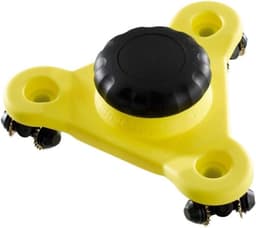
The spikes pierce the decorative face so water, stripper, or steam can reach the paste. If you lean until you feel the plaster, you have gone through the paper and into the skim. Test a patch about the size of a dinner plate, low on the wall. Score it, wet it, and see whether the face softens and the plaster stays. If the patch lifts the skim, stop. Painted woodchip has its own maker limits on the score painted woodchip wallpaper page. One Coral UK text describes a thumb caught under a wheel.

The order of work

Peel a vinyl face before you score. Zinsser UK is explicit: lift the vinyl skin, then score the backing, then use stripper. Scoring the vinyl itself punches the wrong layer. If the sheet is non-woven and a corner already dry-strips, you may not need the scorer. That decision sits on the wallpaper scorer buying guide. After the holes are in, wet or steam, then scrape with a flat blade while the paste is soft. A maker line that "eliminates steam" belongs to a named stripper, not to every wall. A steam plate is a short contact. DIY Doctor and Speedy Hire both say not to leave the plate in one spot.

Pressure, circles, and a locked wheel

Overlap the orbits so the face looks peppered, not sliced. Straight drags are what UK Coral texts say fails: the spikes track in a groove and you press harder to compensate. Light pressure means the tool rolls without you hanging your weight on the handle. The moment a wheel stops and starts to plough, stop. If it will not spin, that tool is finished for the day. Do not puncture plasterboard. Switching the whole wall to a craft knife is a different page: wallpaper scorer vs Stanley knife.

Edges, sockets, and ladders

A wide head does not sit in a corner or along a ceiling junction. Score the open field with the wheels, and treat the last few centimetres as a slower job. Dunelm still wants care at the ceiling line so you do not tear the ceiling paint. A metal rule against the junction gives you a stop. Turn sockets off at the breaker before water or steam gets near a back box. A stair ceiling that needs you stretched off the steps is not a scoring problem. Set the steam plate down off the wall when you climb.

When a professional should take over

Stop if the texture might be a coating rather than wallpaper. HSE asbestos essentials a28 covers textured coatings: do not sand or scrape through a coating that may contain asbestos, and large-scale steaming of that coating is notifiable non-licensed work. Woodchip is paper. Stop if the ceiling is out of safe reach, especially over a stair. If the wheels have locked, replace the tool before the next room.

Common questions

Do I score before or after I wet the wall?
Score the dry face first, then wet or steam, so the wheels cut paper instead of skating on slurry. Peel vinyl off before that score. If a first soak shows the paste already releasing, you can skip further scoring on that patch. Do not wet the whole room and then try to perforate a soggy sheet.
Should I use circles or straight lines?
Use overlapping circles so the holes stay shallow and even. Straight drags are the pattern UK Coral texts associate with poor piercing and with extra pressure. A trench means you have pressed too hard, not that you need a longer straight run. Another light orbit is the correction.
How hard is light pressure?
Hard enough for the spikes to tick through the face, and light enough that every wheel still spins. If you are leaning a forearm on the handle, that is too much. A second light pass beats one heavy pass. Listings that say “moderate” still sit under the same complaint: press harder and the axle suffers.
What if a wheel stops spinning?
Stop, pick the paper out of the teeth, and spin the wheel in the air. If it stays locked, retire the tool. UK texts describe gouges from a wheel that has stopped, and clips that leave the shaft when the press continues. Do not finish the wall on a dead head.
Do I still need a steamer?
Often, yes. The scorer only makes holes. Coral and Paper Tiger UK texts in this extract still soaked or steamed afterwards. Zinsser UK’s line about not needing steam is tied to their stripper. Use short contact with a steam plate, and do not park it on plasterboard.
How do I treat vinyl?
Pull the vinyl face off first, then score the backing, then wet or apply stripper. Scoring the vinyl skin misses the layer that is glued. Zinsser UK states that order. If the face will not pull, a test patch matters more than a harder press.
When do I stop and call someone?
Call someone if the skim lifts, if the coating may contain asbestos, if a stair ceiling is out of safe reach, or if a fair score and soak still brings plaster away. Also stop if you cannot keep the wheels spinning. Those are plaster, safety, and tool failures, not a cue to change brand mid-wall.

Related pages

Sources

Maker pages, a UK trade shelf, Dunelm, Graham & Brown, HSE asbestos essentials a28, and the Criminal Justice Act 1988. Shelf prices, stars, and review counts are the amazon.co.uk lines in the six listings dated 15 October 2026. Prices move.

  1. Zinsser UK, Paper Tiger triple head (retrieved 15 October 2026)
  2. Zinsser UK, how to strip wallpaper (retrieved 15 October 2026)
  3. Coral, orbital wallpaper perforator 65300 (retrieved 15 October 2026)
  4. Brewers, wallpaper perforators (retrieved 15 October 2026)
  5. HSE, asbestos essentials a28, textured coatings (retrieved 15 October 2026)
  6. Criminal Justice Act 1988, section 141A (retrieved 15 October 2026)
  7. Dunelm, how to remove wallpaper (retrieved 15 October 2026)
  8. Graham & Brown UK, wallpaper FAQ (retrieved 15 October 2026)