Scraping lead paint UK: overcoat or wet-scrape only
You are in a pre-1980s hall with a scraper and a heat gun. Scraping lead paint on UK woodwork of that age is a stop-or-control decision, not a shopping one. If the film is sound, leave it and paint over it. If it flakes, remove only the loose paint, wet and cool, or hire a decorator. A sharper blade does not make the dust safe. Peter F. used HSE, CIS79, GOV.UK and PaintSafe, checked on 20 October 2026, with no lab test and no product winner. A purchase can earn a commission at no extra cost to you. Ordinary tools are a separate question on the [paint scraper comparison](/hub/painting-supplies/paint-scraper).
You are in a pre-1980s hall with a scraper and a heat gun. Scraping lead paint on UK woodwork of that age is a stop-or-control decision, not a shopping one. If the film is sound, leave it and paint over it.
You are in a pre-1980s hall with a scraper and a heat gun. Scraping lead paint on UK woodwork of that age is a stop-or-control decision, not a shopping one. If the film is sound, leave it and paint over it. If it flakes, remove only the loose paint, wet and cool, or hire a decorator. A sharper blade does not make the dust safe. Peter F. used HSE, CIS79, GOV.UK and PaintSafe, checked on 20 October 2026, with no lab test and no product winner. A purchase can earn a commission at no extra cost to you. Ordinary tools are a separate question on the paint scraper comparison.
Our top picks
| Badge | Product | Type | Stated job | Lead-safe claim | Note | Price | Offer |
|---|---|---|---|---|---|---|---|
| Best overall |  Harris Harris 3 inch stripping knife | Stripping knife | Flat wallpaper | Not certified lead-safe | 9.1 | about £5.88 | View offer |
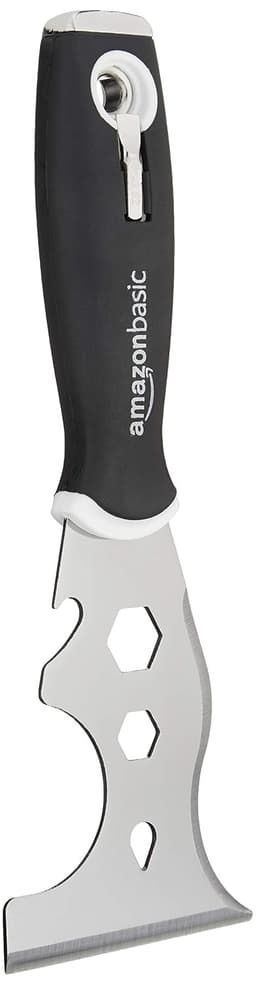
 Amazon Basics Amazon Basics 14-in-1 | Multi-tool | Scrape and open tins | Not certified lead-safe | 8.0 | about £8.35 | View offer | |
 ALLWAY Contour scraper set | Contour set | Mouldings and spindles | Not certified lead-safe | 7.1 | about £17.99 | View offer |


On this page
When UK paint can still contain lead
Leave it, or take it off
Heat, without a blow lamp
People, masks and waste
When to stop and hire
Common questions
How do I know if old UK paint contains lead?
Can I use a heat gun on lead paint?
Why do council pages disagree on temperature?
What mask should I wear when scraping?
What should I do with the flakes?
Related pages
Sources
Public UK sources used for this comparison. Listing prices, stars and review counts are the amazon.co.uk figures saved for this set, not a live re-check on 20 October 2026.
- HSE, Lead in construction (retrieved 20 October 2026)
- HSE, CIS79 Old lead paint (retrieved 20 October 2026)
- GOV.UK, Lead information for the public (retrieved 20 October 2026)
- British Coatings Federation, PaintSafe (retrieved 20 October 2026)
- Painting and Decorating Association, HS-034 Lead in painted surfaces (retrieved 20 October 2026)
- Homebuilding, Tools to remove paint from woodwork (retrieved 20 October 2026)
- Screwfix, Remove paint from wood (retrieved 20 October 2026)
- Cleaning Guides, Paint on glass (retrieved 20 October 2026)