Insulating wallpaper vs wall insulation, in practice
One room in a solid-wall house never quite warms up, and a roll of insulating wallpaper sits next to a quote for internal wall insulation. Insulating wallpaper vs wall insulation is a thin lining on the plaster against boards or a stud wall. They are not two prices for the same result. This page says when the roll is enough and when 2–10 mm is the wrong tool. Prices stay on the [insulating wallpaper comparison](/hub/painting-supplies/insulating-wallpaper). Peter F. wrote this on 20 October 2026 from the Centre for Sustainable Energy, a BEIS report and Historic England. We did not model your house. A qualifying purchase can earn us a commission.
One room in a solid-wall house never quite warms up, and a roll of insulating wallpaper sits next to a quote for internal wall insulation.
One room in a solid-wall house never quite warms up, and a roll of insulating wallpaper sits next to a quote for internal wall insulation. Insulating wallpaper vs wall insulation is a thin lining on the plaster against boards or a stud wall. They are not two prices for the same result. This page says when the roll is enough and when 2–10 mm is the wrong tool. Prices stay on the insulating wallpaper comparison. Peter F. wrote this on 20 October 2026 from the Centre for Sustainable Energy, a BEIS report and Historic England. We did not model your house. A qualifying purchase can earn us a commission.
Our top picks
| Badge | Product | Thickness | R-value | Coverage | Note | Price | Offer |
|---|---|---|---|---|---|---|---|
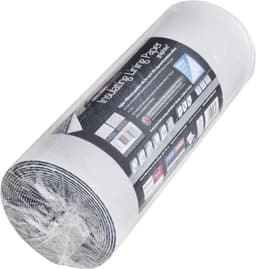
| Best overall |  Erfurt Erfurt Heatsaver | 2 mm | 0.05 m²K/W | About 10 m² | 5.7 | about £12.99 | View offer |
 Erfurt Erfurt Graphite Plus | 4 mm | 0.125 m²K/W | 3.75 m² | 6.2 | about £17.85 | View offer | |
| Alternative |  Generic 9 mm peel-and-stick foam | 9 mm | n/a | n/a | 2.8 | about £21.99 | View offer |


On this page
Two different jobs
Thickness and stated resistance
Cost shape, not a quote
Moisture, consent, and the stop line
Common questions
Is insulating wallpaper the same as internal wall insulation?
How thick is a liner next to a stud wall?
When is a liner the sensible stop?
Does a listed building change the answer?
What should I buy if I only want one cold wall to feel less cold?
Related pages
Sources
Public UK sources and manufacturer pages used for this comparison. Listing prices, stars and review counts are the amazon.co.uk figures saved for this set on 20 October 2026.
- Erfurt, Heatsaver 2 mm wall underliner (retrieved 20 October 2026)
- Erfurt, Insulating lining paper Graphite Plus (retrieved 20 October 2026)
- Erfurt, Understanding fire ratings (retrieved 20 October 2026)
- Erfurt, Wallrock Dampstop Thermic (retrieved 20 October 2026)
- GOV.UK, Damp and mould in the home (retrieved 20 October 2026)
- Approved Document B, volume 1, dwellings (retrieved 20 October 2026)
- Centre for Sustainable Energy, Internal solid-wall insulation (retrieved 20 October 2026)
- Homebuilding, Insulating wallpaper (retrieved 20 October 2026)