How to dispose of wood ash: cool it before the bin

Cool wood ash fully before it meets the bin. UK councils treat coal ash differently, and a warm plastic sack is how a fire pit sets the rubbish alight.
On this page
The morning after a fire pit, the bowl looks finished. The embers are grey, the evening is over, and a plastic sack is the nearest thing with handles. That is when bins get melted.
Search for dispose of wood ash UK and the council pages that mention ash start one step earlier: the ash has to be cold. Warmth in the middle is enough to soften plastic and set the rubbish going. You empty the pit when a rake through the centre finds no heat, not when the garden has gone quiet.
A smaller bowl is not a safer ash. Coal, briquettes, or offcuts from a house job change what you may do with the dust. The cooling rule stays the same either way. Plastic does not care which fire made the heat, and a grey surface says little about the centre.
In short
Cool the ash until the centre has no warmth left, then use the bin or the home heap your council names for that fuel. Coal ash is not compost, and ash from treated wood is not a soil improver. A wooden basket is for logs you have not burned, kept away from the pit while the ash cools.
Dispose of wood ash only when it is cold
Scottish Fire and Rescue wants the fire extinguished before you leave it, with a bucket of water or a bucket of sand. Water knocks flame down. Sand smothers the bed without flooding the patio. The centre can stay hot after either method, so the bin waits until the ash itself is cold.
The pages used here give no hour after which ash is safe. Rake the dust with a metal tool and check the centre. Warm ash stays in the bowl or goes into a lidded metal bucket on bare ground or on a slab that will not burn. A deck, a fence, or a shed is the wrong place for that bucket, even with the lid shut.
A warm load in a plastic sack is the usual failure. Plastic softens well below a hidden coal, the sack can stick to the wheelie bin, and the rubbish around it can catch. Ceredigion allows wood ash into non-recyclable waste once it is cool. Cornwall wants cold ash before the rubbish bin. A grey top at bedtime is not the test either council prints.
Move the pit only when it is cold, because the bowl and the ash travel together. Wet slurry from a doused fire needs the same wait, and a dripping sack is harder to lift than dry dust. If the centre is still warm the next morning, leave the metal bucket where it stands and check it again later in the day.
Wood ash and coal ash are not the same
Clean, untreated logs leave wood ash. Coal, briquettes, and smokeless fuel leave a different waste. Central Bedfordshire puts wood ash on the home heap and coal ash, once cold, in the refuse bin. Lewisham uses that same split. Ceredigion allows a small amount of wood ash on a home heap, or non-recyclable waste once the ash is cool, and it keeps coal ash off the compost.
Any coal, or any mix of fuels, makes the whole load coal ash. Sorting pale dust from dark dust in the bucket will not tell you what burned. Mixed ash goes in the refuse bin after it is cold. It stays off the heap and off the soil.
Southend lists wood ash as non-recyclable kerbside waste, so the recycling bin stays shut. Powder spoils paper, card, glass, and plastic. The food caddy is not another door: these pages send wood ash to a home heap or to the rubbish, and they do not list it as food waste. Lewisham also says not to take ash to their reuse centre. A household recycling site is not a default drop unless your own site prints a rule you can follow. Cold ash otherwise goes in the kerbside refuse bin. Fill the sack only part way, because the dust packs tight and a split seam covers the hall.
Home compost is a small-amount option
Ceredigion, Central Bedfordshire, Southend, Lewisham, and Cornwall each allow some wood ash on a home heap. Southend also allows a small amount on soil. Cornwall still takes cold ash in the rubbish bin as well. None of those pages is a plan for a winter of fire-pit ash on one heap.
Use a light scatter mixed through green waste. A thick grey layer sheds rain and sits as a crust. Wood ash is alkaline, so a heavy dose is a poor match for acid-loving plants such as blueberries and rhododendrons. If you do not know the soil, treat this as disposal of a little dust, not as a feed.
Coal ash stays off the heap, and so does ash from treated wood, paint, plastic, or old decking. If you are unsure what burned, use the refuse bin once the ash is cold. These five councils are examples, so read your A to Z before you copy them. Cold wood ash in the refuse bin is still a proper end.
What not to burn in the first place
Ash that is hard to place often started as the wrong fuel. DEFRA's outdoor-burning note says not to burn treated wood, plastics, or old decking. The dust from that burn is not a soil improver. Grey colour does not reveal preservative or paint, so sieving the bucket will not produce a clean layer you can spread.
If that waste has already been in the pit, keep the ash off the compost and off the beds. Cool it in the bowl or in a metal bucket, then put it in the non-recyclable refuse. One load of scrap changes the whole pile. MDF, plywood, and preserved fence boards are rubbish rather than kindling. A garden fire pit does not replace the collection you already pay for. Clean logs leave a small wood-ash job the next day. A pit used to clear a garage leaves ash you still cannot compost.
Where spare logs sit while the pit cools
Logs you did not burn are still fuel. Keep them out of the ash bucket and off the bowl while the centre cools. Move them before you bag the ash, so more wood is not left against a hot shell.
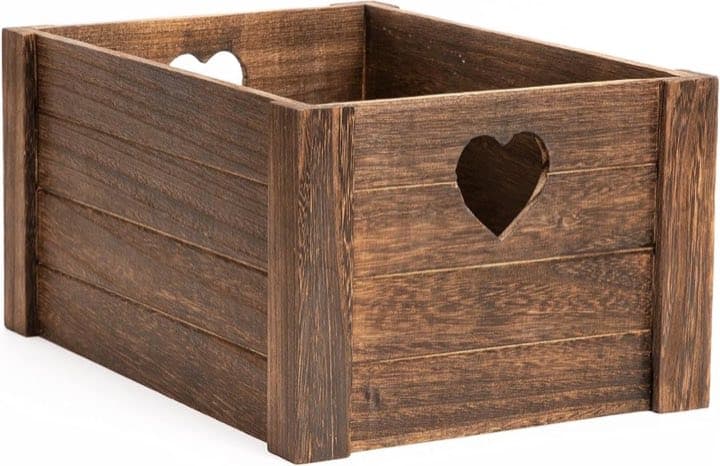
A wooden basket carries that unburned wood. The featured crate is a Wickerfield heart-handle box, 27 by 17 by 14 centimetres, and the listing says it is not water resistant. On amazon.co.uk it was about £6.29, with 4.6 from 707 reviews. That is a small carrier for logs or kindling, not a bin for hot dust and not a cover for a cooling pit. On the lawn overnight, an open crate also wets the wood.
Stand the crate clear of the bowl until the ash is cold. A hamper lid traps heat over coals you have not checked. Crate versus wicker, for carrying logs, is the crate and wicker page. Kindling is on kindling baskets. A roofed stack is in how to store logs. Sizes are on the buying guide. Warm ash stays in metal, and the spare logs go back to the store with the crate.
Common questions
Can ash go out the same night?
Is wood ash the same as coal ash?
Can wood ash go in the recycling bin?
Can wood ash go on the compost?
What if the sack of ash is heavy?
Is ash from treated timber the same?
Do I pour water on the pit?
Where should spare logs sit while the pit cools?

Products Compared publishes British-English buying guides based on amazon.co.uk listings and public UK sources. We do not run a lab and we do not invent test scores.
Related articles

store kiln dried logs: keep rain off the pile
Kiln-dried logs climb back over 20% moisture in rain. Store them roofed and off the ground, and keep the basket about three feet clear of the fire pit.

Compost wooden coffee stirrers: check the food caddy
Compostable on the pack is not a caddy pass. BCP excludes wooden sticks. Dundee and Stirling keep wooden cutlery out. If your page is silent, use general waste.

Plastic drink stirrers ban UK: café supply rules
England banned business supply of plastic drink stirrers on 1 October 2020. The straw exemption does not cover them. Wood is the usual café replacement.