Independent comparisons. We may earn from shop links. More info

How to grow blueberries in the UK

Updated: 22 October 2026

The parcel has arrived, the stems look alive, and the question is whether your soil and water will let a blueberry bush survive more than one season. How to grow blueberries in the UK comes down to an acid root zone, rainwater where you can, a light prune in the right month, and a net before the berries colour. The [blueberry bush comparison](/hub/ornamental-plants/blueberry-bush) is for choosing a listing. This page is the care sequence after purchase. A qualifying purchase can earn a commission at no extra cost to you. Peter F. used Royal Horticultural Society and BBC Gardeners' World guidance, with listings checked on 20 October 2026. This is not a crop trial.

The parcel has arrived, the stems look alive, and the question is whether your soil and water will let a blueberry bush survive more than one season.

Our top picks

Carbeth Plants Bluecrop (1 L)

Best overall

Carbeth Plants Bluecrop (1 L)
6.6/10about £14.99
Carbeth Plants Bluecrop (9 cm)

Best value

Carbeth Plants Bluecrop (9 cm)
7.6/10about £9.99
On this page

Acid soil, or do not plant in the border

Blueberries need ericaceous conditions. The Royal Horticultural Society quotes roughly pH 4.5 to 5.5. BBC Gardeners' World allows about pH 4 to 5.5. Test before you dig. Lime, mushroom compost, and manure push the pH the wrong way. Above that band, use peat-free ericaceous compost in a container. Pot size is on blueberries in pots. Plant dormant if you can, from mid-autumn through early spring. Gardeners' World highlights October. Avoid frozen waterlogged ground and a baked summer drought. Space bushes about 1 to 2 m apart on RHS advice, or near 1.5 m for taller cultivars on Gardeners' World figures. Set the plant at the nursery-pot depth, firm it, and water with rainwater if you have it.

Water, feed, and the first two years

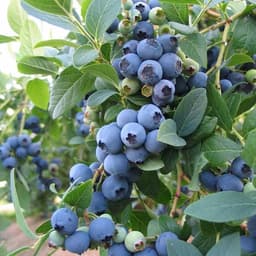
Keep the root zone moist, not soggy, through the first spring and summer. Rainwater is the default in RHS and Gardeners' World pot guidance. Occasional tap water beats drought. Hard water drifts the pH, sooner in a pot than in a large acid border. Feed with an ericaceous fertiliser and follow the label. Pick when the berry is fully blue and comes away with a gentle tug. Blue colour alone can still mean sour fruit. A couple of berries in year one is what the RHS treats as normal on a small mail-order starter. A heavier crop belongs to year two if the winter prune stayed light and birds missed the first colour. A desiccated or dead arrival is the listing problem. A second cultivar name is on the blueberry bush buying guide.
Carbeth Plants Bluecrop (1 L)

Testsieger

Carbeth Plants Bluecrop (1 L)
6.6/10about £14.99

Prune when you can see fat buds

Prune while the bush is dormant, from November to March, ideally in late February when fat buds show and before the sap runs. Take out dead, diseased, crossing, and low branches that would drag fruit into the mud. Shorten a few older stems for new upright growth. Do not strip a small plant in year one. Aim for an open goblet of young and middle-aged wood. Heavy renovation is for an established bush, not a 9 cm arrival. If you cannot tell which stems fruited, wait a winter and label a few branches after harvest. Mulch with pine bark or ericaceous mulch if the soil still tests acid, keep it off the crown, and do not use ash or lime-rich compost.

Birds, yellow leaves, and a dead arrival

Net when the berries start to colour. Use taut mesh, and check it daily so nothing is trapped. The RHS warns that birds take fruit and sometimes buds. One blackbird can clear a small bush in an afternoon. Yellow leaves on a living bush often mean chlorosis from high pH, especially where tap water dominates. Refresh with ericaceous compost and rainwater before a generic feed. Blueberry rust is reportable on RHS advice. Leaf spots need a proper identification, not a fungicide chosen here. A brittle, black, budless plant that stays dry after shade and water is a dead-on-arrival case with the seller. Pliable stems and swelling buds after a 9 cm arrival are a normal first year.

Common questions

What soil pH do blueberries need?
About pH 4.5 to 5.5 on Royal Horticultural Society figures, or roughly pH 4 to 5.5 on BBC Gardeners' World. Test the border before you plant. If the reading sits above that band, use a pot of peat-free ericaceous compost rather than the bed.
Can I use multipurpose compost?
Not for long-term success. Use ericaceous compost in pots and an acid-friendly mix in the ground. Manure and mushroom compost usually raise the pH, which is the wrong direction for a blueberry root zone.
Should I water with tap water?
Rainwater is preferred, especially in pots. Occasional tap water is better than drought. Hard water shifts the pH over time, and that drift shows up sooner in a container than in a large acid border.
When do I prune, and what do I leave?
Prune while the bush is dormant, from November to March, ideally in late February when fat buds are visible. Remove dead and crossing wood. Leave enough young wood on a small plant to fruit the next year.
How do I net the fruit without trapping birds?
Use taut netting with a small mesh, supported so it does not rest on the bush, and inspect it daily while the fruit ripens. Put the net on when the berries start to colour.
Why are the leaves yellow?
Yellow leaves on a bush that is otherwise alive often mean chlorosis from alkaline soil or hard water. Correct the pH and refresh ericaceous compost before you chase a generic fertiliser. Spots that might be rust need identification, not a guess from this page.
How soon will a young mail-order plant fruit?
A couple of berries in year one is normal on a small starter. Heavier crops build in year two and after that, if the root zone stays acid and birds are kept off the coloured fruit. A 9 cm or one-litre plant is not a fruiting shrub in the first summer.
Will it crop in partial shade?
Yes. A fair crop is possible in partial shade on Royal Horticultural Society guidance. Sunnier sites usually give sweeter, more plentiful fruit. One Titanium listing in the comparison says full sun only, so read the sun line on the plant you bought.

Related pages

Sources

Public UK sources and the amazon.co.uk listings in this comparison, last checked on 20 October 2026.

  1. RHS, How to grow blueberries (retrieved 20 October 2026)
  2. RHS Award of Garden Merit, fruit and vegetables (retrieved 20 October 2026)
  3. RHS, Fascinating facts: blueberries (retrieved 20 October 2026)
  4. BBC Gardeners' World, How to grow blueberries (retrieved 20 October 2026)
  5. GOV.UK, Issuing plant passports in Great Britain (retrieved 20 October 2026)
  6. UK Plant Health portal, plant passport questions and answers (retrieved 20 October 2026)
  7. amazon.co.uk listings for the eleven blueberry ASINs (retrieved 20 October 2026)