Independent comparisons. We may earn from shop links. More info

PU vs nitrile work gloves

Updated: 16 October 2026

Two gloves in the basket look the same: a coloured knit and a shiny palm. One is PU, one is nitrile, and a third pair is latex. This PU vs nitrile work gloves page uses only the eleven amazon.co.uk listings in the [work gloves comparison](/hub/occupational-safety/work-gloves). PU is the light, mostly dry coat. Nitrile is the coat whose listing claims oily grip. Latex is the one you leave if you react to latex. The Products Compared editorial team updated this page on 16 October 2026 from those listings. We did not lab-test the coatings. A purchase through our links can earn a commission at no extra cost to you.

Two gloves in the basket look the same: a coloured knit and a shiny palm. One is PU, one is nitrile, and a third pair is latex.

Our top picks

On this page

Three coats in this set

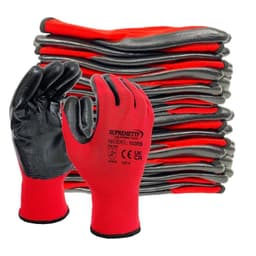
PU, nitrile, and latex are three palms. Rainberg, Velway, and Straame are the PU rows. Rainberg prints CE EN 388 3121 and limits the grip to dry and slightly oily work, not heavy oil and not wet. Velway says latex-free and prints no EN 388 digits. Straame prints no EN 388 code. Nitrile here is Supreme TTF and KAYGO, both 4131 and latex-free. Supreme’s bullet says the back is open. KAYGO claims light oils, and the waterproof field is false. Latex is RUFTUF only. The digit order is on the work gloves buying guide.

Dry feel versus oily grip

Use PU when the job is light and mostly dry. Rainberg’s bullet stops the grip claim at heavy oil and wet work. Velway reviewers say the PU wears off and wets through. Straame reviewers call the medium wafer thin. Move to nitrile when the listing claims oil. Supreme says dry, wet, and oily. The shared reviews include a pipefitter who found threading oil slippery. KAYGO says light oils, and reviewers say the coating wears off. No bullet prints an EN 374 time.

3121 and 4131 are not a cut upgrade

The abrasion digit does move. SATRA puts abrasion level 3 at 2,000 cycles and level 4 at 8,000. Rainberg’s 3121 is abrasion 3 and circular cut 1. KAYGO and Supreme’s 4131 is abrasion 4 and the same circular cut 1. Buying nitrile to escape cut level 1 does not work inside this set. There is no A–F letter on these rows. Which row to open is on the best work gloves UK page.

Open backs, waterproof flags, and latex

Supreme says the open back lets the hand breathe, so rain still reaches the skin. Size 10’s fields say waterproof while the bullet says the back is open. Follow the bullet. KAYGO says water-repellent and the waterproof field is false. Rainberg, Velway, and Straame say they are not waterproof. RUFTUF’s palm is latex. HSE says people with a latex allergy should not use latex gloves. Velway, Supreme, and KAYGO print latex-free. Neither coated palm here covers blades, an EN 374 time, or hot metal.

Which coat matches the job

Stay with PU, such as the Rainberg 3121 pack, when the work is light and mostly dry and you will replace a thin pair. Move to KAYGO or Supreme when the listing’s oil sentence matches the job, and keep circular cut at 1. Leave RUFTUF if anyone who will wear the gloves reacts to latex. Leave the whole coated set when you need a blade letter, an EN 374 time, or a sealed wet glove.

Common questions

When is PU the right coat?
PU is the right coat for light, mostly dry handling: decorating, light gardening, boxes, and tools, when you will replace a thin pair. In this set that is Rainberg, with a printed 3121 and a bar on heavy oil and wet work, Velway if you want a latex-free claim without EN 388 digits, or Straame if the review count matters more than a code. Skip PU for brambles and for heavy oil.
When do I move to nitrile?
Move when the listing claims oily grip and the job matches that sentence. KAYGO claims light oils on three pairs at about £9.98 with 4131. Supreme claims dry, wet, and oily on 24 pairs at about £13.55, also 4131, with an open back. A pipefitter in the shared Supreme reviews found threading oil slippery. Nitrile here is still circular cut 1.
Are these nitrile gloves chemical gloves?
They are handling gloves with an oil sentence. No listing in this set prints an EN 374 breakthrough time. KAYGO’s bullets answer a chemical question with light oils, abrasion, and a water-repellent claim. Supreme has a field that says chemical resistant, and the bullets do not show EN 374. If you need a time for a named substance, this coat is the wrong product.
Are open-back gloves waterproof?
The open back is there so the hand can breathe, which means water comes through. Supreme’s size 10 fields say waterproof against that bullet. Size 9’s waterproof fields disagree with each other. KAYGO is water-repellent on the bullet and not waterproof on the field. Rainberg, Velway, and Straame say they are not waterproof. Keep a sealed glove for a job that must stay dry.
What is the difference between 3121 and 4131?
3121 is abrasion 3, circular cut 1, tear 2, puncture 1. 4131 is abrasion 4, circular cut 1, tear 3, puncture 1. SATRA puts those abrasion levels at 2,000 and 8,000 cycles. The cut digit does not change, and neither code prints an A–F letter. Rainberg is the 3121 PU pack. KAYGO and Supreme are the 4131 nitrile packs.
Who should not wear the RUFTUF latex palms?
Anyone with a latex allergy, and anyone you cannot confirm is free of one before you issue gloves at work. HSE says not to use latex gloves if you have that allergy, and to choose non-latex unless nothing else will protect. RUFTUF is the latex palm here. Velway, Supreme, and KAYGO print latex-free. Sticky palms and a poor rose-pruning review are further reasons to skip it.

Related pages

Sources

Public UK sources used for this comparison, retrieved on 16 October 2026.

  1. HSE: choosing gloves (retrieved 16 October 2026)
  2. HSE: PPE regulations 2022 (retrieved 16 October 2026)
  3. HSE: product safety and supply (retrieved 16 October 2026)
  4. HSE: PPE maintenance (retrieved 16 October 2026)
  5. HSE: latex allergies (retrieved 16 October 2026)
  6. GOV.UK: UKCA and CE by sector (retrieved 16 October 2026)
  7. SATRA: EN 388 (retrieved 16 October 2026)
  8. SATRA: EN ISO 21420 (retrieved 16 October 2026)