Men's S1 safety shoes for warehouse work
You are on a long warehouse or factory shift, the floor is smooth concrete, and you want S1 safety shoes for warehouse work that feel like trainers by the afternoon. A dry indoor floor can be an S1 job only when the risk assessment says so. A light uncoded trainer is a comfort preference, and it is not that decision. The eight amazon.co.uk listings in the [main comparison](/hub/occupational-safety/men-s-s1-safety-shoes) include comments about warehouse walking, factory miles, and van driving. None of them print S1. Who should skip each listing, as a shortlist rather than a shift plan, is on the [best men's S1 safety shoes](/hub/occupational-safety/men-s-s1-safety-shoes/sub/men-s-s1-safety-shoes-best) page. A qualifying purchase can earn us a commission at no extra cost to you. Peter F. checked the listings and public UK guidance. We did not lab-test the shoes.
You are on a long warehouse or factory shift, the floor is smooth concrete, and you want S1 safety shoes for warehouse work that feel like trainers by the afternoon.
You are on a long warehouse or factory shift, the floor is smooth concrete, and you want S1 safety shoes for warehouse work that feel like trainers by the afternoon. A dry indoor floor can be an S1 job only when the risk assessment says so. A light uncoded trainer is a comfort preference, and it is not that decision. The eight amazon.co.uk listings in the main comparison include comments about warehouse walking, factory miles, and van driving. None of them print S1. Who should skip each listing, as a shortlist rather than a shift plan, is on the best men's S1 safety shoes page. A qualifying purchase can earn us a commission at no extra cost to you. Peter F. checked the listings and public UK guidance. We did not lab-test the shoes.
Our top picks
| Badge | Product | Class stated | Walking note | Sole note | Note | Price | Offer |
|---|---|---|---|---|---|---|---|
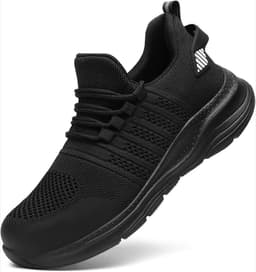
| Best overall |  Unbranded Unbranded steel-toe trainer | Not printed | Factory and delivery | Worn down in about six months | 8.4 | about £25.49 | View offer |
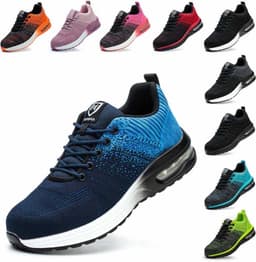
| Best value |  LUPWEE LUPWEE UK-6799 | Not printed | Light and wide | Insoles worn at the heel | 7.5 | about £30.99 | View offer |
| Alternative |  Baofular Baofular K8 | Not printed | Warehouse walking praised | Soles split in weeks or months | 7.6 | about £39.95 | View offer |

On this page
The dry-floor job
What the kept listings say about walking
Grip and insoles on a long shift
Swivel buckles on a warehouse shift
Common questions
Is S1 the usual code for a dry warehouse?
Do you still need the employer's code if the floor looks clean?
What happens when the sole wears on a smooth floor?
When does a warehouse job need S1P instead?
Should footwear be the first control for a wet patch?
Related pages
Sources
Public UK sources from the research digest, last checked on 20 October 2026. Shelf prices and star lines are the amazon.co.uk figures captured with these eight listings. The price band is this set, not a market average.
- HSE: construction PPE FAQ (retrieved 20 October 2026)
- PPE at Work Regulations 1992 (retrieved 20 October 2026)
- HSE: using the right type of PPE (retrieved 20 October 2026)
- HSE: slip-resistant footwear (retrieved 20 October 2026)
- HSE: PPE supply (retrieved 20 October 2026)
- GOV.UK: product marking, UKCA and CE (retrieved 20 October 2026)
- BSI: BS EN ISO 20345:2022+A1:2024 (retrieved 20 October 2026)
- HAIX UK: safety footwear classes (retrieved 20 October 2026)