Independent comparisons. We may earn from shop links. More info

Larnmern safety trainers warehouse

Updated: 21 October 2026

You do a dry warehouse shift, you sometimes drive between drops, and next week the same shoes might follow you onto a site. Larnmern safety trainers warehouse use is a different question from a site induction. A comfortable trainer can be the wrong shoe the moment the floor has nails, rain, or an S3 rule. The [main comparison](/hub/occupational-safety/larnmern-safety-shoes) holds nine amazon.co.uk listings from £30.59 to £51.84 on 19 October 2026. This page stays on one workplace contrast: flat indoor miles versus ground that changes. A qualifying purchase can earn us a commission at no extra cost to you. Peter F. used review notes from this file and HSE guidance on sites and slips. We did not walk your warehouse.

You do a dry warehouse shift, you sometimes drive between drops, and next week the same shoes might follow you onto a site. Larnmern safety trainers warehouse use is a different question from a site induction.

Our top picks

On this page

What a dry warehouse asks of a shoe

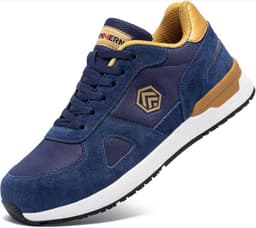
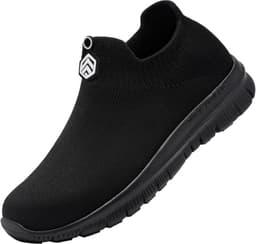
A dry warehouse, a retail floor, or a driving day asks for hours on hard ground, a shoe you can wear in a van, and less weight than a tall site boot. Ankle support is rarely the point on flat concrete. The limit is the class the assessment already set, the toe clearance after a crouch, and whether the sole is still intact at the end of the month. Two listings carry that indoor comment. The £33.99 steel-toe trainers, 4.3 from 4,682 reviews, are described on long shifts, and the same reviews call the sole slippery and mention stones in the tread. The £32.99 trainers, 4.1 from 6,296 reviews, draw warehouse-shift comments and indoor grip on metal, plus sole wear from about a month to about nine months. Neither title prints S1P. The £44.99 PRO shoe is the one that prints S1, and its reviews include warehouse and hospital shifts, with hot uppers and quick sole wear. If your paper allows S1 or an unmarked trainer, those are the pairs people actually wrote about wearing indoors. The best of this set separates that volume pick from the printed S1.

What a site adds

A building site adds nails, offcuts, mud, and weather, and it adds a set of site rules. HSE’s construction FAQ expects protective footwear with a toecap and midsole protection against nails, supplied by the employer. The site-induction guidance puts PPE in the site rules, which means the card you are given beats the sentence in an Amazon title. There is no such thing as footwear that cannot slip. HSE’s slips leaflet says you deal with the floor first, and slip-resistant soles only help on some surfaces after the floor cannot be kept clean and dry. A mesh trainer reviewed for a warehouse aisle is the wrong default once that ground changes. Trade pages that sell S1P trainers describe them for warehousing and long shifts, and they tell you to leave them when the work is prolonged and wet, where they point to S3. Those pages are other brands, often from about £22 to £66 including VAT, or a named S1P trainer around £85. They assume the shoe is already marked. In this set the warehouse-style titles mostly have no class. One wide-toe reviewer, on a listing with 10 reviews at £39.99, says the sole is too thin for a proper site and that stones can be felt through it. A wide comfortable toe is not a midsole. The code definitions, including why S1 is not S1P, are on the S1 or S3 page.

What these reviews show about soles

Comfort on concrete does not answer a nail, and it does not answer a wet loading bay. On the £33.99 trainers, grip is praised and also called slippery. On the £32.99 pair, indoor metal grip appears next to water through the sole and peeling at the toe. Stones caught in the tread show up on more than one listing, which matters if your dry warehouse has a spill zone or a yard door. The £38.61 waterproof title has a sole worn through in six days in one review and a split at about three months in another. The PRO boot at £51.84 is the ankle option people reach for when they want the site shoe to be in the same basket. UK reviews describe a light boot, padding, a deep tread, a UK 10.5 that fitted, and a toe cap that took a scaffolding knock. The review count is 11, with six UK reviews in the file. The title does not state S3, waterproof, or a steel toe. Amazon’s forestry browse node is not a forestry-boot standard and does not mention a chainsaw. A small sample that sounds more protective is still a small sample.

When to change shoe rather than change brand colour

Stay with a light Larnmern trainer for dry indoor miles only when the workplace accepts that shoe. The £33.99 and £32.99 listings are the ones reviewers describe that way. The £44.99 shoe is the stay option when the paper says S1 and the floor has no nail risk. Change shoe, not just colour, when the induction says S1P or S3, when the floor has nails, or when you are out in the wet for the shift rather than crossing a dry aisle. Another black colourway of the same unmarked trainer does not add a midsole. Driving does not change the class. A light shoe in the cab is reasonable when the delivery point is a dry retail floor and the assessment allows it. The moment the delivery point is a construction gate, the site rules apply to your feet, including footwear the employer provides if it is required PPE. If you do both jobs in one week, keep two pairs rather than splitting the difference. Ask the person who wrote the PPE list when the warehouse card and the site card disagree.

Common questions

Are Larnmern trainers suitable for a warehouse?
They can be, when the warehouse allows a trainer and the floor stays dry, with no nail risk the assessment has already flagged. Reviewers describe 10-hour and 12-hour shifts on the £33.99 steel-toe trainers and warehouse shifts on the £32.99 pair. Neither listing prints S1P. The £44.99 shoe prints S1 and has warehouse and hospital comments. Suitability is the assessment, not the star rating. If your card says S1P or S3, these titles do not state it.
Can the same pair go on a building site?
Not on the strength of a warehouse review. HSE expects a toecap and midsole protection against nails on a construction site, and the site induction states the PPE. A mesh trainer with no class in the title does not show that midsole. One review of the £39.99 wide-toe shoe says it is not for a proper site. The £51.84 boot has a scaffolding anecdote and 11 reviews, with no S3 in the title. Take the class on the site card, and wear the shoe that states it.
What did reviewers say about 12-hour shifts?
On the £33.99 trainers, long shifts of about 10 and 12 hours appear next to comments that the sole can be slippery. On the £32.99 puncture-proof title, reviewers mention 12-hour warehouse shifts, a light feel, and breathable mesh, and also soles that wear out within months. The S1 shoe at £44.99 draws warehouse and hospital shift comments, with a hot upper in one review. Those notes support a light shoe for a dry indoor day. They do not measure puncture resistance.
Do I need ankle support on a flat concrete floor?
Usually the warehouse question is weight, toe clearance, and the stated class, not a high ankle. Driving and retail floors are the same shape of job if they stay dry and flat. An ankle boot such as the £51.84 PRO pair is a different tool, and this file does not show that you need it for concrete. You need it when the site or the assessment asks for that boot, or when you want the ankle coverage and you have checked the label. A taller boot with 11 reviews is not automatically the warehouse answer.
What if the warehouse floor is wet or has nails?
A wet floor or a nail risk takes you out of an unmarked mesh trainer. HSE says there is no such thing as non-slip footwear, and the floor has to be managed before a sole can help. S1P is the class guides use for dry indoor puncture risk. S3 is the class they use when water resistance and a cleated sole are required. None of these Larnmern titles prints S1P or S3. Waterproof in a title, on the £33.99 and £38.61 men’s pairs, is disputed by reviews that report wet feet. Change the shoe.

Related pages

Sources

Public UK sources from the research digest, last checked on 19 October 2026. Shelf prices and star lines are the amazon.co.uk figures in the display file. The price bands are this set, not a market average.

  1. HSE: PPE overview (retrieved 19 October 2026)
  2. HSE: PPE regulations 2022 (retrieved 19 October 2026)
  3. HSE: INDG225, slips and footwear supplied as PPE (retrieved 19 October 2026)
  4. HSE: L25, foot hazards and inspection (retrieved 19 October 2026)
  5. BSI: BS EN ISO 20345:2022+A1:2024 (retrieved 19 October 2026)
  6. GOV.UK: designated standards notice 0142/26 (retrieved 19 October 2026)
  7. Honeywell: 2022 user information on P, PL, PS, WPA and WR (retrieved 19 October 2026)
  8. Ironstep: safety ratings guide (retrieved 19 October 2026)
  9. amazon.co.uk listing B0CCDHVVJ1 (retrieved 19 October 2026)