Independent comparisons. We may earn from shop links. More info

Thermal camera for heat loss

Updated: October 2026

The landing is colder than the bedroom, the loft hatch looks like a dark square, and you want to know whether the house is leaking heat. A thermal camera for heat loss shows where a surface is colder or warmer than the one next to it. It cannot tell you the kilowatts the room needs, and it cannot prove the patch is damp. Peter F. read the six amazon.co.uk imagers in this set, plus NHBC, RICS and Which?, on 16 October 2026. There was no survey of your house. The cameras are on the [thermal camera comparison](/hub/measuring-equipment/thermal-camera).

The landing is colder than the bedroom, the loft hatch looks like a dark square, and you want to know whether the house is leaking heat.

Our top picks

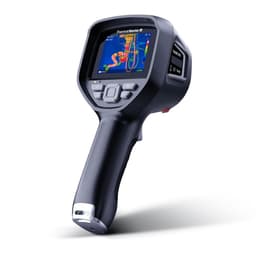
GOYOJO GOYOJO GW192A

Preis-Tipp

GOYOJO GOYOJO GW192A
8.6/10about £129
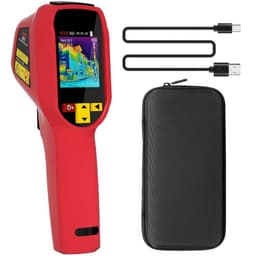
BSIDE BSIDE HX1

Alternative

BSIDE BSIDE HX1
8.0/10about £139.99
On this page

What a heat-loss picture can show

On a cold, still day, with the house warmer than the garden, a thermal frame can show breaks in the pattern of a wall. NHBC describes insulation that does not continue, thermal bridges, and unwanted air leakage. An internal shot is less beaten about by the weather, so a loft hatch or a bay reveal is often easier to judge from inside. Compare the hatch with the ceiling around it, and the corner with the middle of the same wall. That is a map of where to look. A missing quilt above a hatch shows as a colder panel if the loft is cold and the landing is warm. A draught at a skirting can show as a cool streak if the detector has the pixels. The picture is the location. A kilowatt survey for a heat pump is a different service. The camera does not produce that number.

What it is not

It is not a U-value. BS EN 13187:1999, the older infrared method for building envelopes, was qualitative. It did not determine the degree of insulation or airtightness, and it has been withdrawn. The current British Standard for this kind of detection is BS EN ISO 6781-1:2023. None of the six listings claims a sticker to either document. A colour scale is not an energy rating, and it will not fill an EPC. It is not a heat-pump size. UK Heat Pump Help says thermal imaging does not give the kilowatt figure used to size a heat pump or to support a Boiler Upgrade Scheme application. Which? puts professional surveys from around £300 to more than £750. HICH quotes domestic surveys from about £365 and Thermalume from about £485. Those are their prices, not a national average.

Cold is not automatically wet

A cold surface can be missing insulation, a bridge, or air leakage, and it can be damp. RICS makes the practical point: if you suspect damp, check it with a moisture meter as well. The thermal frame cannot tell those causes apart. A tide mark or a musty smell is a reason to measure moisture, not a reason to declare rising damp from the palette. Windows often reflect the sky or the room, so a pane can look far colder than the wall it sits in. The setup that makes this readable, including the gap of about 10 °C, is on the how to use a thermal imaging camera page. When the question becomes whether it is wet, use a moisture meter on the same spots, and keep the thermal picture as the map.

Which of these cameras is even in the running

The Minhe, at £58.18 with a 24×32 sensor and no review line, is the wrong tool for a whole room. The GOYOJO, at £129.00 with 4.2 from 778 ratings, is the one reviewers describe on insulation and viewings, with a native 96×96 sensor. The AMPBANK, at £101.15 with a native 192×192 sensor, is the finer phone detector. The handhelds you can walk a house with are the BSIDE HX1, the BSIDE HX3 and the Thor 002. The HX pair are £139.99 with 240×240 sensors. The Thor 002, at £359.00 with 4.4 from 279 ratings, is the listing UK reviewers describe on house walks, with a 256×192 detector and NETD under 40 mK. None of them replaces a surveyor when the picture has to travel with a purchase. A qualifying purchase through our links can earn a commission at no extra cost to you.

Common questions

Can this find missing cavity insulation?
It can show a colder area where insulation is missing or has slumped, if the temperature gap is real and the surface is visible. NHBC treats that kind of break in continuity as one of the defects an infrared survey is used to see. It cannot see through furniture, and it cannot tell you the remaining U-value of the wall. A 24×32 camera is too coarse for that room-scale pattern.
Does a cold patch mean damp?
It means the surface is colder than the surface you compared it with. The cause might be missing insulation, a bridge, a draught, or moisture. RICS says suspected damp should also be checked with a moisture meter. Declare the pattern, then measure. Do not name rising damp from the colour alone.
Will it size a heat pump?
No. A thermal picture does not produce the kilowatt heat-loss figure used to size a heat pump or to support a Boiler Upgrade Scheme application. That figure comes from a room-by-room calculation. The camera can still show you a hatch or a bay that is worth insulating before anyone runs that calculation.
Inside or outside in a British winter?
Inside is the steadier picture, because sun, rain and wind spoil an external wall. Outside can show a whole elevation on a dull, still morning when the house is at least about 10 °C warmer than the air. Keep the comparison to one face, and do not mix an internal hatch with a sunlit gable and treat the colours as one scale.
Is a cheap camera a waste for this job?
The £58.18 Minhe, at 24×32 and with no reviews, is a waste if the job is the house. A phone module around £101 to £129 can show a hatch if the phone connects. Cheap does not mean useless. Coarse and unreviewed does, for this use.

Related pages

Sources

NBS, BSI, NHBC, RICS, the UK Thermography Association, the Electricity at Work Regulations 1989 and Cambridge Carbon Footprint loan-scheme training, plus the amazon.co.uk listings read on 16 October 2026. Prices move. Nothing was calibrated in a lab.

  1. NBS, BS EN ISO 6781-1:2023 (retrieved 16 October 2026)
  2. BSI, BS EN 13187:1999 (retrieved 16 October 2026)
  3. NHBC, thermal imaging report guide (retrieved 16 October 2026)
  4. RICS, an introduction to building thermography (retrieved 16 October 2026)
  5. UK Thermography Association, electrical thermography (retrieved 16 October 2026)
  6. Electricity at Work Regulations 1989 (retrieved 16 October 2026)
  7. West Devon, thermal imaging camera user guide (retrieved 16 October 2026)
  8. FLIR, infrared camera accuracy and uncertainty (retrieved 16 October 2026)
  9. Cambridge Carbon Footprint, thermal imaging training slides (retrieved 16 October 2026)
  10. Red Current, electrical thermal imaging FAQs (retrieved 16 October 2026)