Independent comparisons. We may earn from shop links. More info

Thermal imaging camera buying guide

Updated: October 2026

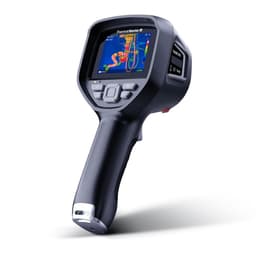
You are comparing a phone plug with a pistol-shaped camera, and the title is shouting a pixel count that may not be the sensor. A thermal imaging camera buying guide, for the six imagers kept from amazon.co.uk, starts with the native detector and only then looks at the enhanced figure, the form, and the temperature range. Peter F. read those listings on 16 October 2026. There was no lab test. Shelf prices stay on the [thermal camera comparison](/hub/measuring-equipment/thermal-camera). By the end you should know which number in the advert is the detector, and which extras still do not turn a colour picture into a building certificate.

You are comparing a phone plug with a pistol-shaped camera, and the title is shouting a pixel count that may not be the sensor.

Our top picks

AMPBANK AMPBANK M192

Best overall

AMPBANK AMPBANK M192
9.8/10about £101.15
GOYOJO GOYOJO GW192A

Preis-Tipp

GOYOJO GOYOJO GW192A
8.6/10about £129
On this page

Start with native resolution

The detector size is the grid of infrared pixels the camera actually has. Enhancement, whether the listing calls it Super Resolution, TISR or X³, rearranges that grid. It does not add sensing elements. In this set the native figures are far apart. The Minhe states 24×32. The GOYOJO GW192A states 96×96, enhanced to 192×192. The AMPBANK M192 states 192×192, with TISR at 240×240 or 384×384. The BSIDE HX1 and HX3 each state 240×240 and do not print a smaller sensor underneath. The Thermal Master Thor 002 states 256×192, enhanced to 512×384. If you buy the Thor on the strength of 512×384, you have bought the processed picture, not a 512-wide detector. Who each listing is for is on the best thermal imaging camera page.

NETD, refresh and field of view

NETD is the smallest temperature difference the detector is claimed to distinguish, usually in millikelvin. A lower figure is a finer claim. Only the Thor 002 states it, at under 40 mK. The other five listings do not print a NETD, so you cannot rank them on sensitivity from the page. The M192, the HX1 and the HX3 state 25 Hz. The GOYOJO, the Minhe and the Thor do not state a refresh rate. The GOYOJO states a 50° by 50° field of view. The HX1 states 50°. The others do not. The shape of the body is a separate choice, on the phone or handheld page.
AMPBANK AMPBANK M192

Testsieger

AMPBANK AMPBANK M192
9.8/10about £101.15

Range, accuracy and emissivity

Every listing except the Minhe claims a span that starts around −20 °C and ends between 400 °C and 550 °C. The Minhe starts at −40 °C and stops at 300 °C. A domestic wall in a British winter sits inside all of those spans. Where a bullet states accuracy, it is ±2 °C, ±2%, or both. The Minhe states no accuracy figure. A claim of that class is the maker's specification. It is not a UKAS calibration, and it is not a guarantee on bare metal or glass. Emissivity is how readily a surface gives off infrared. The M192, the HX3 and the Minhe say you can adjust it. The GOYOJO, the HX1 and the Thor do not state an emissivity control. Training slides often put ordinary paint near 0.95.

What this set cannot certify

BS EN ISO 6781-1:2023 is the current British Standard for detecting heat, air and moisture irregularities by infrared. It replaced BS EN 13187:1999. The withdrawn standard was qualitative. It did not determine how well a wall was insulated or how airtight a room was. None of these six listings claims to be certified to either document. A colour frame from any of them is a private look. It is not an EPC, not a U-value, and not a damp certificate. At work, the Electricity at Work Regulations 1989 still apply. The UK Thermography Association says professional electrical thermography should not use a phone clip-on. If the picture is for a client or a live board, the next step is a competent person. A qualifying purchase through our links can earn a commission at no extra cost to you.

Common questions

What resolution do I need for a house?
For a bay, a hatch or a patch of wall, compare native pixels, not the enhanced count in the title. The Minhe's 24×32 is a close-range grid and the wrong buy for a room. Figures such as 384×384 or 512×384 are processed pictures. No listing here is a surveyed 320×240 requirement, and none of these figures is a U-value.
Is the number in the title the sensor size?
Often it is the enhanced number. The GOYOJO title size line says 192×192 while the bullet says the sensor is 96×96. The AMPBANK title leads with 384×384 TISR while the native line is 192×192. The Thor title leads with 512×384 while the detector is 256×192. Read the bullet that says sensor or native, and keep that figure.
What is NETD, and which listing states it?
NETD is the claimed temperature sensitivity of the detector, in millikelvin. Lower is a finer claim, and it is not the same as accuracy. Only the Thor 002 states it, at under 40 mK. The Minhe, GOYOJO, AMPBANK, HX1 and HX3 do not print a NETD, so they cannot be ranked on that line.
Does ±2 °C mean the reading is right on metal?
No. Where the bullet states ±2 °C or ±2%, that is the maker's accuracy claim under its own conditions. Bare metal and glass reflect other temperatures, so the number moves unless emissivity is set or a known tape is stuck on the spot. The Minhe states no accuracy figure at all. These cameras were not calibrated.
Is a 24×32 camera enough for insulation?
It is the wrong grid for a whole room. The Minhe is specified for PCBs, switches and appliances at close range, it has no amazon.co.uk review line, and it costs £58.18. A loft hatch or a missing patch of insulation needs more native pixels than 24 by 32, which is why that listing is the outlier in this buying order.
What should I ignore in the advert?
Ignore the enhanced pixel count when a smaller native figure is printed beside it. Ignore a top temperature of 550 °C as proof the camera can survey a house. Ignore a star line of twelve ratings as if it were several hundred. And ignore any wording that treats a colour picture as a damp proof, a heat-pump size, or a workplace electrical inspection.

Related pages

Sources

NBS, BSI, NHBC, RICS, the UK Thermography Association, the Electricity at Work Regulations 1989 and Cambridge Carbon Footprint loan-scheme training, plus the amazon.co.uk listings read on 16 October 2026. Prices move. Nothing was calibrated in a lab.

  1. NBS, BS EN ISO 6781-1:2023 (retrieved 16 October 2026)
  2. BSI, BS EN 13187:1999 (retrieved 16 October 2026)
  3. NHBC, thermal imaging report guide (retrieved 16 October 2026)
  4. RICS, an introduction to building thermography (retrieved 16 October 2026)
  5. UK Thermography Association, electrical thermography (retrieved 16 October 2026)
  6. Electricity at Work Regulations 1989 (retrieved 16 October 2026)
  7. West Devon, thermal imaging camera user guide (retrieved 16 October 2026)
  8. FLIR, infrared camera accuracy and uncertainty (retrieved 16 October 2026)
  9. Cambridge Carbon Footprint, thermal imaging training slides (retrieved 16 October 2026)
  10. Red Current, electrical thermal imaging FAQs (retrieved 16 October 2026)