Independent comparisons. We may earn from shop links. More info

How to fit winch rope

Updated: 22 October 2026

You have a new line on the drive and an old roller fairlead still on the bumper. The moment before you spool is when most preventable damage happens. This how to fit winch rope guide walks the sequence: fairlead choice, drum terminal, first layer and sleeve, then gloves, damper, and where bystanders stand. Product choice stays on the [winch rope comparison](/hub/lifting-equipment/winch-rope) and the [winch rope buying guide](/hub/lifting-equipment/winch-rope/sub/winch-rope-buying-guide). Here you execute what you already bought. Peter F. read the amazon.co.uk listings and public UK sources on 20 October 2026. There was no lab test. A qualifying purchase can earn a commission at no extra cost to you.

You have a new line on the drive and an old roller fairlead still on the bumper. The moment before you spool is when most preventable damage happens.

Our top picks

On this page

Fairlead before the rope

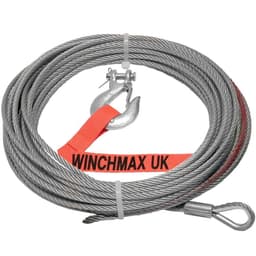
Synthetic winch rope belongs on a smooth hawse fairlead. Warn's rope FAQ and Novawinch's synthetic-versus-steel essay both tie fibre to a hawse and steel wire to a roller. A roller grooved by years of cable can nick braid the first time you winch through it. If you are replacing steel with synthetic, plan the fairlead swap before you tension the new line. Steel cable in this set, the WINCHMAX 5 mm × 15 m, expects a roller path in ordinary use. Weight and burrs are the trade you accept. The material split is on synthetic winch rope vs steel cable. This page assumes you already picked fibre or wire. Quad owners still need the right length for the drum. That is the 15 m class, not a different fitting method.

The drum end

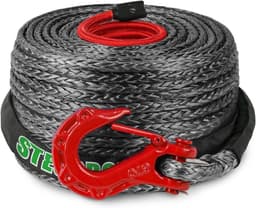
Follow the winch maker's manual for your drum: setscrew, wedge socket, or a named terminal. WINCHMAX lists a thimble, ring terminal, drum terminal and G70 clevis, more termination detail than most synthetics print. STEGODON bullets name a removable stainless rubber terminal. Captured reviews say it will not enter some Warn Zeon drum holes. SHALL names a hook and a sleeve and leaves the drum end unstated. Tiardey names a sheath only. Dry-fit the terminal before you load wraps. If the end piece is too wide, order a different listing or ask a winch fitter. Do not grind the drum hole unless the maker allows it. HSE treats kinked wire and frayed fibre as discard conditions. A line that cannot be secured is the same class of stop.

First layer, sleeve, and wraps

Spool under moderate tension so the first layer sits flat. A sliding sleeve or heat wrap protects the rope where it meets the fairlead. STEGODON reviews complain that the heat wrap covers only part of the first drum layer, leaving bare braid exposed on the rest. SHALL lists a 1.5 m sliding cover on several SKUs. Position it where abrasion actually occurs on your mount, not only where the photo shows it. Wrap counts do not merge across sources. HSE HSG221 discusses at least three turns remaining on a crane drum, a different duty from a vehicle winch. Use the manual for your winch, not a blended rule from the internet. If diameter or length was wrong, with a thicker rope eating capacity, go back to the buying guide before you finish spooling. Auveach and Tiardey buyers should confirm the delivered length against the title before this step. Run the first few metres under light load and watch the fairlead. Synthetic should not saw against a sharp edge, and steel should not bird-cage off the roller flanges. If the line walks to one side, stop and respool rather than letting it bury itself under the top layer.

Gloves, damper, and where you stand

WINCHMAX's rope manual asks for gloves, no loose clothing, a damper on wire rope, spectators at least 1.5 times the rope length away, and never hooking the rope back onto itself to shorten a pull. Those rules are from one maker's PDF, not a statute for every braid, but the hook-on-itself prohibition is sound practice for stored energy in any line. Synthetic rope can whip if it breaks. Steel stores energy differently and throws broken wires. Gloves either way. Keep bystanders out of the line plane, not just behind the bonnet. Do not drive the vehicle to help the winch pull. That loads the rope unpredictably. When the recovery is in traffic, the line is cut, or broken wires show on steel, stop and call professional recovery. Workplace lifts need accessories marked with a safe working load. Consumer drum lines in this capture do not provide that mark.

Common questions

Do I have to change the roller fairlead?
When you fit synthetic rope, plan a hawse unless the maker allows your roller and it is unscored. Steel cable generally stays on a roller.
How do I attach the rope to the drum?
Use the method in the winch manual for that model: a terminal, a setscrew or a wedge. WINCHMAX names a drum terminal in the box. Many synthetic listings here do not. Dry-fit the end before you spool, and stop if it will not enter the hole.
How many wraps should stay on the drum?
Follow your winch manual. Do not merge crane-drum guidance with vehicle-winch marketing into one number. HSE HSG221 discusses at least three turns on a crane drum, which is a different duty from the winch on a vehicle.
Where should bystanders stand?
WINCHMAX suggests at least 1.5 times the rope length away from the line. Keep people out of the snap-back zone, not beside the fairlead.
Can I hook the rope back onto itself?
No. The WINCHMAX manual forbids hooking the rope back on itself to shorten a pull. A tensioned line stores energy, whether it is wire or braid. Use an anchor rated for the pull, not a loop in the rope.
What if the rubber end will not go in the hole?
Stop. STEGODON reviews describe a rubber terminal that will not enter some Warn Zeon drum holes. Choose a compatible terminal or ask a winch fitter. Do not grind the hole unless the maker allows it, and do not spool in the hope that load will seat the end.
When should I stop and get help?
Stop when the terminal does not fit, the line is cut or kinked, broken wires show on steel, or the recovery is in traffic. A workplace lift needs a marked safe working load, which these consumer listings do not print. Call professional recovery rather than driving the vehicle to help the winch.

Related pages

Sources

Public UK and manufacturer sources named below. amazon.co.uk prices, stars and review counts on these nine listings were taken from the 19 October 2026 capture. Page updated October 2026.

  1. LOLER 1998, regulation 7 — safe working load (retrieved 19 October 2026)
  2. HSE INDG474 — thorough examination of lifting equipment (retrieved 19 October 2026)
  3. HSE: safe lifting by machine (retrieved 19 October 2026)
  4. Novawinch: synthetic rope versus steel cable (retrieved 19 October 2026)
  5. Warn winch rope FAQ (retrieved 19 October 2026)
  6. WINCHMAX rope manual (retrieved 19 October 2026)
  7. English Braids: winching Dyneema (retrieved 19 October 2026)
  8. Marlow ropes: vehicle recovery brochure (retrieved 19 October 2026)