Independent comparisons. We may earn from shop links. More info

Polyurethane or rubber castors for the floor you have

Updated: 22 October 2026

You are choosing a tread because the wheel will either mark the vinyl, pick up oil, or make you shove harder than you expected. The title often says rubber when the material field says something else, and this amazon.co.uk group also includes nylon and TPR. The twelve rows are the [heavy duty castors comparison](/hub/lifting-equipment/heavy-duty-castors). Prices are from the listings read on 19 October 2026. Products Compared did not run a floor test. A qualifying purchase can earn a commission.

You are choosing a tread because the wheel will either mark the vinyl, pick up oil, or make you shove harder than you expected.

Our top picks

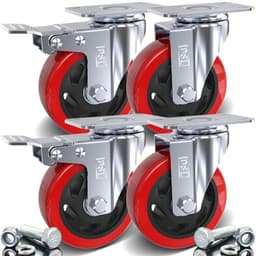
DSL DSL 100 mm, four brakes

Best overall

DSL DSL 100 mm, four brakes
9.4/10about £19.96
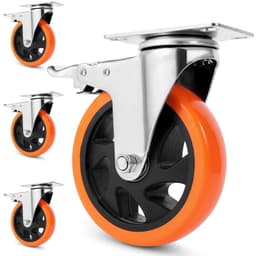
DSL DSL 100 mm, two brakes

Best value

DSL DSL 100 mm, two brakes
9.4/10about £18.49
On this page

What rubber and polyurethane each give up

Black rubber gets its colour from carbon black, and Essentra and Bulldog say that pigment can transfer onto wood and tile. Grey, silica-filled rubber is the non-marking version they describe, and it can still dent a soft surface. Rubber also takes more effort to push. Polyurethane is the usual UK trade compromise. Essentra says it does not transfer colour the same way, and that a longer life under their controlled tests is their statement, not a result for any ASIN here.

Oil, and what is only a seller claim

If the floor is lightly oily, Essentra's oil point is why polyurethane is the default suggestion. It is still not a chemical rating. None of these listings names a standard for oil resistance. A bullet about lightly oiled floors is the seller's claim. Load arithmetic stays on the heavy duty castors buying guide.
DSL DSL 100 mm, four brakes

Testsieger

DSL DSL 100 mm, four brakes
9.4/10about £19.96

What these amazon sets actually say

The DSL 50 mm set says polyurethane in the bullet and rubbered in the title. The DSL 75 mm set is polyurethane. The DSL 100 mm packs have Rubber in the material field, so this comparison does not upgrade them to polyurethane. The WEIBIDA 5 inch set at £32.99 is the clear polyurethane row. The solid-rubber WEIBIDA set at £65.99 is two swivel and two fixed. HOLKIE at £13.99 is thermoplastic rubber. MSH&HCE says polyurethane in the bullets and metal in the material field.

When you would still pick nylon

Nylon rolls easily and can scar a floor. Castors Online puts it as the stronger, noisier wheel, and the better one on carpet. The WEIBIDA 2 inch nylon set is £39.99 and prints 2200 lb, 1E+3 kg and 250 kg. Until one of those figures is the one you trust, the tread is not the reason to buy it. The levelling set then drops a rubber foot, which is a parking method.

Common questions

Will black rubber mark vinyl or wood?
It can. Essentra and Bulldog both trace marks to carbon black in black rubber, which can transfer onto wood and tile. Grey, silica-filled rubber is the compound those guides describe as non-marking, and it can still dent a soft surface. In this comparison the DSL 100 mm material field says rubber and does not say the compound is grey or non-marking. If the floor is pale vinyl, do not assume a black tyre will leave it clean.
Is polyurethane always non-marking?
No. Trade guides say polyurethane does not transfer colour the way carbon-black rubber does. They do not say it cannot scuff. The DSL 75 mm bullet says the wheels leave no marks, and one UK review says they marked the floor under an oak-top table. The WEIBIDA 5 inch listing calls its polyurethane non-marking. That is the seller's word. A single oak-top review is not a verdict on every polyurethane wheel, and it is enough to drop the word always.
When is nylon the right tread?
When the floor is firm and flat, you can accept more noise, and you want the wheel to roll rather than grip. Castors Online describes nylon as stronger and noisier than rubber, and better on carpet. The WEIBIDA 2 inch set is the nylon row here, 38 mm wide in the bullet, at £39.99. It is the wrong tread for a floor you cannot scratch, and the listing's three load figures still have to be reconciled before the material matters.
What is TPR on the HOLKIE set?
Thermoplastic rubber, which is the material field on the HOLKIE 50 mm twin-wheel set at £13.99. It is not the polyurethane field on the DSL 75 mm set, and it is not the solid rubber on the £65.99 WEIBIDA set. The HOLKIE page also says two brakes and a 400 kg total. Choose it as a low furniture twin wheel, not as a substitute for a 100 mm workshop tyre.
Are the DSL 100 mm wheels rubber or polyurethane?
On the listing the material field says rubber. This comparison does not relabel them from a description that is not on that page. The 50 mm and 75 mm DSL sets are the ones that say polyurethane. If you came for a polyurethane 100 mm wheel, look at the WEIBIDA 5 inch set, and still read its two load lines, 1400 lb and 6.3E+2 kg.
Which tread for an oily workshop floor?
Polyurethane is the trade-guide default, because Essentra describes it as more resistant to oil than rubber. That is their comparison, not an oil certificate for these ASINs. The WEIBIDA rubber set at £65.99 says the tyre is solid and needs no inflation, and its bullet mentions lightly oiled floors as a use, which is a claim rather than a test. A UK review says a full timber cart on that set was only just mobile. None of the listings names a British Standard for chemical resistance.

Related pages

Sources

Public UK sources named below. amazon.co.uk prices, stars and review counts on these twelve listings were read on 19 October 2026. Page updated October 2026.

  1. HSE: push and pull risks (retrieved 19 October 2026)
  2. HSE INDG143: manual handling at work (retrieved 19 October 2026)
  3. HSE: roll cages and wheeled racks (retrieved 19 October 2026)
  4. HSE: push and pull assessment (retrieved 19 October 2026)
  5. BS EN 12532:1999, industrial castors (retrieved 19 October 2026)
  6. Keystone Castors: buying swivel castor wheels (retrieved 19 October 2026)
  7. TENTE: locking systems for castors (retrieved 19 October 2026)
  8. Consumer Rights Act 2015 (retrieved 19 October 2026)