Independent comparisons. We may earn from shop links. More info

Stihl battery vs petrol leaf blower: which power source fits your work?

Updated: October 2026

If you are clearing one UK garden after the leaves fall, the useful question is not whether battery or petrol is better in the abstract. It is whether your work fits a battery-and-swap routine or needs to continue wherever the next pile is. This Stihl battery vs petrol leaf blower comparison uses the BGA 86 and the BG 86 to make that decision concrete. You can compare the wider market on the [Stihl leaf blower comparison](/hub/lawn-and-garden-equipment/stihl-leaf-blower). Equal blowing force does not mean equal working time, weight or upkeep. If you buy through our links, we may earn a commission at no extra cost to you.

If you are clearing one UK garden after the leaves fall, the useful question is not whether battery or petrol is better in the abstract.

Our top picks

On this page

The blowing-force tie

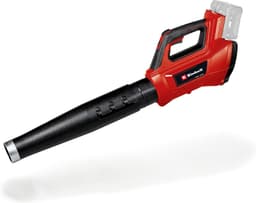
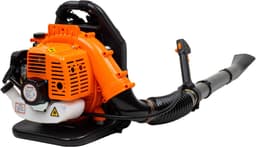
Stihl gives both the cordless BGA 86 and the petrol BG 86 a blowing force of 15 N. That is a better like-for-like comparison than putting a newton figure beside a retailer’s air-speed claim in kilometres per hour. Blowing force describes the push at the nozzle. Speed and air volume describe different parts of the airflow. The BGA 86 is an AP-system tool. Stihl lists it at 2.8 kg without a battery and sells it tool-only, so a working setup needs a compatible AP pack and charger. The BG 86 uses a 27.2 cm³ 2-MIX petrol engine and weighs 4.4 kg before fuel. It reaches the same stated 15 N, with the weight in the machine rather than partly in a removable battery. Do not confuse either model with the BG 56. Stihl’s UK page gives that petrol blower 13 N, so the force is not a tie. The buying guide explains the battery families.

What the battery table actually promises

Stihl’s working-time table for the BGA 86 changes with the AP battery and the power setting. Published ranges span roughly 26 to 150 minutes on commonly paired packs, and about 140 to 840 minutes across the wider options. The short figure is high power. The long figure is reduced output. Reading only 840 minutes is the wrong plan for constant full-force clearing. Cold weather, battery age and repeated boost use can cut that further. Count the high-output minutes for your pack, then the time to recharge or swap. The BGA 86 makes sense if an AP battery is already part of your system. Its IPX4 rating is splash protection, not permission for standing water or a downpour. If wet, stuck debris is the difficulty rather than runtime, use the wet leaves page.

What a petrol tank changes

The BG 86 manual gives a 0.44-litre fuel tank. That is capacity, not a guaranteed number of minutes, and it is not a full-power runtime. An owner’s estimate of about an hour is not a specification. When the tank empties, you refill from an approved fuel can instead of waiting for electricity. The BG 86 needs a 50:1 petrol-to-oil mixture. Stop the engine and let it cool before you add fuel. At 4.4 kg without fuel, it starts 1.6 kg above the BGA 86 before a battery is fitted to the cordless model. Petrol earns that burden when the site has no practical charging window. One small garden rarely does. Battery removes local exhaust near windows, though it is not silent.

Which to buy, with one condition

Choose the BGA 86 if you already own suitable AP batteries and your work fits a planned pack swap. It gives the same published 15 N as the BG 86, is lighter before its power source is attached, and avoids fuel mixing. The condition is that you price enough battery capacity for your high-power minutes, not for the longest low-power number in the table. Choose the BG 86 if the working day cannot stop for charging and you can safely transport, mix and store fuel. Its 0.44-litre tank can be replenished on site. The manual does not support a promise that one tank lasts for hours. The condition is that the extra weight, engine care, fumes and noise are acceptable where you work. For a small garden with no AP equipment, an AK or AS blower can cost less as a complete setup. The best Stihl leaf blower page matches those families to the job. Decide on your longest continuous high-power session.

Common questions

How long does an AP 300 S last on the BGA 86?
Use Stihl’s current battery working-time table for the exact pack row and read both ends of its range. The shorter figure represents high-power use and the longer figure reduced output. Do not plan a full-force job around the largest number in the range.
Does the BG 86 run for hours on one tank?
The manual states a 0.44-litre tank and does not provide a directly comparable full-power runtime. Owner estimates are not a specification. Plan around safe refuelling access rather than assuming one tank will cover an entire session.
Which is quieter?
Battery is usually the more neighbour-friendly option because it removes engine and exhaust noise, but the BGA 86 still produces a powerful air jet. Follow the manual’s hearing-protection guidance and consider the time and place of use on either model.
Can I refill faster than I can charge?
Usually, yes, once the petrol tool is cool and you have correctly mixed fuel ready in an approved container. A battery user can close that gap by swapping to a charged AP pack, which is why the number of packs matters as much as charger speed.
Is petrol worth it for one small garden?
Usually not, if the whole task fits comfortably within one or two suitable battery packs. Petrol becomes more rational when several jobs, large grounds or a lack of charging access make interruptions costly. For occasional use, fuel storage and engine maintenance can outweigh the refill advantage.

Related pages

Sources

Sources checked for this comparison; last retrieved on 16 October 2026.

  1. Stihl UK, leaf blowers, blowers and vacuum shredders (retrieved 16 October 2026)
  2. Stihl UK, BG 56 petrol blower (retrieved 16 October 2026)
  3. Stihl UK, BGA 86 (retrieved 16 October 2026)
  4. Stihl UK, AK battery system (retrieved 16 October 2026)
  5. Stihl BGA 57 instruction manual (retrieved 16 October 2026)
  6. GOV.UK, noise nuisances: how councils deal with complaints (retrieved 16 October 2026)
  7. HSE, noise at work regulations (retrieved 16 October 2026)
  8. Stihl UK, fuel mix for 2-MIX and 4-MIX engines (retrieved 16 October 2026)