Independent comparisons. We may earn from shop links. More info

How to install artificial hedge panels

Updated: 21 October 2026

The fence is up, the carton is in the hall, and the shop video you watched assumes clips this box may not contain. This is how to install artificial hedge panels from this set: check that the surface is sound, use a fixing that surface can hold, and stop when the job becomes a façade, a party wall or a taller enclosure. It is not a ranking of the seven listings. How much area a title actually covers is on the [buying guide](/hub/houseplants/plants-wall/sub/plants-wall-buying-guide). Whether the leaves block a view, and whether extra height needs permission, is on the [privacy screen guide](/hub/houseplants/plants-wall/sub/plants-wall-privacy-screen). The listings are on our [plant wall comparison](/hub/houseplants/plants-wall). Peter F. did not fit a test fence. Updated 21 October 2026. A qualifying purchase can earn us a commission at no extra cost to you.

The fence is up, the carton is in the hall, and the shop video you watched assumes clips this box may not contain.

Our top picks

Ark Mat Ark Mat VG-3 Lowther Green

Best overall

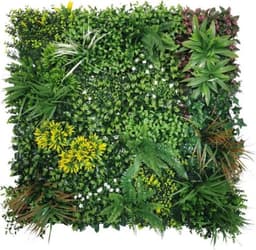
Ark Mat Ark Mat VG-3 Lowther Green
7.8/10about £39.95
Vinclus Vinclus ivy roll

Best value

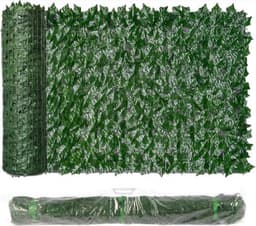
Vinclus Vinclus ivy roll
7.0/10about £21.99
ULAND ULAND mixed fern 12-pack

Alternative

ULAND ULAND mixed fern 12-pack
7.6/10about £119.90
On this page

Check the surface and the box

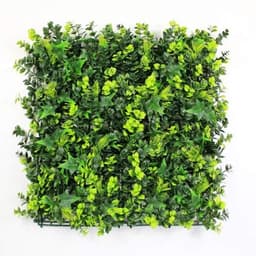
A sound fence comes before any leaf. If a timber panel rocks, or a post is soft where it meets the ground, a cable tie will hold the ivy and not the structure. Shop install notes written for connected panels they sell start with the same check and then assume male and female connectors. Several listings here do not include that kit. Read the included-components line on the ASIN you ordered. Vinclus, the roll titled 1 × 3 m, lists a rolling strip. The assembly field says no. You still have to secure the roll. A reviewer described straps that are not in that included line. The generic 50 × 100 cm panel names the panel only. One UK reviewer said no fixings arrived. Another screwed into plastic holes along the top. The fern ULAND pack lists zip ties, and a reviewer still wanted heavier cable ties, so the supplied tie is a start rather than a promise on a windy corner. The mixed broadleaf pack lists binding ties and marks assembly as required. A009 claims fasteners, while the piece count on that listing still conflicts, so count the tiles in your hands before you mark out a whole run from the title. Both Ark Mat metre panels list the panel. Reviews say four squares clip together and people then use cable ties, which are not on the included line.

Timber, mesh and brick

On sound timber, UK shop pages describe staples or U-nails about every 25 cm, closer where the run is exposed, with the point going into the rail rather than through a plastic leaf. That spacing is their fitting tip. It is not a British Standard, and it is not printed on these amazon.co.uk listings. Work from the back, or from a gap in the foliage, so the staple misses the leaf. On mesh, railings or wire, cable ties do the equivalent job, snug enough that the panel cannot creep along the wire. Vinclus is one continuous strip. You are not clipping connectors this carton does not contain. The fern tiles follow the seller’s cut-and-connect line, using the zip ties in the box. Ark Mat reviews describe four squares making the metre, then ties. One tie at each end is not a fixing. Shop notes, and one Ark Mat review after leaves had shed, both point at wind: the middle sags if only the corners are held. On brick or render, do not pin the tile straight into the mortar. The masonry route those notes describe is battens, then galvanised mesh, then ties from the panel into that mesh. A row of plugs is a row of holes when the screen comes down. If you are not confident setting battens into a wall you own, that is already a reason to stop.

Cut, join and fluff

Cut the backing from the rear, not by tearing leaves off the face. Foliage breaks when you pull it off the grid, and a pair of scissors through the front does the same damage. Lay the panel face down, mark the post or the rail, and cut the mesh. The cut is unfinished until you tie or staple that edge. An unsecured cut flaps, and the flap is where the next leaf pops off in your hand. Shared Ark Mat reviews mention leaves coming away while the four squares were clipped, and one person cut the bottom because the grid showed along the fence. Trimming that strip is a finish. It also shortens the cover, so decide whether the sightline still works before you remove a band you cannot put back. Once the ties are in, fluff the leaves forward so they sit off the fence rather than pressed flat. Fluffing does not add density the plastic was not moulded with, and a thin roll stays thin. If two tiles gap at the join, overlap them on the mesh side and tie through both layers. Stretching one tile to meet the next is how a corner tears. Which roll or tile you should have ordered is on best artificial hedge panels. This page only fits the one already in the garden.

When you stop

Stop when the surface is not yours to drill, or when the screen would change the height of the enclosure. On a block of flats, the managing agent’s rule comes before a tie on the balcony rail. A party wall is not a place to try masonry plugs. If the plan is to stand a panel on top of the fence, you are no longer covering the height you have. In England the Planning Portal’s fence notes follow a limit of 1 metre beside a highway used by vehicles and 2 metres elsewhere, and you must not raise an enclosure that is already at that limit. Listed buildings and local directions sit outside the ordinary allowance. Scotland, Wales and Northern Ireland are not governed by that English order, so a London forum post is the wrong permission check for a fence in Glasgow. Indoors, keep the plastic off a heater. Kent Fire and Rescue’s note on artificial foliage is about commercial displays. It is a reason not to clad a salon from this set, not a step in stapling a garden fence. A cover on sound timber you own, at the fence’s present height, is the DIY case. A façade, a party wall or a new height is where you ask the freeholder, the council or a fitter before you buy more ties. Peter F. drew the fixing differences from these amazon.co.uk included-lines and from public UK shop guides as of 21 October 2026.

Common questions

How do I fix panels to a timber fence?
Use staples or U-nails into sound timber, through the mesh rather than through a leaf. A UK shop suggests a fixing about every 25 cm and closer on a windy run. That spacing is their tip, not a figure printed on Vinclus, ULAND or Ark Mat. If the fence panel moves when you push it, repair the post or the arris rail first. A tie into rotten timber holds the leaf for an afternoon and not the fence.
How do I fix a roll to a railing?
Unroll Vinclus against the rail and use cable ties through the screening into the bars or the mesh, at intervals along the length, not only at the two ends. The included line on that listing names the rolling strip. It does not name ties. A reviewer mentioned straps that are not in the field, so bring your own. The assembly field says no, which means there is no frame to build. It does not mean the roll stays up on its own.
What if the box has no ties?
Buy them before you are standing on the fence. Ark Mat’s included line is the panel, and the reviews then describe cable ties. Reviewers of the generic panel report no fixings, and one person used screws in holes along the top. The fern pack does include zip ties, and a reviewer still wanted heavier ones. An empty included line is the signal. A connector kit from a different shop’s video is not hiding in this carton.
Can I cut a panel, and from which side?
Cut from the back. Lay the panel face down and cut the mesh, or the roll, where the post needs a shorter piece. Pulling leaves off the front to make a hole breaks the foliage. A cut edge still needs a tie or a staple, or the loose mesh flaps. Cutting the bottom of an Ark Mat square to hide a visible grid, as one reviewer did, removes cover you will not get back.
How do I fix to brick without a mesh frame?
You need the frame if you want the tile to come off again cleanly. Shop fitting notes tell buyers not to fix this kind of panel straight to masonry. Their route is timber battens, galvanised mesh on the battens, then cable ties from the panel into that mesh. Plugs into every brick joint leave holes when the screen comes down. If you cannot fix battens, or the wall is not yours, stop before you drill.
Why did leaves come off while I was fitting Ark Mat?
The shared UK reviews describe four squares clipped into the metre, and they also describe leaves coming off while the panel was handled. Forcing a leaf back onto a stem, or stapling through the face, makes that worse. Clip the squares, tie the grid, and fluff what remains. A leaf on the patio is a handling loss. A heavier staple will not glue it back onto the stem.
When do I stop and call someone?
Stop if you are about to drill a façade you do not own, open a party wall, or raise a fence that is already at the height limit. A managing agent on a block, and the planning notes on the privacy page, come before another pack of ties. Also stop if the only sound fixing is a masonry frame and you have not built one. Fitting a cover to sound timber you own is the ordinary case. Changing the enclosure is not.

Related pages

Sources

Public UK sources named below. amazon.co.uk prices, stars and review counts on these seven listings are the figures used for this comparison. Page updated 21 October 2026.

  1. Planning Portal, fences, gates and garden walls (retrieved 21 October 2026)
  2. GPDO 2015, Schedule 2, Part 2, Class A (retrieved 21 October 2026)
  3. mygov.scot, building a fence or wall (retrieved 21 October 2026)
  4. GOV.WALES, planning permission for fences, gates and garden walls (retrieved 21 October 2026)
  5. Anti-social Behaviour Act 2003, section 66 (retrieved 21 October 2026)
  6. Kent Fire and Rescue, artificial or dried foliage (retrieved 21 October 2026)
  7. GOV.UK, General Product Safety Regulations 2005 (retrieved 21 October 2026)
  8. RHS, green walls (retrieved 21 October 2026)