Independent comparisons. We may earn from shop links. More info

Peace lily vs pothos

Updated: 21 October 2026

You are choosing between an upright clump that can throw a white spathe and a vine that trails off a shelf. Peace lily vs pothos is that choice, and both are sold as low-light plants. They fail in different ways. A peace lily in deeper shade grows slowly and rarely flowers. Devil’s ivy, which is golden pothos, loses the cream marks and rots if winter compost stays wet. The prices are the amazon.co.uk lines in our [low light plants comparison](/hub/houseplants/low-light-plants). The upright pick is on the [best low light indoor plant](/hub/houseplants/low-light-plants/sub/low-light-plants-best) page. This page is the pair. Peter F. updated it on 20 October 2026 from the listings and the Royal Horticultural Society. This is not a lab test. A qualifying purchase through our links can earn a commission at no extra cost to you.

You are choosing between an upright clump that can throw a white spathe and a vine that trails off a shelf. Peace lily vs pothos is that choice, and both are sold as low-light plants. They fail in different ways.

Our top picks

On this page

Upright spathes or a trail

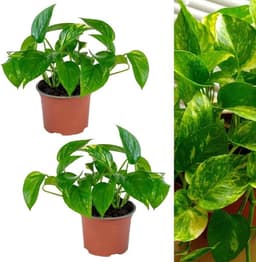
The Carbeth peace lily, B0BK9TD3C5, arrives in a 9 cm nursery pot. A bullet says low to medium light and shade. The same listing says it grows best in bright, indirect light. The height field of 50 cm is a catalogue figure. The decorative pot is not included. Amazon.co.uk shows 4.3 from 1,377 reviews that match a peace lily, including yellow leaves and transit damage as well as healthy plants. Devil’s ivy is Epipremnum aureum, also called golden pothos. The single listing, B0HDCPF75Q, puts low light rooms in the title, at about £10.99, with 5.0 from eight reviews. There is no stated pot diameter, and the weight field prints 0.05 g. The two-pack, B08H5ZQD6L, is Carbeth Scindapsus aureus at about £19.99 with 4.3 from 516 reviews. The title says 12 cm and a bullet says 13 cm, and the plants prefer good light. That is a different light sentence from the single pot. Choose the peace lily for a clump, and accept fewer flowers as the room gets duller. Choose devil’s ivy for a trail, and let the top of the compost dry. A spathe will not appear on the vine. The fern wants moisture, the Nanouk wants bright light, and the schefflera’s low-light line comes with a leggy caveat. None of them replaces this pair.

How a peace lily fails when the room is dimmer

The RHS is blunt about flowers. Bright, indirect light is where you get spathes. Deeper shade means slow growth and rare flowers. A north room where you can read can hold the leaves. A hallway where you cannot read will not be rescued by the low-to-medium bullet. Dry air browns the edges. A dry pot droops and often recovers after a drink. Wet compost yellows leaves and rots roots. The pet question has no answer. The PDSA names peace lily, and the RHS treats it as poisonous. If a cat or dog chews plants, skip this one.

How devil’s ivy fails when the room is dimmer

Devil’s ivy fails on colour and on winter water, not on missing flowers. Homes & Gardens says variegation is stronger with more light, and that a jade form is the one for a room with no direct light. The RHS says deep shade slows growth and reduces variegation. Let the top 2–3 cm dry. Overwatering in winter rots roots. Wear gloves. The PDSA page names peace lily and does not clear the vine, so do not treat it as the pet-safe alternative. In January, water both less often than in June, and do not use one gap for both. The peace lily still wants compost that is lightly moist. The ivy wants the top centimetres dry, and a cold wet pot is the rot the RHS warns about. Neither needs a winter feed while it is standing still.

About £9.99 once, or about £19.99 for two

The peace lily is the large matching sample and the lower price: 4.3 from 1,377 at about £9.99. A 5.0 from eight reviews is not a reason to rank the single ivy above that. The two-pack is 4.3 from 516 at about £19.99, and the listing says prefer good light. The pots are 12 cm in the title and 13 cm in a bullet. Do not add the eight reviews to the 516 and call it one rating. Order the peace lily if you want the upright plant, you can read by the window, and no pet chews the leaves. Order devil’s ivy if the shelf is the point and you will let the top dry. Prefer the two-pack only when you want two trails and you have read the good-light line. Prefer the single pot only when the title’s low-light line is what you came for, and you will not treat eight stars as a stable rate. Skip both if you cannot read in the room. If a plant arrives dead, the Consumer Rights Act 2015, section 9, still applies: photograph it, contact the seller, and Citizens Advice is on 0345 404 0506 if that return is refused.

Common questions

Which one if I want white spathes?
The peace lily. Devil’s ivy does not flower in that way. The RHS says spathes need bright, indirect light and become rare in deeper shade, so a dim north room may give you leaves without flowers. The Carbeth listing at about £9.99 says low to medium light and also says it grows best in bright, indirect light. Buy it for the clump, and treat a spathe as possible rather than promised.
Which one for a shelf or a hanger?
Devil’s ivy. It trails, and the single listing is titled for low light rooms, while the peace lily stays an upright clump in a 9 cm pot. The two-pack is two trails at about £19.99 if you can accept 12 cm in the title and 13 cm in the bullet, and a care line that says the plants prefer good light. A hanger in a windowless hall is still the wrong room for either plant.
Will golden marks last in a north room?
Often they fade. Homes & Gardens and the RHS both tie stronger variegation to brighter light, and deep shade leaves devil’s ivy greener and slower. A north window where you can read is survivable. It is not a guarantee that the cream streaks stay as they looked in the photo. A jade-type plant is the form those guides point to when light is poor. This set does not label the single pot as jade.
Is the two-pack better value than one peace lily?
Not as a low-light buy. The peace lily is about £9.99 with 4.3 from 1,377 reviews and a low-to-medium bullet. The two-pack is about £19.99 with 4.3 from 516 reviews and a line that says prefer good light. It is the better spend only if you already want two trailing plants and the pot-size clash is acceptable. The single ivy at about £10.99 is close to the peace lily on price and far thinner on reviews.
Are they the same plant?
No. A peace lily is an upright aroid grown for leaves and spathes. Devil’s ivy is Epipremnum aureum, sold here as golden pothos. The two-pack title says Scindapsus aureus, which the bullet treats as the same golden pothos, not as a peace lily. They want different compost moisture, and only one of them can flower with a white spathe.
Which is worse for a cat?
Do not pick a winner. The PDSA names peace lily. The listing’s pet question has no answer, which is not clearance. The RHS says wear gloves with epipremnum and does not present devil’s ivy as safe to chew. The PDSA page used for this comparison does not clear the vine just because it names the lily. If a cat or dog chews plants, skip both and call a vet if a chew has already happened.
What do I do in January with each?
Water less often than in summer, and use a different test. For the peace lily, keep the compost lightly moist, wait longer between drinks, and expect fewer flowers. For devil’s ivy, let the top 2–3 cm dry, and do not leave the pot cold and wet, which the RHS links to root rot. Hold fertiliser until you see new growth. A drooping lily on dry compost usually wants a drink. A yellow ivy in a soggy pot wants a pause.

Related pages

Sources

Public UK sources named below. amazon.co.uk prices, stars and review counts on these seven listings are the figures used for this comparison. Page updated 21 October 2026.

  1. RHS houseplants for shady rooms (retrieved 21 October 2026)
  2. RHS how to grow peace lilies (retrieved 21 October 2026)
  3. RHS Epipremnum (retrieved 21 October 2026)
  4. RHS how to grow Swiss cheese plants (retrieved 21 October 2026)
  5. RHS Nephrolepis exaltata (retrieved 21 October 2026)
  6. PDSA poisonous plants (retrieved 21 October 2026)
  7. HTA harmful-plants guide (2022) (retrieved 21 October 2026)
  8. Consumer Rights Act 2015, section 9 (retrieved 21 October 2026)
  9. GOV.UK plant passports (retrieved 21 October 2026)