Independent comparisons. We may earn from shop links. More info

Hot water cylinder buying guide for UK homes

Updated: 17.10.2026

Replacing a cylinder can look like a choice between litres and price, but the wrong heat source or pressure system cannot be fixed by a better brand. This hot water cylinder buying guide puts the decisions in order: how the water is heated, how it is supplied, how much you need, and what the installation requires. Inspect the six direct electric wall stores in our [hot water cylinder comparison](/hub/hot-water/hot-water-cylinder) once those questions are settled. They run from 30 to 120 litres, a small-cylinder set rather than every cylinder for a UK home. Peter F. checked the amazon.co.uk listings, with no lab test. A qualifying purchase can earn a commission at no extra cost to you.

Replacing a cylinder can look like a choice between litres and price, but the wrong heat source or pressure system cannot be fixed by a better brand.

Our top picks

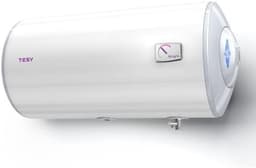
TESY TESY BiLight 30 litre

Best overall

TESY TESY BiLight 30 litre
8.8/10about £139.99
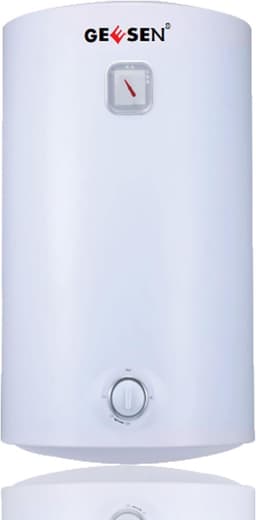
GEESEN GEESEN GK050 50 litre

Alternative

GEESEN GEESEN GK050 50 litre
7.0/10about £219.00
On this page

What to decide before you compare models

Begin with the heat source. A direct cylinder uses its own immersion. An indirect cylinder has a coil fed by a boiler or heat pump. All six are direct, and none states a coil. If a system boiler or heat pump should heat the water, read direct or indirect hot water cylinders. Next, vented or unvented. A vented cylinder is fed from a loft cistern, and outlet pressure depends on the height difference. An unvented cylinder takes a sealed mains supply and needs a safe discharge. A weak incoming main stays weak. See unvented or vented hot water cylinders. Capacity is third. The Hot Water Association gives 35–45 litres per occupant as a rule of thumb. Baths, shower flow and reheat time change it. Use what size hot water cylinder you need before wattage or stars.

Pressure, discharge and who may install it

An unvented store is a pressurised installation, not a plug-in appliance. In England, CNC Building Control says an unvented store above 15 litres must be installed by a competent person. A scheme member may self-certify suitable work. Otherwise the Building Control route needs to be agreed. Requirements differ across the UK, so ask what applies at your property. Approved Document G for England requires an unvented vessel to have at least two independent safety devices in addition to its thermostat. If a relief device operates, the discharge must be visible and taken safely to a suitable point. A cylinder may fit beneath a worktop and still have no acceptable route for its tundish and discharge pipe. The word unvented is not evidence of competence, approval or a complete safety kit.
TESY TESY BiLight 30 litre

Testsieger

TESY TESY BiLight 30 litre
8.8/10about £139.99

What the listing must say about the box and electrics

Read included components separately from the feature bullets. A listing can name a relief valve as a requirement without supplying it. The 100 litre horizontal TESY says cylinder only and calls for a 3 bar temperature and pressure relief valve plus a 1.5 mm electrical cable. The 50 litre horizontal TESY includes a wall bracket but not fixing bolts, and it specifies a 16 A fused spur. The GEESEN 50 litre listing names a safety valve, drip pipe, hanging plate and screws. Its title says UK plug, but the contents also name an American NTP 1/2 adapter. Corded electric does not tell you whether a 13 A plug is supplied. Only compare element output when the number is credible. The 30 litre TESY and 50 litre horizontal TESY state 1,500 W, the GEESEN states 2,000 W and the 100 litre horizontal states 3,000 W. The 80 litre listing prints 1,500 kW and the 120 litre listing places 220 W beside 220 V. Those two figures are unusable until you have the model plate.

What a small electric wall cylinder is not

The six listings cost £139.99 to £259.99 and store 30–120 litres. They are direct electric wall stores. A family system-boiler cylinder is commonly larger and includes a primary coil. A heat-pump cylinder needs a coil for a lower flow temperature. Buying one of these wall units creates neither connection. Class C is not a failed safety test. It depends on the declared load profile. The 50 litre horizontal TESY states profile M. The GEESEN states class A without a profile, so the letters are not a saving. The 30, 80 and 120 litre TESY files share one 4.4-from-72 line. Price cannot repair missing technical information.

Common questions

Is a hot water cylinder the same as a combi boiler?
No. A cylinder stores hot water so it is ready for later use. A combi boiler normally heats mains water on demand and does not need a separate domestic hot-water cylinder. A system boiler, by contrast, usually works with an indirect cylinder containing a coil.
Do I need a loft cistern?
You need a feed cistern for a conventional vented cylinder. An unvented cylinder takes water from the mains and removes that requirement, but it adds pressure controls, relief devices and a safe discharge. Measure incoming pressure and flow before treating the absence of a loft tank as an upgrade.
Does unvented mean the cylinder is ready to fit?
No. It does not prove that every valve, pipe, fixing or electrical component is included, and it does not approve the installation. Check the exact box contents and have a competent installer specify the controls and discharge route for the property.
How big should the cylinder be?
The Hot Water Association’s 35–45 litres per occupant is a starting point, not a guarantee. Shower flow, baths, simultaneous use, storage temperature and recovery input all change the result. An installer should size the store around your peak draw rather than bedrooms alone.
Why is energy class C not automatically poor?
The letter is tied to a declared load profile and a regulated efficiency band. It is not a simple product mark. Compare cylinders with the same profile and a complete declaration. A class A claim without a profile cannot by itself prove lower bills than a class C listing.
What evidence should I keep after installation?
Keep the product instructions, commissioning record, installer details and any Building Regulations compliance certificate that applies. Also record the valve and discharge arrangement so future servicing does not depend on an online listing that may later change.

Related pages

Sources

Public UK sources listed in the research digest, and the amazon.co.uk listings for these six cylinders. Prices in the digest were captured on 16 October 2026.

  1. Approved Document G (2024 amendments) (retrieved 16.10.2026)
  2. Part G FAQ (retrieved 16.10.2026)
  3. CNC Building Control: unvented hot water cylinder (retrieved 16.10.2026)
  4. Hot Water Association, unvented note (retrieved 16.10.2026)
  5. Hot Water Association, sizing a hot water cylinder (retrieved 16.10.2026)
  6. HSE: legionella and hot and cold water systems (retrieved 16.10.2026)
  7. Regulation (EU) No 812/2013 on legislation.gov.uk (retrieved 16.10.2026)
  8. TESY BiLight series (retrieved 16.10.2026)