Independent comparisons. We may earn from shop links. More info

How to sow seed bombs

Updated: 21 October 2026

You already have a pack, the ground is either lawn or a bare patch, and the listing says any time of year. How to sow seed bombs in the UK is narrower than that line. The balls need bare soil you may use, a spring or early-autumn sowing, contact with the surface, and water while the clay stays damp. A ball on living turf is the failure this page is trying to stop. Which pack to buy stays on the [seed bomb comparison](/hub/herb-seeds/seed-bomb). Peter F. used RHS and Plantlife notes with the stored amazon.co.uk listings. No lab sowed a ball. A purchase through our links can earn a commission at no extra cost to you.

You already have a pack, the ground is either lawn or a bare patch, and the listing says any time of year. How to sow seed bombs in the UK is narrower than that line.

Our top picks

On this page

Bare ground, not a living lawn

A seed bomb on a mown lawn loses to the grass. Plantlife notes that scattering balls can work on bare ground, and that prepared ground is the method they prefer. If you are adding seed to a lawn, they describe cutting short and scarifying until about half the soil is bare. That is a renovation, not a throw from the path. Clear a patch you occupy. Your own bed, planter or pot is the setting the Bumblebee Conservation Trust describes. The shady mix says scatter onto cleared soil. The five-pack bullet says no gardening, while one UK review says the turf still had to come off. Bloombugs says throw onto soil. None of those lines means a living sward. If the lawn is all you have, scarify to bare patches or move the balls to a container.

Spring or early autumn

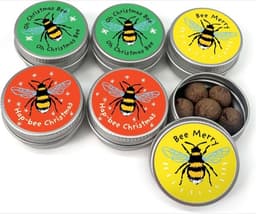
The RHS puts a meadow sowing in March or April, or in September. Heavy, wet soil is better left until spring, because an autumn sowing on waterlogged ground sits and rots. September suits lighter soil. Spring suits heavy clay, once it is workable rather than sodden. Beebombs' single bag prints any time of year. The shady mix prints year-round. Treat both as seller lines. A ball on frozen ground in January, or on dust in July, is outside the RHS window. Bloombugs prints spring or autumn, which is closer. Seedball prints spring. A tin opened in December is a present, not a sowing date. One ten-pack review describes a March sowing kept moist that still produced nothing. That does not ban March. It stops you treating kept moist as a guarantee.

Spacing, contact and water

Place the balls on the surface. Do not bury them. You want the ball touching damp soil or compost. A thick mulch on top hides it. Only Seedball prints a gap: at least 10 cm. Use that for those tins. Do not copy it onto a Beebombs bag. Reviewers of the single bag reported about 10 to 22 balls. Spread what you received across the claimed 2 m². Kew's Grow Wild notes, for loose seed rather than these listings, water a spring sowing about twice a week for six weeks, and an autumn sowing more lightly. Use that as a rhythm, not as a trial of one brand.

When nothing shows

Many perennial meadow plants stay plain in year one and flower from the second summer. Kew makes that split for wildflowers generally. A Beebombs label note in one review says some perennials take two years. Look for seedlings, not only for colour. If the bed grew only the lawn you failed to lift, the ground was the problem. Change the condition before a second pack. Move to bare soil, shift heavy soil into spring, or use a pot of compost you can water. A Christmas tin judged in December has not had a season. The RHS figure of about 2 g of pure wildflower seed per square metre is for loose seed. It is not the weight of a 130 g Beebombs bag. If Japanese knotweed, Himalayan balsam or giant hogweed is already there, follow the invasive-plant rules instead of adding a shop mix.

Common questions

Can you throw seed bombs onto a lawn?
Only if you have opened the sward so about half the soil is bare, which is Plantlife's lawn figure, or you have lifted the turf. A ball on living grass is outcompeted. Scarifying a lawn you own is different from tossing balls onto a verge. If you cannot scarify, use a pot of compost.
When should you sow on heavy, wet soil?
Wait for spring, in the March or April window, once the soil is workable. September suits lighter soil. An autumn sowing on cold, wet clay is the case the RHS tells you to delay. Any time of year on a Beebombs listing does not override that. Frozen or baked ground is a skip even in the right month.
What does any time of year leave out?
Frost, summer drought, heavy waterlogged soil, and the chance that perennials will not flower in year one. The single bag and the shady mix both print a year-round line. Bloombugs prints spring or autumn. Seedball prints spring. Use the RHS months unless your packet is more specific and the soil agrees.
How far apart does Seedball say to place the balls?
At least 10 cm, on soil or compost. That gap is for those tins. It is not printed on Bloombugs or the Beebombs bags. For the single Beebombs bag, spread the balls you received across the claimed 2 m². Review counts run from about 10 to 22, so a Seedball grid would mis-state that bag.
How often do you water a spring sowing?
Often enough that the clay and the soil surface do not dry while seedlings establish. Kew's loose-seed note is about twice a week for six weeks in spring, and lighter watering in autumn. Rain may do the job. Do not leave a spring ball for a dry fortnight because the packet said scatter and walk away. Pooling water is the other way to lose it.

Related pages

Sources

Public UK sources named below. amazon.co.uk prices, stars and review counts are the figures stored for these twelve listings. Page updated 21 October 2026.

  1. RHS, Creating wildflower meadows (retrieved 21 October 2026)
  2. RHS, How to sow a wildflower patch (retrieved 21 October 2026)
  3. Plantlife, When and how to sow wildflower seeds (retrieved 21 October 2026)
  4. Plantlife, Grow your own wildflower meadow (retrieved 21 October 2026)
  5. Wildlife and Countryside Act 1981, section 13 (retrieved 21 October 2026)
  6. Wildlife and Countryside Act 1981, Schedule 9 (retrieved 21 October 2026)
  7. GOV.UK, Invasive non-native plants (retrieved 21 October 2026)
  8. Bumblebee Conservation Trust, Make seed balls (retrieved 21 October 2026)
  9. Seed Marketing Regulations 2011 (retrieved 21 October 2026)
  10. Consumer Rights Act 2015, section 9 (retrieved 21 October 2026)