Independent comparisons. We may earn from shop links. More info

Is privet evergreen? January cover and 2 metre rule

Updated: October 2026

You want the boundary to stay private in January, and the plant label says evergreen. With privet that word is only half the story. Garden privet is semi-evergreen or evergreen in the Royal Horticultural Society's wording, which means a mild sheltered garden keeps more leaf and a cold exposed one can drop a lot of it. A tall line that does hold its leaf can also meet the high-hedge test in England and Wales. This page is from Peter F., editor for DIY & tools, on 20 October 2026. It uses the RHS, a UK nursery answer, GOV.UK, and the Anti-social Behaviour Act 2003. We did not score a winter in a trial garden. A qualifying purchase can earn a commission at no extra cost to you. The listings themselves are on the [privet comparison](/hub/hedges-and-privacy-screens/privet).

You want the boundary to stay private in January, and the plant label says evergreen. With privet that word is only half the story.

Our top picks

On this page

Is privet evergreen?

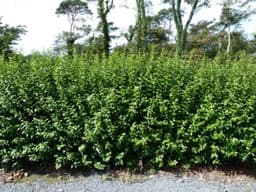
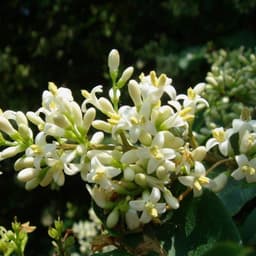
The RHS plant page for Ligustrum ovalifolium, garden privet, says semi-evergreen or evergreen. Its hedge table treats that species as a good formal hedge and notes honey fungus, which is a health problem rather than a winter one. Hedging Plants Direct, answering whether privet is evergreen as a seller, calls it semi-evergreen in the UK. Mild, sheltered gardens keep more leaf. Cold, exposed sites drop more. That seller is not a laboratory, and the point matches the RHS range rather than replacing it. Wild privet, Ligustrum vulgare, is the one the RHS describes as semi-evergreen in colder winters, and nurseries treat it as the type that thins more. Golden privet is still ovalifolium. The gold does not make it a better January screen. A seed title in this comparison, B0BR5RH61Z, calls Japanese privet an evergreen shrub, including the Italian arbusto sempreverde. That is a phrase on a seed listing. It is not a measurement of a UK hedge in January, and the packet is not garden privet. Read evergreen on a privet page as it depends on the site, then look at where your boundary actually sits. Which type you planted is on best privet hedge.

What you still see in January

A sheltered town garden, with the hedge out of the east wind, will often keep enough garden privet to block a neighbour's window. The same species on a hill, or in a gap the wind finds, can open into a lattice of twigs by midwinter. You will see through it at head height even though the plant is alive and will leaf again in spring. Wild privet is the more likely of the two to do that. If the brief was no sightline in January, wild privet was the wrong brief, however good it is for flowers. Young liners make this worse. A stated 30–50 cm plant in a 9 cm pot is not a winter screen in its first years, even if every leaf hangs on. Height and density take seasons of clipping, which is the work on how to plant a privet hedge. People who buy in October and judge the species in January are judging a sapling. Give an established hedge one winter in your own exposure before you decide it has failed. A brand-new line has not had that winter yet.

Yellow leaves in winter

Older leaves turning yellow and falling, while the twigs stay live and the buds look sound, is normal semi-evergreen behaviour. BBC Gardeners' World says as much. You do not spray it, and you do not replace the hedge because the pavement is briefly yellow. Clear the leaves if you like a tidy path. The plant is doing what a semi-evergreen does in a cool spell. The fork is bare wood. If a whole section has dead twigs, blackened stems, or no buds, you are no longer looking at winter leaf drop. Summer drought, waterlogging, and honey fungus can all leave a brown patch that you only notice when the rest of the hedge thins. That diagnosis is on privet hedge dying. Black spots on leaves that are otherwise attached are a different, usually minor, problem. They are not, by themselves, the white sheets under the bark that confirm honey fungus. If the hedge is evenly yellow and still budding, wait for spring before you order replacements.

A tall hedge and the neighbour

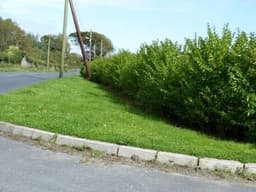
In England and Wales, section 66 of the Anti-social Behaviour Act 2003 defines a high hedge as a line of two or more evergreen or semi-evergreen trees or shrubs that form a barrier, and that rise to more than 2 metres. GOV.UK's complaint guide uses the same test: mostly evergreen or semi-evergreen, over 2 metres, and a barrier to light or access. Passing 2 metres is not itself an offence. A neighbour complains to the council, a fee may apply, and the fee is set locally. One council's published figure is not the UK fee, so do not budget from a single example. The council cannot order you to remove the hedge or to cut it below 2 metres. Roots are outside this part of the law. Talk first. The statute is the route when that talk has already failed. GOV.UK excludes a privet hedge that loses all its leaves in winter. It is not treated as semi-evergreen for the test. A line full of gaps that spoil the barrier above 2 metres is out as well. A garden privet that keeps a dense face through January is inside the test once it is over 2 metres. A privet that is naked every winter is outside it, even if it annoyed someone in July. Scotland and Northern Ireland are not covered by this Part. Do not tell a neighbour in Glasgow that section 66 applies. If January privacy is non-negotiable, privet is the wrong plant for an exposed site. Choose something that keeps its leaf, and accept that a truly evergreen barrier over 2 metres is more clearly inside the England and Wales complaint test, not less. This file did not compare yew, holly, or cherry laurel. It only marks the limit of privet.

Common questions

Is privet evergreen?
Garden privet is semi-evergreen or evergreen in RHS wording. In a mild sheltered UK garden it keeps more leaf. In a cold exposed garden it can drop a lot. Wild privet thins more readily. Evergreen on a seed title is not a winter trial of a hedge.
Will I be able to see through it in January?
On an exposed site, often yes, especially with wild privet or with a young line that has not thickened. A sheltered, established garden privet may still block the view. One January in your own garden tells you more than the word on the label. A 30–50 cm liner will not screen anyone yet.
Does wild privet hold leaf better or worse?
Worse, as a winter screen. The RHS describes it as semi-evergreen in colder winters, and nursery comparisons treat it as the type that drops more leaf. It is the better choice when you want a native flowering hedge, not when you want a solid January wall.
Are yellow winter leaves a sign it is dying?
Often no. Older leaves yellowing and falling while buds and twigs stay live is normal semi-evergreen behaviour. Dead sections, bare wood, or white fungal sheets under the bark are a different problem. Those belong with a proper look at the plant, not with a winter tidy-up.
Can a neighbour force me to cut a privet hedge?
In England and Wales they can ask the council to look at a high hedge. The line has to be a barrier of evergreens or semi-evergreens over 2 metres. The council cannot order removal or a cut below 2 metres. Being over 2 metres is not an offence by itself. Settle the height in conversation before anyone pays a fee.
Does the 2 metre rule apply in Scotland?
This high-hedge part of the Anti-social Behaviour Act 2003 is England and Wales. It does not apply in Scotland or Northern Ireland. A local complaint route may exist under other rules. Do not quote section 66 outside England and Wales.
If the hedge drops every leaf, is it still a high hedge?
GOV.UK says a privet hedge that loses all its leaves in winter is not semi-evergreen for this test. Gaps that stop it being a barrier above 2 metres also take it outside. A privet that stays dense and green through winter can still be complained about once it is over 2 metres.
What should I plant if I need a solid green wall?
Not privet on a cold exposed boundary, if January cover is the whole requirement. A plant that keeps its leaf will do that job more reliably, and if you let it pass 2 metres as a solid barrier it is more clearly inside the England and Wales high-hedge test. This comparison did not trial those alternatives.

Related pages

Sources

Public UK sources named below. amazon.co.uk prices and the one review line are from the four listings in this comparison, saved on 19 October 2026. Page updated October 2026.

  1. RHS, Choosing a hedge (retrieved 20 October 2026)
  2. RHS, Ligustrum ovalifolium (retrieved 20 October 2026)
  3. RHS, Planting a hedge (retrieved 20 October 2026)
  4. RHS, Pruning hedges (retrieved 20 October 2026)
  5. Anti-social Behaviour Act 2003, section 66 (retrieved 20 October 2026)
  6. GOV.UK, High hedges: complaining to the council (retrieved 20 October 2026)
  7. BBC Gardeners' World, How to grow a privet hedge (retrieved 20 October 2026)
  8. Horticultural Trades Association, Harmful plants (retrieved 20 October 2026)
  9. Glebe Farm, Hedging privet (Ligustrum ovalifolium) (retrieved 20 October 2026)