Independent comparisons. We may earn from shop links. More info

How to plant a hedge: soil, spacing and nest check

Updated: October 2026

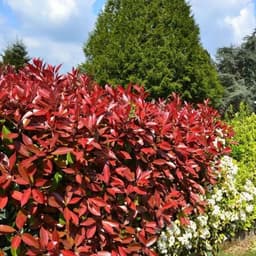
The plants are on the doorstep, or the order is about to go in, and the listing says you can plant from spring to autumn, or even year-round. That sentence is a seller window, not a frost exemption. How to plant a hedge with the evergreens in this set means three checks before the spade: the ground must not be frozen or waterlogged, the row needs a measured gap, and you look for a nest before you cut. The Royal Horticultural Society is the method here. The photinia seller’s about 2.5 m for six plants is one shop’s coverage line, not a national spacing law. The [hedge plants comparison](/hub/hedges-and-privacy-screens/hedges-plants) is where the four listings, prices, and ratings sit. This page does not rank them. A qualifying purchase can earn us a commission at no extra cost to you. We used the RHS planting guidance and the Wildlife and Countryside Act 1981. We did not plant a trial row.

The plants are on the doorstep, or the order is about to go in, and the listing says you can plant from spring to autumn, or even year-round. That sentence is a seller window, not a frost exemption.

Our top picks

On this page

When to put them in

The RHS plants evergreen hedges from late autumn into late winter, and it says not to plant into frozen or waterlogged soil. Early autumn is described as ideal for box, privet, and yew, which are not these listings, but the same page is the UK timing for evergreens generally: the soil is still warm enough for roots, and you are not asking a new shrub to establish in a July drought. If your parcel arrives in a hard frost, heel the pots in a sheltered spot or keep them watered under cover until the ground gives. Do not treat a delivery date as a planting date. One Green Spire listing prints spring to autumn. The single 1 litre plant prints year-round. The photinia pack prints spring. Those lines are what the seller typed. They do not cancel a frozen bed in January or a puddled clay trench in February. The plants in these listings are in pots, not bare-root bundles, so they can sit, watered, for a short delay. If you have not decided whether the row should stay near 1 m or grow into a screen, stop and use the hedge plants buying guide before you dig a trench you will regret.

How far apart

For a single row, the RHS suggests 30–60 cm between plants. A double row, used when the hedge must be thicker than about 90 cm, is set with the rows about 45 cm apart and the plants about 90 cm apart within each row, staggered. The example set-back from a boundary is 90 cm, so the mature stems are not on the pavement or through next door’s fence. A trench about 60–90 cm wide gives you room to spread roots rather than stabbing a pot-shaped hole. Woodland Trust figures of about 30 cm, or 1–1.5 m off a boundary, are written for native whips. Use them as a second UK voice, and keep the RHS band for these evergreens. Six photinia plants for about 2.5 m is roughly one plant every 40 cm, which is between 30 and 60 cm. Label it as the seller’s run, not as the RHS telling you that six 9 cm pots equal a finished hedge. Green Spire’s spread on the profile is only 0.1–0.5 m, so a 60 cm gap can look sparse for the first seasons. Mulch about 7.5 cm deep after planting, kept off the stems, which is the RHS aftercare figure.

Water and the first cuts

Water the plants in, then water in dry spells for the first two years. A new evergreen in a small pot has a rootball the size of that pot, not the root system of a hedge that has stood for a decade. The listings say moderate watering. That is a label, not a weekly number. In a dry April or a hot June, moderate still means you check the soil with a hand and water if it is dry a few centimetres down. Waterlogging is the other failure: firethorn and a heavy clay trench do not belong together, and the RHS tells you not to plant into it. Leave the leading shoot of an evergreen until the hedge is as tall as you want it. Cutting the top off a 22 cm Green Spire, or a tiny photinia shoot, does not make a denser screen this month. Photinia is the awkward one in this set. The RHS prefers secateurs to a hedge trimmer, because a coarse blade chews the large leaves, and it says stop trimming after mid-August so new red growth can harden before winter. Green Spire will not become a tall hedge if you leave the leader forever. Its ceiling is about 1 m. Whether waiting turns it into a Red Robin is the point of Green Spire or photinia.

Nests before you cut

Trimming is where the offence sits, not the planting. In England and Wales, the Wildlife and Countryside Act 1981, section 1, protects a nest while it is in use or being built. The RSPB recommends cutting from 1 September to 28 February, and still checking, because a late nest or an early one will not read your calendar. Cutting in May is not automatically a crime. Damaging or destroying an active nest is. Look before you start, including inside a thick photinia or a thorny firethorn where a blackbird can sit out of sight. If you cannot see, do not cut. The March-to-August ban that appears on GOV.UK is a different rule. Hedgerow management rules restrict cutting from 1 March to 31 August on agricultural land, and only where the hedge meets the length test. A garden boundary in a town is not that farm rule. Northern Ireland has its own wildlife order; the RSPB notes the Wildlife (Northern Ireland) Order 1985. Call someone else when the hedge is already tall, you cannot see whether birds are in it, or a neighbour has raised a high-hedge complaint and the row is over 2 metres. Thorns and berry wood on firethorn are on the pyracantha hedge page.

Common questions

How far apart do I plant these hedges?
Use 30–60 cm in a single row, which is the RHS band for hedge plants. If the hedge must be thicker than about 90 cm, a double row at about 45 cm between the lines, with plants about 90 cm apart in the row and staggered, is the society’s thicker layout. Set the row back from a boundary. The RHS example is 90 cm, so stems are not in the pavement once they fill out.
Does six plants for 2.5 m match the RHS band?
The sum does. Six plants along about 2.5 m is roughly 40 cm apart, which sits inside 30–60 cm. That 2.5 m line is the photinia seller’s coverage claim for 9 cm pots, not an RHS rule and not a mature screen. You can use the gap as a worked example. You should not read it as proof that the hedge will be 2.5 m tall, or that six pots equal privacy this season.
When should I plant an evergreen hedge in the UK?
The RHS window for evergreens runs from late autumn into late winter, as long as the soil is workable. Do not plant into frozen or waterlogged ground. Pots can wait, watered, through a cold snap. Early autumn suits several traditional hedge plants on that page. A July planting is possible in mild, wet weather and is the season most likely to need extra watering.
Can I plant because the listing says year-round?
You can plant in any month when the soil is not frozen or sodden and you can water through a dry spell. The year-round line on the single Green Spire, and the spring-to-autumn line on the 6-pack, are seller attributes. They do not override the RHS stop for ice and standing water. A Saturday after snow is a storage day, not a planting day.
Can I cut the hedge in May?
You can cut in May only after you have checked and found no nest in use or being built. The offence in England and Wales is damaging that nest, not holding secateurs in summer. The RSPB still prefers 1 September to 28 February, and says you check then as well. If the hedge is too dense to see into, leave it until you can, or get someone else to look.
Is the March-to-August ban the same for a garden hedge?
No. The ban on cutting from 1 March to 31 August is the farm hedgerow rule on GOV.UK, for agricultural land that meets the length test. An ordinary garden hedge is governed by the nest protection in the Wildlife and Countryside Act, not by that closed season. You still must not harm an active nest at any time of year.
When should a professional do the cut?
When you cannot see whether birds are nesting in a tall hedge, when stems meet a path, a cable, or a roof, or when the row is already over 2 metres and a neighbour has mentioned the council. Planting a short row of potted evergreens is ordinary garden work. A reduction cut on a ladder, with thorns or with nests you cannot check, is the point to hand it over.

Related pages

Sources

Public UK sources named below. amazon.co.uk prices, stars and review counts are from the four listings in this comparison. Page updated 21 October 2026.

  1. RHS, planting a hedge (retrieved 21 October 2026)
  2. RHS, Photinia × fraseri Red Robin (retrieved 21 October 2026)
  3. RHS, Photinia growing guide (retrieved 21 October 2026)
  4. RHS, Euonymus japonicus Green Spire (retrieved 21 October 2026)
  5. RHS, pyracantha growing guide (retrieved 21 October 2026)
  6. Anti-social Behaviour Act 2003, section 66 (retrieved 21 October 2026)
  7. GOV.UK, high hedges: complaining to the council (retrieved 21 October 2026)
  8. Wildlife and Countryside Act 1981, section 1 (retrieved 21 October 2026)