Hedge or privacy screen: cover this summer, or wait
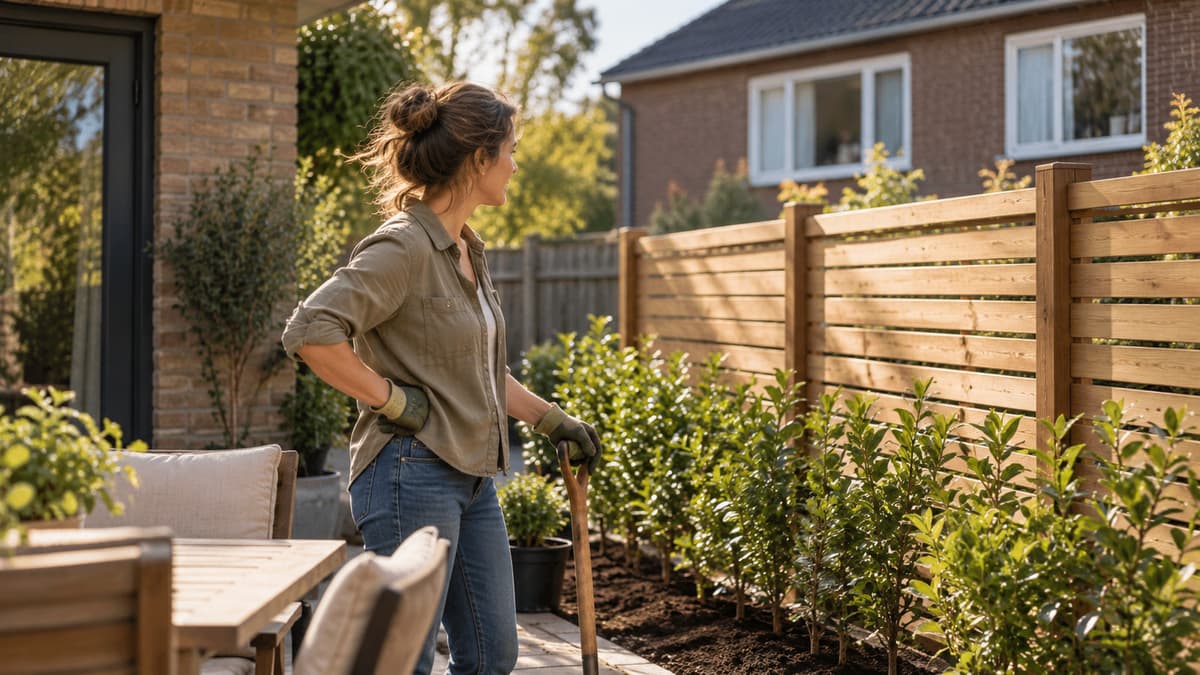
Hedge or privacy screen: what you get this summer, what young plants cost in the UK, and when a panel in front of a hedge is the mix that works.
On this page

The boundary is open, the patio faces the neighbour's windows, and you want it closed. A hedge or privacy screen is a choice about this summer as much as about the receipt. Young plants can be the smaller bill, and they can leave you looking through stems until the line thickens. A panel or a roll closes the view when the posts are in. It can also end up on the lawn after the first proper gale if the fixing was a bag of cable ties.
The figures below are publisher ranges from Soil Sisters, Plot & Patio, and Garden Cost. They are not a survey, and they are not a quote for your soil. This page does not recommend a species and does not give a growth rate in centimetres per year. Products Compared has not grown these hedges in a trial bed. If you buy through our amazon.co.uk links, we may earn a commission at no extra cost to you. Plants do nothing for flies at a bedroom window. That job sits on the tesa fly screen comparison.
In short
Choose a screen when you need the view blocked this season and you will spend enough on posts to keep it standing. Choose young plants when you can wait several years and you want a hedge rather than a panel. Instant and pleached stock shortens the wait and raises the price. A screen in front of a young hedge works if you budget both, and if the screen still respects England's height rules where it encloses the garden.
What you get this summer
A fitted panel, a slatted bay, or a reed roll on a sound fence is cover you can see the day the work finishes. The garden privacy screen cost page separates the shelf roll from the installed timber run. A roll at £15 to £30 for about 4 metres, in Soil Sisters' south-east notes, only gives privacy if something already holds it up. A 10 metre timber run at about £500 to £900 installed is a line that arrives with posts.
Instant hedge is the plant answer to that same summer. Plot & Patio puts it at about £80 to £200 a metre, about £800 to £2,000 on a 10 metre boundary before soil prep, which can meet or pass a fitted timber run. You still have to keep those plants alive. Ask to see the density: a tall sparse stem is a tall sparse view. Pleached trees, in the Soil Sisters notes, are about £200 to £500 a tree, a hedge on stilts that suits a courtyard and a poor match for a long back fence bought as bare-root whips.
Wind limits every instant option. A new screen has no roots. An instant hedge has a root ball that has not gripped your soil yet. Both can shift in the first winter if the anchoring is optimistic. Check posts, ties, and stakes after the first storm. That hour is cheaper than buying the run twice.
What you get in three to five years
Bare-root and other young stock are the long bet. Plot & Patio frames that choice as a plant bill and then years of waiting. Garden Cost puts young living screens at about £20 to £60 a metre, against mature stock at about £100 to £300 a metre and upwards. Three to five years is the horizon those guides point at when they contrast a whip with a finished screen. It is not a promise that your hedge will be private in year three. Soil, species, and how hard you cut it will move the date. This page will not invent a centimetre figure to hide that.
In year one the line is a marker. You water it, you replace failures, and you still see through it. The cheap end is real: Plot & Patio's bare-root plants for a 10 metre run at about £50 to £100, and Soil Sisters' bare-root evergreens at about £8 to £15 a plant. Soil Sisters also notes that a 10 metre planted line can work out much dearer than panels once you leave the whip for stock that looks finished. One dead plant is a window onto the patio. Budget a few extras. A nursery that knows your postcode is the next conversation, because this article is about time and money, not about naming a shrub.
Money, using the published bands
Keep those bands in their own voices, because they do not describe one product. A 10 metre line of £8 plants is a small receipt. A 10 metre line at £80 to £200 a metre is a project. Soil Sisters' installed timber run of about £500 to £900 for 10 metres is a useful ruler beside them. A whip hedge can come in under that ruler and still fail a private August. An instant hedge can come in over it and still need staking and water. The hedge's risk is biological: drought, honey fungus, or a hard prune at the wrong time.
Labour is easy to forget on the plant side because the pots look like a Saturday. Digging a 10 metre trench, improving the soil, and watering through a dry May are hours. A fitter's screen quote already contains labour. A DIY hedge quote often contains only the plants. Write your own time down if you are choosing on money. The Hedges and privacy screens hub is the wider set around this boundary, including insect mesh. A living screen does not substitute for a window sheet, and a window sheet does not substitute for a 10 metre boundary.
Wind and a screen in front of young plants
The mix that matches most houses is a screen now and a hedge behind it, or in front of it, with room to prune. You get the closed view this year and the plant once it has had several seasons. The posts need a specification you would accept if the hedge never thrived. Temporary is a budget word. Wind does not read it. A reed roll on a light frame in an exposed garden peels off and leaves the young plants as the only boundary. Leave a gap you can clip and water, and measure it before you concrete the posts. Moving a post in year two is a second screen bill.
In England, the screen is the item that can be a means of enclosure. The Planning Portal's fences, gates, and garden walls guidance gives 1 metre next to a highway used by vehicles and 2 metres elsewhere, with listed buildings and Article 4 directions as reasons the familiar number may not apply. A hedge is not that paragraph. Do not borrow the fence heights as a planting law. Do apply them to the panel you are about to erect. The fence height planning permission article stays on England and sends you to the Order rather than ruling on your house. The screen wants a check of fixings and posts. The hedge wants water, replacements, and a prune once there is something to prune.
Artificial leaf is a third option
Retailers, Homebase among them, sell panels and rolls printed or formed as leaves. That is a garden screen with a costume. It gives a green face on the day you fit it, which is the instant privacy garden people search for, and it never becomes a hedge. There is no root, no flowering, and no growth into a gap. There is also no watering. Treat sun fade, wind, and the posts as the risks, the same family as any other panel. Keep it out of the plant budget so the £8 whip and the leaf panel do not get averaged into nonsense.
If the leaf panel encloses the garden, the England height question is the screen question. If it only decorates a legal fence and does not raise the height, you are in a different conversation, and you should still read that piece before you add a deep trellis on top. Artificial leaf does not stop insects at an open window. The fly-screen comparison remains the page for that opening. A living hedge, a timber or reed screen, and a leaf panel can each be the right purchase for a different constraint: time, money this year, or a refusal to prune. Write the constraint down first, then pick the band that matches it.
Common questions
Should I plant a hedge or buy a privacy screen?
How long until a hedge gives privacy?
What does an instant hedge cost?
Will a garden screen blow over?
Can I put a screen in front of a young hedge?
Is an artificial leaf panel the same as a hedge?
Does a hedge need planning permission?

Products Compared publishes British-English buying guides based on amazon.co.uk listings and public UK sources. We do not run a lab and we do not invent test scores.
Related articles
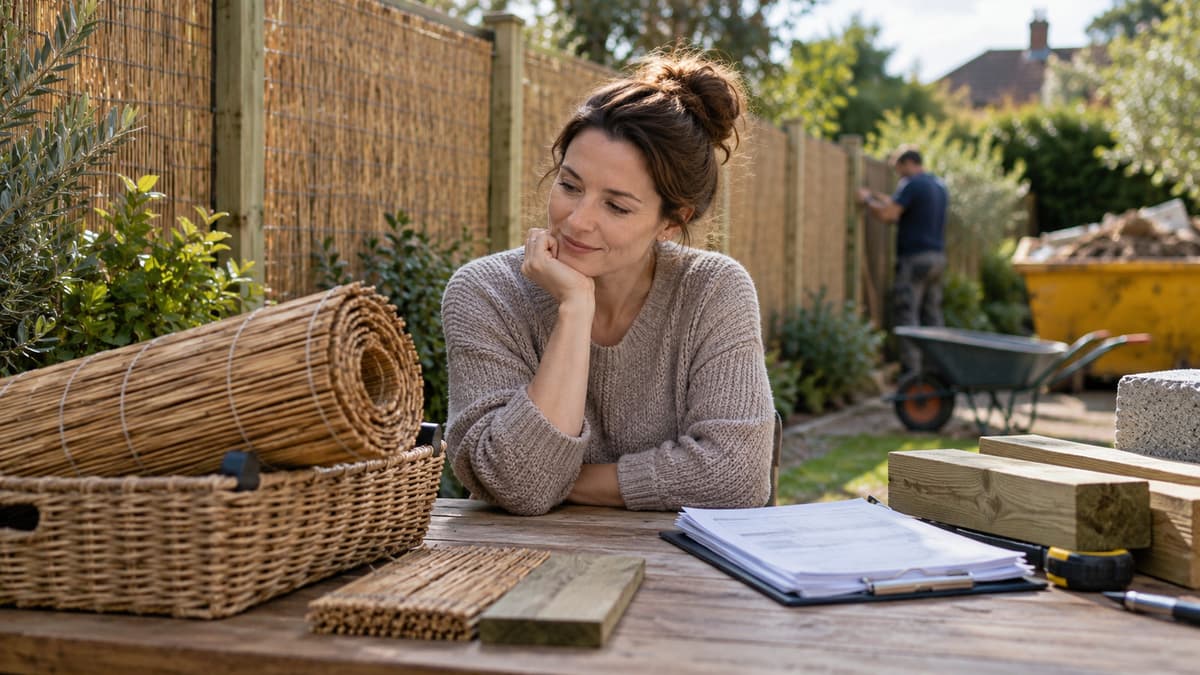
Garden privacy screen cost UK: shelf or fitted
One number is a roll in a DIY-shed basket. The other is a fitter's quote with posts, concrete, and a skip.

Fence height planning permission England: 1 m and 2 m
Someone has told you that 2 metres is always allowed. In England, next to a vehicle highway, the limit is 1 metre.
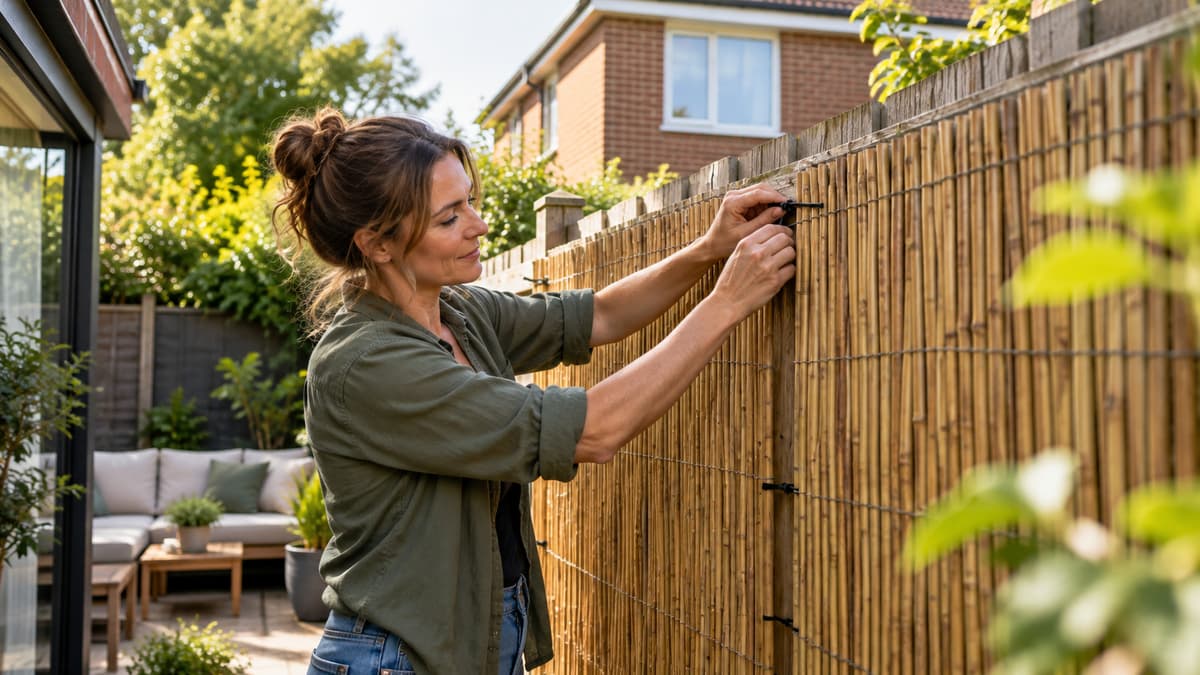
Bamboo screening roll UK: cover now, plan to replace
A bound sheet of canes, reed, or willow tied to the fence is instant cover, and a short-life skin on that structure.