Garden privacy screen cost UK: shelf price or a fitted run

Garden privacy screen cost in the UK, from shelf rolls to fitted timber and composite, and why a door fly curtain is a separate bill. Check posts and labour.
On this page

You have two numbers on the table and they refuse to meet. One is a roll in a basket at the DIY shed. The other is a fitter's quote with posts, concrete, and a skip. Garden privacy screen cost in the UK only settles once you say which of those jobs you mean. A neighbour's "we paid twenty pounds" story is a shelf price for a short length. It is a poor guide to a boundary that has to stand up through a wet winter.
This page uses published ranges, not a survey and not a quote for your postcode. Garden Cost sets a wide installed band. Soil Sisters gives south-east 2026 supply and install figures. A B&Q garden-screening category shows the shelf ticket for bamboo and reed rolls. Plot & Patio adds a lifespan note. Products Compared has not installed these screens in a lab. If you buy through our amazon.co.uk links, we may earn a commission at no extra cost to you.
In short
A reed or bamboo roll is often a tens-of-pounds purchase. A fitted timber run of about 10 metres moves into the hundreds, and published installed screening bands run from about £600 to £2,500 because the jobs inside that band are not the same. Composite asks for more money at the start and is sold on a longer life. A magnetic insect curtain at about £13.40 is a door product, and it belongs on a different bill.
What the published UK bands cover
Garden Cost's screening guide puts installed work in a band of about £600 to £2,500. Trellis, slatted screens, living screens, and composite all sit somewhere in that conversation. The width of the band is the useful part. It tells you that a garden screen is not one product with one price. The cheap roll and the fitted run are sequential decisions: what you buy, then what it costs to make it stand up.
Soil Sisters, writing for the south-east in 2026, is more specific about timber. Closeboard panels are about £25 to £60 each, supply-only. A timber run of about 10 metres is about £500 to £900 once it is installed. Those two lines can both be true. The panel figure leaves out the posts and the day on site, and you still need the supplier's panel width before you turn a 10 metre boundary into a panel count.
None of this is a tender for your garden. Labour, access, and disposal of an old fence change the invoice from one street to the next. If a quote lands far under £500 for a 10 metre timber run with posts concreted in, read the specification before you celebrate. If it lands far over £2,500, ask which material and which extras produced that figure.
Supply-only shelf prices
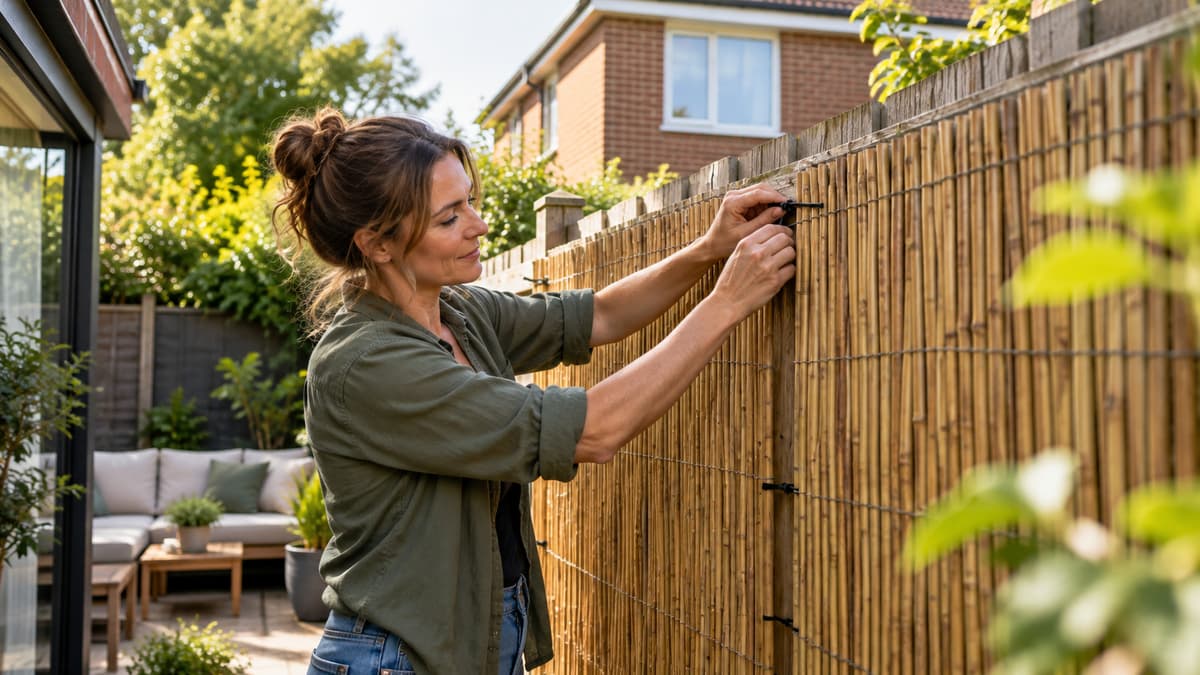
Supply-only means you are buying the covering, and often little else. Soil Sisters puts reed rolls at about £15 to £30 for a 4 metre length. A B&Q garden trellis and screening category has carried bamboo and reed rolls at roughly £15 to £50. Treat that as a shelf example from a category page, not as this week's price. Retailers change packs, lengths, and promotions. Look at the live length on the label. A £20 roll that covers 3 metres is a different metre-rate from a £30 roll that covers 4 metres.
That shelf ticket is why bamboo and reed feel cheap next to a closeboard panel at £25 to £60. The panel is one bay of fence. The roll is a facing you tie, staple, or clip to something that already exists, or to a frame you still have to build. If you have no posts, the roll has nowhere to live, and the £20 price has not bought the structure.
Plot & Patio's lifespan note belongs next to the shelf price. Cheap rolls are described as lasting a few years. Timber lasts longer. Composite lasts longer still. A roll you replace twice in six years can meet a panel on lifetime cost even when the first receipt looks kinder. Wind is the usual reason the cheap fixing fails first. Price the fixing, not only the roll.
Fitted timber, slats, and composite
A fitted price should name the posts. Soil Sisters' £500 to £900 for about 10 metres of timber is an installed range, so it is the right family of number to set beside a fitter's quote. Ask whether that style of quote includes concrete or Metposts, gravel boards, caps, and hauling the old panels away. Two quotes £200 apart are often the same fence with a different exclusion. The lower one that leaves you to dig the holes is not automatically the cheaper Saturday.
Slatted screens and trellis panels follow the same split. A trellis square can still need a post and a rail. Spacing the slats wider makes the screen cheaper and less private. Spacing them tight uses more timber, blocks more of the view, and catches more wind. A light trellis kit and a closeboard run should not share one screen cost in your notes.
Composite asks you to pay more before you have lived with it. Garden Cost's £600 to £2,500 installed band already includes composite among other screens, so you cannot lift a single composite rate out of it. Plot & Patio sells it on lasting longer than a cheap roll, and often longer than ordinary timber. Get the post specification in writing. A composite board on an undersized timber post is a short life bought at a long-life price.
Height sits beside money. In England, a means of enclosure next to a highway used by vehicles is in different territory from a back boundary. Read fence height and planning permission in England before you pay for a tall run beside a pavement. A quote that ignores that split can be a bill for a screen you are later told to lower.
Living screens are a different bill
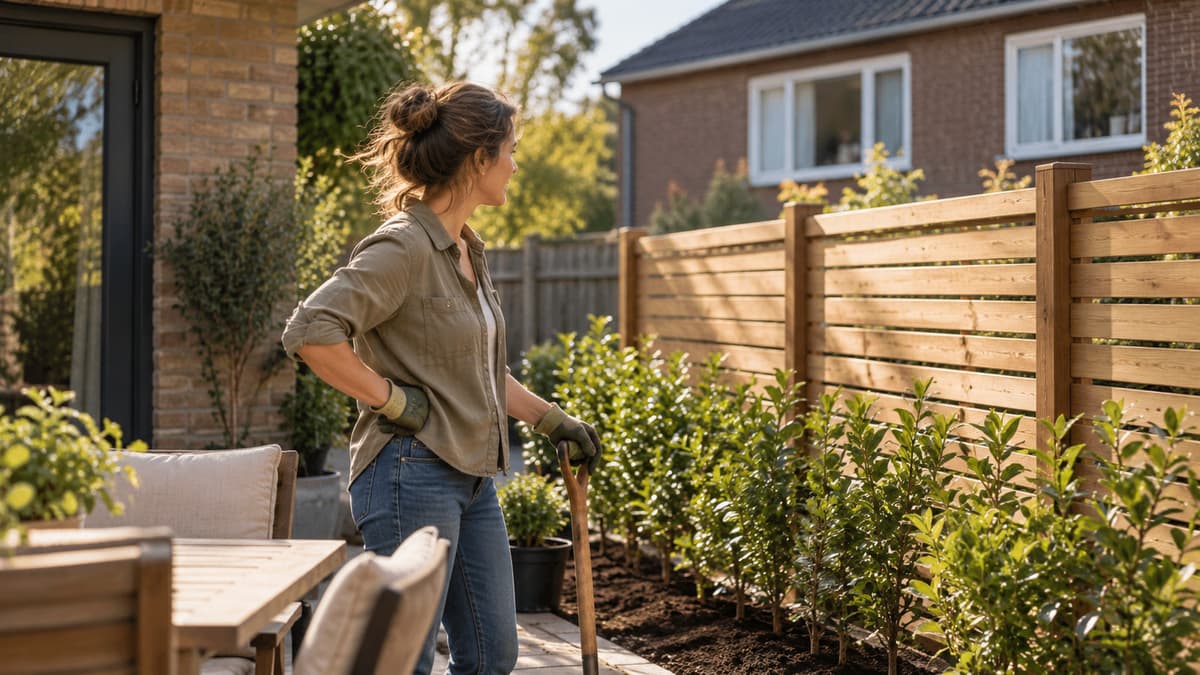
A hedge or a planted screen does not belong in the roll-versus-panel table without a second column for time. Garden Cost discusses living screens inside the same broad installed guide, which is why a single £600 to £2,500 sentence can hide plants, irrigation, and years of growth. The receipt in year one can look modest. The summer you still look at the neighbour's kitchen is the cost the receipt omits.
Plants also fail in ways a panel does not. A dry spell, a waterlogged clay bed, or rabbits along a new boundary can leave gaps you then fill with more plants or with a screen you had hoped to avoid. If you want cover this season and plants later, budget both lines. The hedge or privacy screen piece sets the published plant bands next to the wait.
Artificial leaf panels are a screen with a leaf pattern, sold by the panel. They do not grow into a hedge. Price them with posts and wind, and keep them out of the plants column.
A door fly curtain is a separate budget
Insect mesh for a patio door is the mix-up that makes a garden budget look absurd. In the snapshot behind our tesa fly screen comparison, a magnetic door curtain, 2.2 m by 1.0 m, was about £13.40. The listing is for a balcony or patio door, with sewn-in magnets, and it cannot close a 10 metre fence. The products share a word. They do not share a job.
Use the fly-screen figure when the problem is flies at an open door. The Hedges and privacy screens hub compares those sheets and curtains. Use the garden bands on this page when the problem is a view across a boundary or a patio. A £13 curtain will not privacy-screen a garden, and a £40 reed roll will not seal a bedroom window. If you need both, write both numbers down and refuse to average them.
Shelf prices on amazon.co.uk move, just as B&Q roll prices move. The £13.40 figure is the comparison snapshot, not a promise of tomorrow's page. Take Garden Cost, Soil Sisters, and the shelf examples as a map of scale, then get a quote that lists length, material, posts, and disposal.
Common questions
How much does a garden privacy screen cost in the UK?
What is the difference between supply-only and fitted?
Are bamboo and reed rolls cheaper than fence panels?
How long does a cheap screening roll last?
Does composite screening cost more at the start?
Do garden screen prices include the posts?
Is a patio-door fly screen part of a garden screen budget?

Products Compared publishes British-English buying guides based on amazon.co.uk listings and public UK sources. We do not run a lab and we do not invent test scores.
Related articles
Hedge or privacy screen: cover this summer
Young plants can be the smaller bill. They can also leave you looking through stems until the line thickens.

Fence height planning permission England: 1 m and 2 m
Next to a highway used by vehicles, the plain-English limit on the Planning Portal is 1 metre.
Bamboo screening roll UK: cover now, plan to replace
It is instant cover. It is also a short-life skin on someone else's structure.