Fly screen tape not sticking: clean the frame first
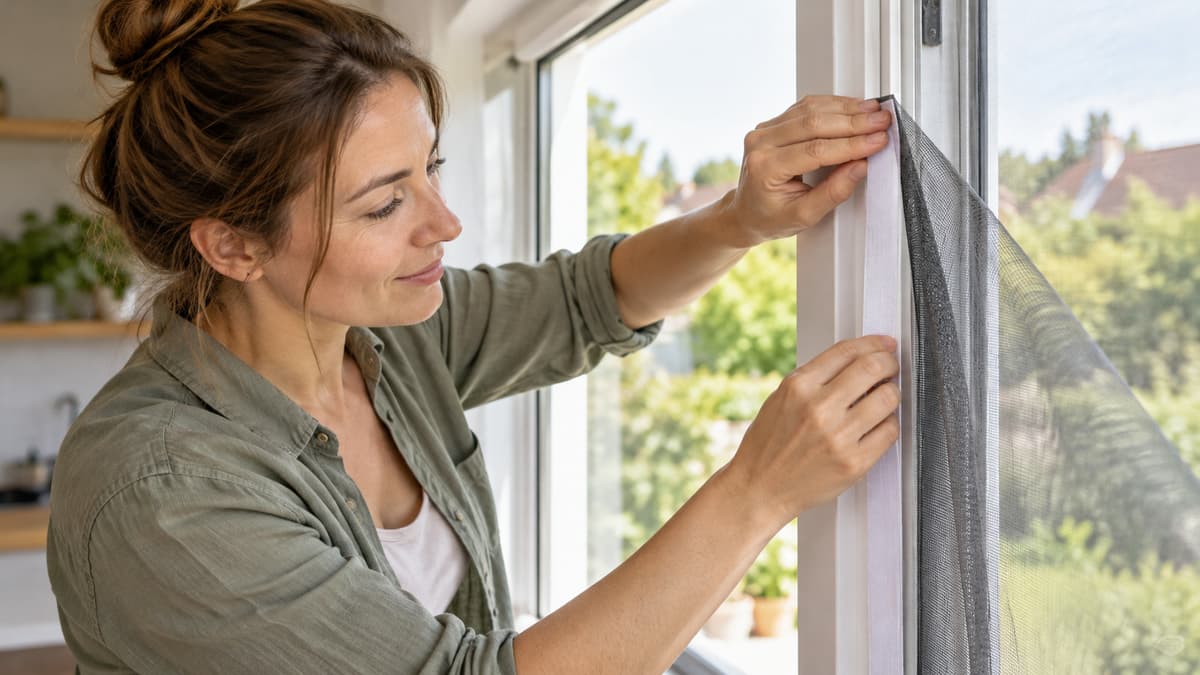
Fly screen tape not sticking is usually the frame: dirt, silicone, rubber, or a short strip. Clean uPVC carefully and know when another roll will not help.
On this page

The sheet looked fine in the packet, and by the second evening a corner is hanging into the room. Fly screen tape not sticking is usually a story about the frame you pressed it onto, or about how the strips meet, rather than a fault in the weave. Dust, silicone, a rubber gasket, a short roll, and two pieces piled at the corner are the ordinary causes.
This piece uses tesa's UK description of its premium hook-and-loop tape, DIY Flyscreens' notes, Family Rollo on old glue, and Everest's warning about solvents on uPVC. Reviews in our tesa fly screen comparison add overlapped corners, short tape, rubber seals, and painted timber. Products Compared has not run a peel test. Prices and review counts are the amazon.co.uk snapshot behind that comparison. A qualifying purchase can earn a commission at no extra cost to you.
In short
Clean a dry, stable frame and press one continuous strip onto uPVC, aluminium, or sound wood. Keep white spirit and methylated spirits off uPVC, and test isopropyl on a small spot if you use it at all. Brick, loose paint, texture, and rubber gaskets are surfaces this tape keeps losing. Overlap at the corners, or a strip shorter than the mesh, will lift even on a sound frame. When the surface was never suitable, another roll repeats the same afternoon.
Clean, dry, and free of silicone
tesa's UK page for the premium hook-and-loop tape names aluminium, uPVC, and wood, and it tells you to clean first. A white frame can still carry polish, grease, cooking film, or silicone from a resealed light. The adhesive bonds to that film, the film lets go, and the tape looks as if it failed. Wash dust off with washing-up liquid, rinse the soap away, and let the frame dry.
DIY Flyscreens points fitters toward alcohol wipes. That is a little isopropyl on a cloth, not a soak. Everest tells owners to keep white spirit, methylated spirits, and WD-40 off uPVC. Test isopropyl on a hidden spot and stop if the plastic smears, whitens, or goes dull. A silicone bead smoothed with a finger leaves a halo, and tape on that halo peels when the window opens. Keep the new strip off the bead itself.
Press only when the frame is dry, along the whole length. A careful press on a dirty frame still fails. The order of operations is on the how to fit a tesa fly screen page. A cold March frame bonds slowly, so bring the tape indoors and wait a few hours before you tension the mesh.
Everest's uPVC cleaning guidance keeps white spirit, methylated spirits, and WD-40 off the frame. A marked window is a larger problem than a fly.
Surfaces that fail
DIY Flyscreens is blunt: brick, heavy texture, and loose paint shed the adhesive or themselves. Painted timber can be the wood tesa names, or chalky emulsion that leaves with the tape. If a fingernail lifts the paint, the tape will too. Fresh paint needs the maker's cure time, then a one-day test with a short piece. Sound timber, or a stable painted finish, is the wood case.
Rubber seals are the failure reviewers describe. Tape comes off a gasket in the wind, and the listings do not name rubber. Stick to the rigid uPVC or aluminium beside it. If that is the only flat face, stop. A stronger tape can stain the gasket and still let go. Brick and pebbledash grab only the high spots. A batten screwed into masonry is drilling.
Deep woodgrain or textured foil on uPVC can leave air under the strip. If you can see the tape bridging the pattern, that window will lift in July. A framed or cassette screen costs more than the Comfort sheet at about £9.51, and it stops you buying that sheet three times. The tape still needs a continuous smooth face about as wide as the strip. If you rent, drilling is a deposit question as well as a DIY one.
Corners and tape length
Two fitting errors look like a bad product. The first is overlap. Running the second strip over the first glues hook-and-loop to hook-and-loop, not to the frame, and the extra thickness gives the mesh a lip. Wind and a closing sash pull at that corner. Butt the ends, or cut a simple mitre, so every millimetre of adhesive meets the frame. A small gap you can see is better than a proud overlap you re-stick on Sunday.
The second error is length. One tape set runs out when a sheet is split across two windows, and some runs finish short of a single perimeter. Measure the four sides before you peel the backing. Spare fabric is not spare tape. If you are short, buy a replacement roll and clean each frame. Do not stretch the last piece and call it fitted.
A drum-tight sheet pulls every corner. A little slack still stops insects. The Comfort sheet at 120 cm by 240 cm is about £9.51, with 4.4 from 17,369 reviews, and the listing says replacement tape is available. If you peel a flap back each morning on an outward-opening sash, read the outward-opening window notes before a second roll.
Residue without a blade
Family Rollo's warning is the one to keep: sun hardens the adhesive, and the tool is a plastic scraper. Acetone and a metal blade score uPVC. A razor leaves a shiny track. Work on a cool frame. A heat gun on a soft edge warps it.
Easy-off language on a tesa listing is the manufacturer's claim. Reviews include glue left behind, and the tesa PDF for the magnetic curtain family marks residue-free removal as no. White spirit, methylated spirits, and WD-40 stay on Everest's do-not-use list. On a rented frame, stop at the plastic scraper. Lift the strip while it is still pliable, rather than leaving it through winter sun.
When to stop and change the screen
Two careful attempts are enough. Clean uPVC or aluminium, tape off rubber and silicone, butted corners, and enough length, then a corner that still drops, means the opening is beating the product. Wind, a daily peel, or a narrow face will beat a fresh roll. Replacement tape suits a strip that aged on a sound frame. It does not suit a surface on DIY Flyscreens' failure list.
A framed screen or a cassette suits an ornate frame. The magnetic curtain, about £13.40 for a 2.2 m by 1.0 m anthracite curtain, is for a patio door, and the listing says you cannot cut it. The Comfort sheets are the window job. The split is on the window or magnetic door page.
A mesh on a bedroom window you might climb through is a safety problem, not a tape problem. If it is an escape route, leave it clear and read the escape-window piece. If the tape holds and insects are still inside, the mesh may be too coarse, especially for Highland midges. A harder stick will not shrink the holes. A hedge will not hold a bedroom mesh. After one fair refit, change the screen.
Common questions
Why will my fly-screen tape not stick?
Should I clean uPVC with white spirit?
Does fly-screen tape work on uPVC?
What about a rubber window seal?
Can I overlap the strips at the corners?
How do I get old fly-screen glue off uPVC?
Is a new roll of tape the fix?

Products Compared publishes British-English buying guides based on amazon.co.uk listings and public UK sources. We do not run a lab and we do not invent test scores.
Related articles
Fly screen rented flat: no drill is not permission
The packet solves screws. Your tenancy decides whether tape is allowed at all.

Store fly screen winter: wash it and take it down
Storing a fly screen over winter is mostly a decision about adhesive, not about insects.

Midge mesh window Scotland: standard mesh is not the same
A midge mesh window in Scotland is a finer specification than the sheet sold for wasps and bluebottles in most of the UK.