Independent comparisons. We may earn from shop links. More info

How to use a texture roller

Updated: October 2026

The roller is already in the room, and the first pass has either flicked paint or left no pattern. Thin coating, a fast pass, or a clay handle that will not spin will do that. This how to use a texture roller page splits the job: wet paint or plaster on one path, soft clay on the other. Shelf context is our [texture roller comparison](/hub/heating/texture-roller). The Products Compared editorial team updated this page in October 2026 from listings captured on 15 October 2026. We did not film a test. If you buy through our links, we may earn a commission at no extra cost to you.

The roller is already in the room, and the first pass has either flicked paint or left no pattern. Thin coating, a fast pass, or a clay handle that will not spin will do that.

Our top picks

On this page

Set up before you roll paint

Protect the room before you load the roller. Polycell’s textured-ceiling method starts with dust sheets, a sealer on a porous ceiling, and filler for cracks larger than a hairline. Follow your own tin if it differs. A test board shows whether this roller and this tin leave a mark. Ceilings need a pole or a stable platform. On the VOBOR listing the pole is not confirmed in the pack. If you were about to sand an old textured coating, stop and use texture roller ceiling repair.

Load, roll, and lay off

Load the roller fully, then take the excess off. Polycell says work about 1 square metre, criss-cross, then lay off with a light pass in one direction, and stipple the edges with a brush. A second coat on that page waits overnight. Foam splashes if you go too fast. One UK review of the BELOWSYALER putty roller says a fast pass splatters, and another says it flung paint. Reviews that liked it used Dalapro Roll Nova once the roller was loaded. Wash water-based tools in warm soapy water, and do not tip the paint down a drain.

When the sleeve or the pattern fails

Tabanzhe sleeves, about 3.5 cm by 10 cm, arrive vacuum packed. Some returned to shape after a soak. Others stayed out of round and track an edge. JNAWA reviews more often say the sponge leaves the core within minutes. Solvent paint, including a Raptor-style coating, melted it. One reviewer found that more passes made a sponge texture finer, which is the opposite of the clay rule below. If the patch is a stipple and the roller polishes it flat, the Artex sheet points at a turned texture brush. Which family to buy stays on the texture roller buying guide.

One pass on soft clay

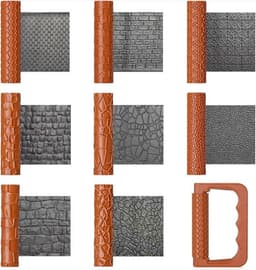
Soften the clay first. The BakePress method is one continuous pass with a light release such as cornstarch, then cut. Do not roll back over the pattern, or you print a second image. That note is a craft method, not a UK shop test. Leriton, about £12.93, is eight PLA rollers plus a handle. Captured US reviews, not British ones, say the fit is too tight. If the handle will not spin, stop. The clay-or-wall split is on clay texture roller or wall roller.

Common questions

How do you load a texture roller without flicking paint?
Fill the sleeve, take the excess off on the tray ribs, and roll slowly. Practical DIY says foam splashes when you go too fast. A UK review of the BELOWSYALER putty roller says too fast and it splatters, and another says it flung paint. Polycell still wants a full load for textured ceiling paint, over about 1 square metre. A starved roller and a racing roller fail in different ways. Wash water-based tools in warm soapy water, and do not tip leftover paint down a drain.
Do you roll in one direction or criss-cross?
On the Polycell sequence you criss-cross about 1 square metre, then lay off with a light pass in one direction, and you stipple the edges with a brush. Practical DIY lays ordinary emulsion off in one direction after an even load. A second coat on that Polycell page waits until the first has dried overnight. Clay is a different pattern. Clay gets one continuous pass, and you do not roll back over the imprint.
What if the sponge sleeves arrive flat?
Tabanzhe reviews say the sleeves are vacuum packed. Some returned to shape after a rest or a soak in warm or hot water, and others stayed out of round. Give them that chance before you decide the pack is dead. If they stay flat, they will track an edge through the paint. JNAWA is a different fault: the sponge often leaves the core within minutes, which a soak does not answer. Neither four-pack includes a frame.
How do you roll a pattern into clay without a double image?
Use soft clay, a light release such as cornstarch, and one continuous pass. The BakePress method says not to roll back over the pattern, and to cut after you have textured. A second pass lays a second image on the first. That is the opposite of the paint sleeve, where one UK reviewer used extra passes to make a sponge texture finer. Keep the clay on a clean board so crumbs do not become part of the imprint.
What if the clay handle will not turn?
Stop pushing. Leriton includes a handle, and the captured US reviews say the fit is too tight, so the roller drags or the handle cracks. Those are not UK reviews, and they are the comments the capture has. Dragging a stuck roller smears the clay and can snap the handle. Lyreh’s UK reviews describe unstable sticks and print lines, which is a different fault. No rolling sequence repairs a roller that cannot rotate.

Related pages

Sources

Public UK sources and the amazon.co.uk listings in this comparison. Listings captured 15 October 2026. Page updated October 2026.

  1. HSE, asbestos locations (retrieved 15 October 2026)
  2. HSE sheet a28, textured coatings (retrieved 15 October 2026)
  3. HSE, work at height FAQs (retrieved 15 October 2026)
  4. VOC in Paints Regulations 2012 (retrieved 15 October 2026)
  5. Consumer Rights Act 2015, section 9 (retrieved 15 October 2026)
  6. Lawsons, decorating rollers (retrieved 15 October 2026)
  7. Artex Repair Texture data sheet (retrieved 15 October 2026)
  8. North Tyneside Council, asbestos management (retrieved 15 October 2026)