Independent comparisons. We may earn from shop links. More info

Ear defenders or ear plugs

Updated: 21 October 2026

Ear defenders or ear plugs is a form decision, not a search for a universal winner. Cups fail when the cushion cannot seal. Plugs fail when they hurt, sit too shallow, or you pull them out and forget them. Wearing both is not the sum of the two SNR figures. The twelve cards and the GBP prices are on the [ear protection comparison](/hub/hearing-protection/ear-protection). Peter F. compared listing text and review notes on 20 October 2026, not a lab seal test. A qualifying amazon.co.uk purchase can earn a commission at no extra cost to you.

Ear defenders or ear plugs is a form decision, not a search for a universal winner. Cups fail when the cushion cannot seal. Plugs fail when they hurt, sit too shallow, or you pull them out and forget them.

Our top picks

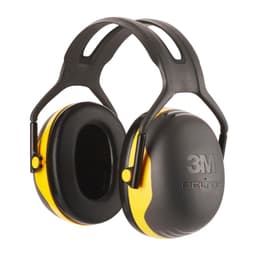
3M 3M Peltor X2A

Best overall

3M 3M Peltor X2A
9.6/10about £33.95
3M 3M Peltor Optime I

Alternative

3M 3M Peltor Optime I
9.6/10about £19.99
3M 3M corded earplugs

Alternative

3M 3M corded earplugs
9.2/10about £14.43
On this page

When cups are the better tool

Choose cups when the noisy moments are short and the cushion can cover the whole ear. You can take them off between cuts, but only if the pad seals. The Optime I is the lighter example: £19.99, 180 g, SNR 27 dB for 87–98 dB(A). The X2A is £33.95, 259 g, SNR 31 dB. Its eyewear bullet is not a seal test. If glasses or a hood lift the pad, cups stop being the better tool. The HSE table is on the ear protection buying guide.

When plugs are the better tool

Choose plugs when glasses or a hard hat stop the cushion sealing, or when your hands are too dirty to roll foam. The work plug here is the 3M corded tri-flange at £14.43, stated 25 dB, and the bullets say no roll-down. Pain means stop. One two-pack review lost the seal with a hard hat and glasses. Helmet-mounted muffs are EN 352-3, not this headband set. Hearprotek and Alpine are music plugs, not the saw plug.
3M 3M Peltor X2A

Testsieger

3M 3M Peltor X2A
9.6/10about £33.95

Heat, fit and the reviews

Cups get hot. Optime I reviewers mention sweaty ears, which is how muffs end up around the neck during the noisiest minute. If heat makes you take them off, plugs are the more honest tool. Dr.meter at £11.99 is often tight on larger heads. Blackrock and Portwest reviews include plastic bands that snap. The sequence is on how to wear ear protection.

Wearing both

A 25 dB plug under a 35 dB cup is not 60 dB of reduction. A UK note points at HSE book L108 and says the pair should be tested together. This research has not opened that paragraph, so there is no extra-decibel claim here. Do not add the numbers. If one form seals and matches the task, use that one. A 34 dB or 35 dB construction muff is the wrong concert tool.

Common questions

Which is better, defenders or plugs?
Neither, until you name the job. Cups are the better tool when you take protection off and on all day and the cushion can seal. Plugs are the better tool when glasses, a hat or dirty hands spoil that cushion, or when you want a filtered music plug. A higher SNR on a muff does not make it better than a plug that actually fits. HSE expects a range of protectors for that reason.
I wear glasses. Which form?
Try plugs if the spectacle arms lift the cushion. HSE treats spectacles as a known leak. The X2A bullets claim eyewear compatibility, and that line is not a seal test. One review of the two-pack lost the seal with a hard hat and glasses. If your frames close the pad all the way round and speech still sounds muffled in a useful way, cups can stay. If you can see a gap, they cannot.
My hands are dirty. Which form?
Cups, if you can get them on without anything under the pad, because you never push a tip into the ear. If cups will not seal, the 3M corded plugs are the work plug here because the bullets say no roll-down, so you are not rolling foam with dirty fingers. The stem should still be clean enough to enter your ear. Hearprotek and Alpine are not that work plug.
The cups get hot. Is that normal?
Yes, in the sense that Optime I reviews often mention hot, sweaty ears, and long wear does that to a closed cup. It becomes a problem when you take them off while the tool is still running. HSE says a few minutes without protection cuts the benefit sharply. If heat makes you remove them, plugs are the more realistic choice, provided you leave the plugs in.
Can I wear both and add the SNR?
You can wear both only with combination data, and you cannot add the two ratings. A 25 dB plug plus a 35 dB muff is not a 60 dB protector. This page does not state an extra decibel figure, because the L108 paragraph behind that claim was not opened for this brief. If one protector matches the task and seals, use that one.
Are muffs easier to take off between cuts?
Yes. That is the practical advantage of cups on a saw or a grinder you pause every minute. The advantage disappears if the band is so tight, or so hot, that you leave them off for the cut as well. Plugs are slower to refit, which is why a cord and a case matter, and why a plug left in a pocket does no work.
Are the concert plugs the same decision as work plugs?
No. Hearprotek and Alpine are for keeping music recognisable at a lower level. The 3M tri-flange is for noise at or above 85 dB without a filter swap. A construction muff at 34 or 35 dB is a third job again. Choose the form for the hour you are in, then use the concert page if that hour is a gig rather than a tool.

Related pages

Sources

Public UK sources named below. amazon.co.uk prices, stars and review counts are from the twelve listings in this comparison. Page updated 21 October 2026.

  1. Control of Noise at Work Regulations 2005, regulation 4 (retrieved 21 October 2026)
  2. Control of Noise at Work Regulations 2005, regulation 7 (retrieved 21 October 2026)
  3. HSE noise regulations (retrieved 21 October 2026)
  4. HSE hearing protection (retrieved 21 October 2026)
  5. HSE real-world hearing protection (retrieved 21 October 2026)
  6. UK designated PPE standards notice (retrieved 21 October 2026)
  7. NHS hearing loss (retrieved 21 October 2026)
  8. NHS tinnitus (retrieved 21 October 2026)