Independent comparisons. We may earn from shop links. More info

Drywall screwdriver vs drill: when the nose cone pays

Updated: 23 October 2026

The combi drill is already in the van, the plasterboard is in the hall, and a depth-stop gun is another £80 or so before a battery. A drywall screwdriver vs drill decision is about how each tool stops. The drill’s clutch stops when the screw resists. The gun’s nose stops when the cone meets the paper. For a few sheets, a scrap-tested clutch or a dimpler bit is enough. For a ceiling, a long run, or metal studs that want a fast, repeatable spin, the nose cone is the one to buy. An impact driver stays in the case on the paper face. This sits beside our [cordless drywall screwdriver comparison](/hub/hand-tools/cordless-drywall-screwdriver). Peter F., DIY and tools editor, wrote this on 22 October 2026 from Homebuilding, BuildWiz and the UK prices named below, not from a lab test. A purchase through our links can earn a commission at no extra cost to you.

The combi drill is already in the van, the plasterboard is in the hall, and a depth-stop gun is another £80 or so before a battery. A drywall screwdriver vs drill decision is about how each tool stops.

Our top picks

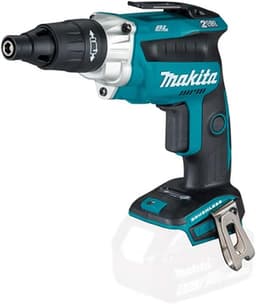
Makita Makita DFS251Z bare unit

Best overall

Makita Makita DFS251Z bare unit
6.3/10about £129.43
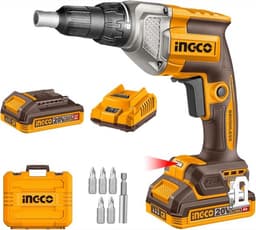
INGCO INGCO CDSLI204281 20 V kit

Best value

INGCO INGCO CDSLI204281 20 V kit
2.5/10about £76.99
On this page

The drill stops on torque, the gun stops on the board

A combi clutch slips when the screw gets tight. On plasterboard that tightness mixes the stud, the board and how straight you are, so the same number can tear one screw and leave the next proud. BuildWiz treats a low clutch, tried on an offcut, as a homeowner option, and mentions numbers around 8–10 as that site’s rule of thumb. Those numbers are not your drill’s dial. A nose-cone gun stops when the cone meets the paper, which is why the depth repeats and why the bit stays quiet until you lean on it. Homebuilding’s Saint-Gobain adviser puts a dimpler first for a novice and a lower torque clutch as the fallback. Both still need the scrap test on the how to use a drywall screwdriver page. You can board a short run with the drill you own if you reset the clutch when the paper changes.

A dimpler is the middle step

A dimpler is a collar on a screwdriver bit, not a third power tool. It uses the drill you have. The collar meets the board and a small clutch in the setter lets the bit stop. On amazon.co.uk the Bosch D60498 drywall dimpler is £18.16, with 4.1 from 2,365 reviews, sold as a preset PH2 setter for a drill. That is a real shelf price for a Phillips depth bit, and it is far below any gun in our set. Screwfix lists a Titan PH2 depth-limiter in a two-pack at £3.09, and the copy says it stops when the screw is flush. Flush is the claim on that page. It is a different claim from just below the paper. If you need the head in the paper rather than level with a proud crown, try the bit on scrap and look. PH2 is the tip UK drywall screws are cut for. BuildWiz warns that a PH2 in a Pozidriv recess cams out, so match the tip to the screw before you blame the clutch. A dimpler still rides on the drill. Over a long ceiling the collar wears and you are back to reading every head. One UK Einhell review said depth bits kept breaking and the gun helped on a ceiling. Another quit because the gun was slower than a drill. The dimpler is the right spend for a few sheets. It is a poor substitute when you need the same depth all day.
Makita Makita DFS251Z bare unit

Testsieger

Makita Makita DFS251Z bare unit
6.3/10about £129.43

When the gun is the one to buy

Buy the gun when the face of the board should stop the bit: a ceiling, a long run, or metal studs where a timber clutch setting misleads you. The in-set comparison is the Einhell TE-DY 18 Li-Solo at £83.99, body only, with 4,000 rpm in the highlight and a 6.35 mm holder. A Power X-Change pack you already own keeps that close to the price of leaving the drill behind. If you still need a battery, the buying guide is where that sum belongs. The same reviews limit the recommendation. The stop can drift, so later screws go too deep. The handle blistered one UK user after four sheets, and that user found the gun slower than the drill. Einhell’s manual says the tool is not designed for commercial use. A gun earns the money on a long, repetitive fix where you will set the nose on scrap and check it again when the heads change. It does not earn the money for a handful of patches you can read one by one with a dimpler. A collated magazine is a further step, for many sheets, and it is not required to make this drill-versus-gun choice.

Leave the impact driver in the case

An impact driver hammers as it turns. On a machine screw or a lag into timber that blow is the point. On plasterboard the blow breaks the core around the head, even when the screw looks seated. Homebuilding’s adviser says not to use one, because the knocking damages the core. BuildWiz says the same: the mechanism is wrong for the paper face, and the warning is not about one brand of driver. A torque clutch and a dimpler are both attempts to stop cleanly. An impact is an attempt to keep hitting. If the only tool charged tonight is an impact, wait for the combi. A light touch still delivers blows the paper does not want. Length and centres stay as British Gypsum states them, whichever tool stops the screw. On a fire or acoustic system, or a ceiling you cannot board safely alone, a plasterer should take the fixing.

Common questions

Can I board one room with the drill I own?
Yes, if the run is short and you set the clutch or a dimpler on a scrap of the same board until the paper is dented and not torn. You will watch the heads more often than with a nose cone, because the clutch feels resistance rather than the face of the board. For a ceiling or a run of metal studs, the repetition is where the gun starts to pay.
What is a dimpler, and is it a gun?
A dimpler is a depth collar on a bit, used in the drill you already have. The Bosch D60498 on amazon.co.uk is £18.16 and is a preset PH2 setter, with 4.1 from 2,365 reviews. The Titan two-pack at Screwfix is £3.09 and is described as stopping flush. Neither is a screwdriver with a motor and a nose cone. They are the middle step between a bare clutch and a dedicated gun.
Why is an impact driver a bad idea on plasterboard?
The driver adds hammer blows while the screw turns. Those blows break the gypsum core around the head, so the screw holds less even if the head looks tidy. Homebuilding and BuildWiz both say to leave it out of this job. The advice is about the mechanism. It is not a ban on a particular brand, and it is not cured by a light touch on the trigger.
Will the drill’s torque clutch set a repeatable depth?
It sets a repeatable resistance, which is only roughly a depth. Harder timber, a knot, or a metal stud changes when the clutch slips, so one screw sits proud and the next tears the paper. BuildWiz’s 8–10 is that site’s starting guess, not your drill’s marked setting. Set it on an offcut, then check the next few heads on the wall. If they wander, lower the clutch or move to a dimpler.
When does the gun earn its price?
When you need the same seat all day: a ceiling, a long run of board, or metal studs where a timber clutch setting misleads you. In this set the Einhell at £83.99 is the body a drill owner would price, and the battery is extra if you are not already on Power X-Change. One UK reviewer still found it slower than a drill and blistered after four sheets. The gun earns the price on repetition. It does not earn it on a repair of half a dozen screws.
The Einhell felt slower than my drill. Is that normal?
It is what one UK review reported, along with blisters from a hard handle after four sheets. A different UK review said depth bits kept breaking and the gun was the better tool on a ceiling. Slower in the hand can still be the right tool if the heads stay consistent. British Gypsum’s length and centres still apply with a dimpler. The collar only limits depth. It does not choose the stud.

Related pages

Sources

Sources from the research digest, last checked on 22 October 2026.

  1. British Gypsum, screw fixing centres (retrieved 22.10.2026)
  2. British Gypsum, screw lengths for metal and timber (retrieved 22.10.2026)
  3. British Gypsum, Gyproc WallBoard data sheet (retrieved 22.10.2026)
  4. British Gypsum, collated drywall screws (retrieved 22.10.2026)
  5. HSE, hand-arm vibration regulations (retrieved 22.10.2026)
  6. HSE, noise for employers (retrieved 22.10.2026)
  7. HSE, PUWER overview (retrieved 22.10.2026)
  8. GOV.UK, Supply of Machinery (Safety) Regulations 2008 (retrieved 22.10.2026)