Independent comparisons. We may earn from shop links. More info

Coconut briquettes vs lumpwood for a kettle or a kamado

Updated: 23 October 2026

You are choosing coconut briquettes vs lumpwood for a kettle or a kamado, and both are sold as the long, hot fuel. Lumpwood is carbonised wood. A grill-bed coconut briquette is pressed shell. The clocks on the bags do not share one test. This page says when lumpwood is the sear and when a coconut bed is the longer cook. A 25 mm cube is neither. Listing checks sit on the [coconut briquettes buying guide](/hub/grill-accessories/coconut-briquettes/sub/coconut-briquettes-buying-guide). Prices stay on the [coconut briquettes comparison](/hub/grill-accessories/coconut-briquettes). Peter F. did not run a burn test. A qualifying purchase can earn a commission at no extra cost to you.

You are choosing coconut briquettes vs lumpwood for a kettle or a kamado, and both are sold as the long, hot fuel. Lumpwood is carbonised wood. A grill-bed coconut briquette is pressed shell.

Our top picks

On this page

What each fuel is

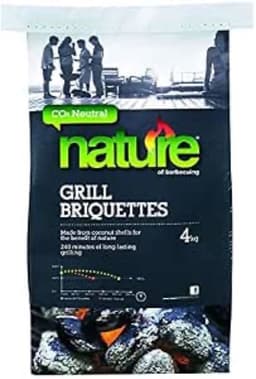
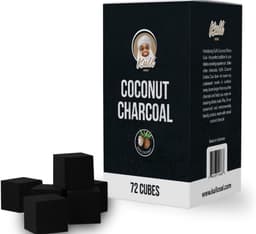
Lumpwood is irregular. A bag holds chunks from chips to fist-sized pieces, with no binder holding a standard shape. The gaps are why a chimney of lumpwood often feels lively, and why the bed collapses into fragile shells. A coconut briquette starts as shell, pressed into a square, a pillow, or a hex. Weber’s UK bag, outside this set, names a tapioca binder, 20 minutes to ready, and up to 3 hours. In this set, Petromax Cabix Plus is the square row for a Dutch oven and a grill, with a bullet of up to four hours. The material field says cast iron, which conflicts with the coconut bullets. The cubes of 25 mm are a hookah size. They are not the briquette this versus is about.

Light, heat, and how long

Lumpwood is the fuel to open when you want a fast, hot sear and the cook is short. It tends to catch quicker than a dense pressed briquette. Weber’s UK lighting page says charcoal heats faster and briquettes stay hot longer. That is a maker’s contrast, not a paired test of coconut against a named lumpwood. Coconut briquettes are the fuel when the cook runs on and you will accept a slower light. Weber claims up to 3 hours for its 4 kg coconut bag and prints no lumpwood time on that card. ProQ’s longer-burn multiple is brand text and does not name the timber sack. One UK log on he110.co.uk, a temperature gun on one cooker, had coconut ashed out inside about 3 hours, a light lump done in about 2, and a dense Cuban lump still useful at 6. It is not a lab and not any ASIN here. A 2025 paper on Italian commercial charcoal found lump tending hotter and briquettes tending longer. It did not test coconut from a UK shop. Use lumpwood for a short hot sear. Use a grill-bed coconut briquette for the longer cook.

Ash and a kamado

Kamado owners meet coconut briquettes because the marketing says the ash is low enough for a ceramic. ProQ states 3–5% ash. KULL and 320°, which are cubes, print under 2.5%. Those are claims, not a BS EN 1860-2 report in the listing. Ash falls into the firebox and can clog the vents that control a kamado. A fuel that holds its shape, then drops fine ash, is easier on a long cook than lumpwood that sheds shells into the bottom vent. You still empty the firebox. The Italian paper’s 18% briquette ceiling is a reminder that briquette as a class can be ashy. Coconut shell claims sit below that ceiling, and they remain claims.

When you are holding cubes instead

A cube of about 25 mm with a 100-minute bullet is session fuel for a hookah coil, not the rival to a sack of lumpwood. Six of the eight listings are cubes, and a barbecue word on the title does not change that. One UK note mentions smoking meat on 320° cubes. That is one note. If the box is 72 pieces of 25 mm, use the hookah charcoal on a BBQ page. Take lumpwood when you want a fast hot sear and the cook ends before the bed falls apart. Take a grill-bed coconut briquette when the afternoon is longer, you will light it with a chimney, and you have read the burn time as a claim. Leave the 25 mm box for the coil.

Common questions

Which lights faster?
Lumpwood, as a tendency. Weber’s UK lighting page says charcoal heats faster and briquettes stay hot longer. A dense coconut briquette wants a chimney and a longer wait. That line is not a paired test of coconut against every lumpwood sack in a UK shed.
Which lasts longer?
No source here crowns one fuel. Weber claims up to 3 hours for its coconut bag and prints no lumpwood time on that card. ProQ’s longer-burn multiple is brand text. One UK log had coconut done inside about 3 hours, a light lump in about 2, and a dense Cuban lump still useful at 6.
Which is better for a sear?
Lumpwood, when you want a fast hot sear and the cook is short. A grill-bed coconut briquette suits a longer afternoon if you will wait for the light. A 2025 paper found lump tending hotter and briquettes tending longer, on Italian charcoal that was not coconut from a UK shop.
Can I use them in a kamado?
ProQ says ceramic grills can take its cocoshell because it claims low ash. Ash still falls into the firebox and can clog the vents. A low-ash line is not a certificate, so empty the firebox. The UK pages used here do not describe a coconut flavour on the meat.
Where do 25 mm cubes fit?
They sit outside this choice. A cube with a 100-minute bullet is session fuel for a hookah coil, even when a title says barbecue. Use the hookah page for the cube, and this page for a grate bed against lumpwood.

Related pages

Sources

Public UK sources used for this comparison. Listing prices, stars and review counts are the amazon.co.uk figures for these eight ASINs. Retrieved 21 October 2026.

  1. Weber UK, coconut shell briquettes (retrieved 21 October 2026)
  2. London Fire Brigade barbecue leaflet (retrieved 21 October 2026)
  3. GOV.UK fire safety outdoors (retrieved 21 October 2026)
  4. GOV.UK smoke control rules (retrieved 21 October 2026)
  5. Defra authorised fuels, England (retrieved 21 October 2026)
  6. BS EN 1860-2:2023 catalogue entry (retrieved 21 October 2026)
  7. Mencarelli and others, 2025, ash and moisture ceilings (retrieved 21 October 2026)
  8. Air Quality (Domestic Solid Fuels Standards) (England) Regulations 2020 (retrieved 21 October 2026)