Coconut briquettes buying guide: bag or cube
You are looking at coconut briquettes on amazon.co.uk before a kettle or a kamado cook, and the shelf has answered with two fuels under one search. One is a larger pressed piece for a bed under a grate. The other is a cube of about 22–26 mm, the size a hookah bowl expects, often with a burn line of about 100 minutes. Choose the shape, then drop any listing that disagrees with itself on weight, pieces, or material. Prices and stars stay on the [coconut briquettes comparison](/hub/grill-accessories/coconut-briquettes). Peter F. used those eight listings. There is no lab burn. A qualifying purchase can earn a commission at no extra cost to you.
You are looking at coconut briquettes on amazon.co.uk before a kettle or a kamado cook, and the shelf has answered with two fuels under one search. One is a larger pressed piece for a bed under a grate.
You are looking at coconut briquettes on amazon.co.uk before a kettle or a kamado cook, and the shelf has answered with two fuels under one search. One is a larger pressed piece for a bed under a grate. The other is a cube of about 22–26 mm, the size a hookah bowl expects, often with a burn line of about 100 minutes. Choose the shape, then drop any listing that disagrees with itself on weight, pieces, or material. Prices and stars stay on the coconut briquettes comparison. Peter F. used those eight listings. There is no lab burn. A qualifying purchase can earn a commission at no extra cost to you.
Our top picks
| Badge | Product | Form | Pack weight | Listing match | Note | Price | Offer |
|---|---|---|---|---|---|---|---|
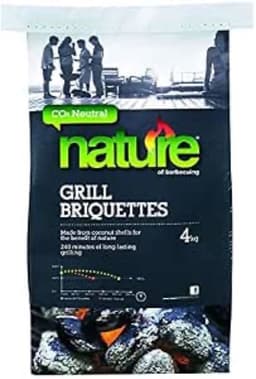
| Best overall |  Nature Land Candles Nature (4 kg title) | Briquette | 4 kg title only | No weight field | 8.1 | about £17.08 | View offer |
 Petromax Petromax Cabix Plus (2.98 kg) | Square briquette | 2.98 kg | Cast iron vs coconut | 9.4 | about £17.49 | View offer | |
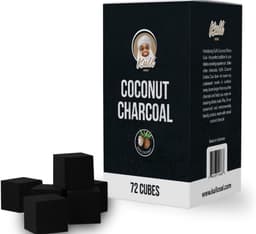
| Best value |  Kull London KULL (1 kg, 25 mm) | 25 mm cube | 1 kg, agrees | Not quick light | 8.3 | about £7.99 | View offer |

On this page
Two fuels under one name
Weight, pieces, and a listing that matches
Lighting and ash, as claims
What you still do on the comparison
Common questions
Are coconut briquettes the same as hookah coals?
What should I check on the kilogram?
Why does one listing say 200 pieces and 80?
Is under 2.5% ash a test?
Do I need quick-light charcoal?
Related pages
Sources
Public UK sources used for this comparison. Listing prices, stars and review counts are the amazon.co.uk figures for these eight ASINs. Retrieved 21 October 2026.
- Weber UK, coconut shell briquettes (retrieved 21 October 2026)
- London Fire Brigade barbecue leaflet (retrieved 21 October 2026)
- GOV.UK fire safety outdoors (retrieved 21 October 2026)
- GOV.UK smoke control rules (retrieved 21 October 2026)
- Defra authorised fuels, England (retrieved 21 October 2026)
- BS EN 1860-2:2023 catalogue entry (retrieved 21 October 2026)
- Mencarelli and others, 2025, ash and moisture ceilings (retrieved 21 October 2026)
- Air Quality (Domestic Solid Fuels Standards) (England) Regulations 2020 (retrieved 21 October 2026)