Independent comparisons. We may earn from shop links. More info

How to install a water butt pump

Updated: 23 October 2026

The pump is still in the box, the butt is half full of last month's leaves, and you are about to find out whether the motor sees water before it sees the mains. The usual way a first evening goes wrong is simple: the plug goes in while the body is still on the path, or the spray gun is shut and the motor keeps running. This is how to install a water butt pump from the eight listings in our [rain barrel pump comparison](/hub/garden-watering/rain-barrel-pump). Not a ranking. A qualifying purchase can earn a commission at no extra cost to you.

The pump is still in the box, the butt is half full of last month's leaves, and you are about to find out whether the motor sees water before it sees the mains.

Our top picks

VEATON VEATON 350 W water butt pump

Alternative

VEATON VEATON 350 W water butt pump
8.4/10about £54.99
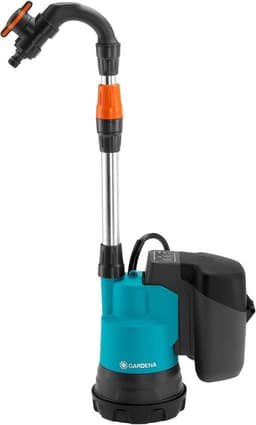
Gardena Gardena 2000/2 18V solo

Alternative

Gardena Gardena 2000/2 18V solo
8.2/10about £82.95
On this page

In the water before the plug

Put the pump in the water, and only then connect it to the mains. Hozelock's water-butt FAQ, written for their pump and not for these ASINs, says raise the pump off the sludge, clean the filters, and prime by lowering it until the water levels match. If the intake sits in the debris, the impeller meets silt, and a pump that runs in air will not move a hose. Lower the pump until water fills the body and the start of the hose, with the outlet open, before you expect a stream. If the tube is shorter than the water you keep, you are priming air. The buying guide is the measuring job if the shaft does not reach.

Float, swan neck and a hose that is open

The float stops a dry run. It is not the switch for your spray gun. Set it so the pump cuts out while the intake is still under water. The VEATON has an external float, and manual mode can keep running when the butt is empty, so leave it on the float unless you are standing there. A swan neck hooks over the rim. Do not lift the pump out by the cable. Shutting the spray gun does not stop the motor. The Gardena battery manual allows about 10 minutes against a closed outlet on that pump, and says it is not for continuous running. Open the gun, or switch the pump off.

RCD, cable and the battery that stays dry

A BS 1363 plug does not replace a 30 mA RCD. Electrical Safety First and the Health and Safety Executive both point outdoor portable mains equipment at a 30 mA residual-current device. Test it. Keep connectors dry, and unplug before you lift the pump out. Gardena UK gives the 4000/1 a 10 metre cable. If that cable is tight across a wet path, use an outdoor extension in good condition, not a taped join. Rainwater stays in the hose. It does not get teed into a drinking-water pipe. The Gardena 18 V solo keeps its battery unit dry. The manual forbids immersing that unit. The mains or battery page is where you choose the supply. On a corded pump, the RCD is part of the install.

When you stop

Stop when the RCD trips and stays unhappy after you have unplugged the pump and dried the connectors. Stop when the motor has run dry, or when you can smell a hot winding and the hose is still empty. Before a freeze, empty the pump, let it dry, and keep it indoors so water left in the body does not split it. Call an electrician for a new outdoor socket. Call a plumber or your water company if rainwater is about to share a pipe with the mains, or if you cannot leave an air gap on any top-up. For which model is worth fitting, use the best water butt pump page.

Common questions

Do I plug it in before it is under water?
Put the pump under the water first, with the intake clear of the sludge, and connect the mains only after that. A motor started in air can run without moving water, and that is a dry run. The same order appears in the Sealey WPB50A manual for that other model: immerse before mains, and keep the pump upright. Dry the connectors if you have been handling them with wet hands.
How do I prime a water butt pump?
Priming fills the pump and the start of the hose with water so the impeller is not turning in air. Hozelock's FAQ for their own butt pump says to lower the pump until the water levels match, after you have raised it off the debris. Use that as the pattern: outlet open, body in the water, then power. If the tube cannot reach the water you store, priming will not invent a longer shaft.
Where does the float go?
Set the float so it switches the pump off while the intake is still covered, and leave it free to fall as the level drops. It is a dry-run cut-out, not a remote control for the spray gun. On the VEATON, manual mode can run without that protection, so use the float mode unless you are watching the butt. Tie the float up only for a short job you stay with.
What if the hose is connected and nothing comes out?
Check air, then the float, then a blocked outlet. Waterpump.co.uk lists those three for a submersible that runs and does not pump. An open hose end, a float that has actually dropped, and an intake that is not packed with leaves will solve the first evening more often than a new pump. If the tube is above the water, you are pumping air. Switch off before a long dry run.
Can I shut the spray gun and leave it running?
Closing the gun does not switch the motor off. Pressure sits in the hose and the pump keeps turning. The Gardena battery manual tells you not to run more than about 10 minutes against a closed outlet, and not to treat the pump as continuous duty. Open the nozzle or turn the pump off when you walk away. A float will not save you from a shut gun if the butt is still full.

Related pages

Sources

Public UK sources from the research digest, plus the amazon.co.uk prices, stars and review counts in the display file for these eight listings. Last reviewed 22 October 2026.

  1. Gardena UK, rain water tank pump 4000/1 (retrieved 22 October 2026)
  2. Gardena 2000/2 manual (retrieved 22 October 2026)
  3. Water Regs UK, alternative water systems (retrieved 22 October 2026)
  4. Water Supply (Water Fittings) Regulations 1999, Schedule 2 (retrieved 22 October 2026)
  5. Ofwat, hosepipe bans and non-essential use bans (retrieved 22 October 2026)
  6. Thames Water, temporary hosepipe ban (retrieved 22 October 2026)
  7. South East Water, Sussex hosepipe restrictions FAQs (retrieved 22 October 2026)
  8. Electrical Safety First, garden electrics (retrieved 22 October 2026)