Driveway channel drain
An impermeable drive that sheds water onto the pavement, or ponds against the garage door, is a layout problem before it is a shopping problem. A driveway channel drain only helps if it sits in the wet line, carries at least B125 under car traffic, and empties to a lawful outfall. This page is from Peter F., editor for DIY & tools. We used ACO driveway guidance, GOV.UK permeable-surfacing advice, Clark Drain’s A15 debate, and the amazon.co.uk listings on 21 October 2026. We did not survey your council. A purchase from the [drainage channel comparison](/hub/garden-watering/drainage-channel) can earn us a commission at no extra cost to you. This page stays on vehicle duty, position, garage aprons, and UK planning and discharge notes.
An impermeable drive that sheds water onto the pavement, or ponds against the garage door, is a layout problem before it is a shopping problem.
An impermeable drive that sheds water onto the pavement, or ponds against the garage door, is a layout problem before it is a shopping problem. A driveway channel drain only helps if it sits in the wet line, carries at least B125 under car traffic, and empties to a lawful outfall. This page is from Peter F., editor for DIY & tools. We used ACO driveway guidance, GOV.UK permeable-surfacing advice, Clark Drain’s A15 debate, and the amazon.co.uk listings on 21 October 2026. We did not survey your council. A purchase from the drainage channel comparison can earn us a commission at no extra cost to you. This page stays on vehicle duty, position, garage aprons, and UK planning and discharge notes.
Our top picks
| Badge | Product | Load class | Grate | Profile | Note | Price | Offer |
|---|---|---|---|---|---|---|---|
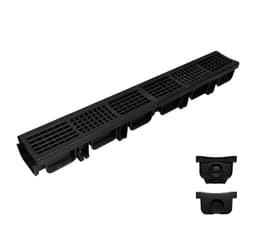
| Best overall |  Natotela Natotela deep B125 channel, 1 m | B125 | Cast iron | 14 cm deep | 7.6 | about £39.99 | View offer |
| Best value |  Natotela Natotela cast-iron channel, 1 m | B125 | Cast iron | 10 cm shallow | 7.1 | about £29.99 | View offer |
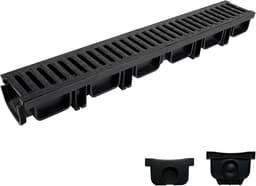
| Alternative |  Natotela Natotela HDPE channel, 2 x 50 cm | B125 | HDPE | 10 cm shallow | 6.3 | about £19.99 | View offer |

On this page
Why driveway channels fail
Choose class and position on the drive
Garage aprons and façade runoff
Planning, soakaways, and highway runoff
Common questions
What is the minimum load class for a car driveway?
Where should I place the channel on a sloping drive?
Is a garage door apron a special case?
Do I need planning permission?
Soakaway or sewer?
Can water run onto the pavement?
Related pages
Sources
Public UK and manufacturer sources used for load class, installation and front-garden planning. Listing prices, stars and review counts are the amazon.co.uk lines saved on 21 October 2026. This is not a lab test.
- Drainage Superstore — how to select a channel drain (retrieved 21.10.2026)
- ACO — load classes to BS EN 1433 (retrieved 21.10.2026)
- ACO — RainDrain B125 (retrieved 21.10.2026)
- Clark Drain — the A15 debate (retrieved 21.10.2026)
- JDP — installing channel drain (retrieved 21.10.2026)
- FloPlast — channel installation notes (retrieved 21.10.2026)
- GOV.UK — permeable surfacing of front gardens (retrieved 21.10.2026)
- GOV.UK — Approved Document H (retrieved 21.10.2026)