Independent comparisons. We may earn from shop links. More info

Garden pump or deep well pump

Updated: 22 October 2026

A bigger motor will not lift water that a garden pump can no longer suck. If a surface pump will not prime, the choice of a garden pump or a deep well pump is about the pumping water level, not about watts. The deep-well shelves come from the seven amazon.co.uk listings in the [deep well pump comparison](/hub/garden-watering/deep-well-pump). Peter F., editor for DIY & tools, updated this on 22 October 2026. We did not lab-test a garden pump. A qualifying purchase can earn a commission at no extra cost to you. If the water stays within reach all year, you leave this category.

A bigger motor will not lift water that a garden pump can no longer suck. If a surface pump will not prime, the choice of a garden pump or a deep well pump is about the pumping water level, not about watts.

Our top picks

Draper Draper 98921 well pump

Best overall

Draper Draper 98921 well pump
9.4/10about £124.13
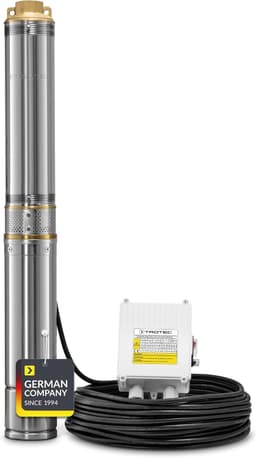
Trotec Trotec TDP 5500 E

Alternative

Trotec Trotec TDP 5500 E
8.0/10about £345.28
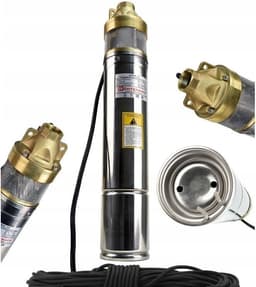
Generic 3 inch SKM 60 m pump

Best value

Generic 3 inch SKM 60 m pump
6.9/10about £180.45
On this page

The lift a surface pump cannot buy

A surface pump lowers the pressure in the suction hose so the atmosphere pushes water up. AES Rewinds puts the theoretical maximum at about 10.3 metres at sea level, and usable suction for clean cold water at about 7 to 8 metres. Henry Pumps treats about 6 to 7 metres as the reliable band. Flood & Water Pumps states a typical self-priming suction of 7 to 8 metres, with a foot valve to hold prime. Those are three seller statements, not one limit we measured. A 1000 W garden pump does not suck further than a 500 W one. If the water is 10 metres down, a larger motor still asks the atmosphere for more than it will give.

Use the dry-spell level

The level that matters is the pumping level in a dry spell, while water is being drawn, not the level on a wet April morning and not the depth on the well cover. One Draper review used that submersible in a 7 metre well. Seven metres can still be a surface-pump conversation if it stays there all year, and it is already at the edge of Henry’s 6 to 7 metre line. Another review describes a 30 foot well, about 9 metres, which is past both bands. If the dry-spell level is deeper than about 7 to 8 metres, watts will not fetch it.
Draper Draper 98921 well pump

Testsieger

Draper Draper 98921 well pump
9.4/10about £124.13

When the pump has to push

A deep well pump in this category sits below the water and pushes up the pipe. It is not sucking across 10 metres of atmosphere, which is why the listings talk about 40 to 109 metres of head. Those headlines are still not the working point. The Draper 98921, at £124.13, is a wide 24 cm body for a dug well, tank or river, with a 40 metre headline. The 75 mm and 98 mm listings are borehole-shaped, and the SDM 24 and STM 28 ask for 85 mm inside before a 75 mm body will pass with its cable. The Trotec TDP 5500 E has a large star count and only 20 metres of headline head, so “submersible” on that title is not a deep borehole. The SKM listings ban solids. Abstraction follows daily volume, not pump type. England and Wales look above 20 cubic metres a day.

Which comparison to open

If the pumping level stays inside about 7 to 8 metres of the pump all year, and you treat Henry’s 6 to 7 metres as the cautious edge, stay with a surface pump. Compare those machines on the garden pump comparison. This page will not pick a garden-pump ASIN. If the dry-spell level is deeper than that band, use the deep well pump buying guide. A 24 cm Draper and a 75 mm borehole pump are not interchangeable, which is the borehole or wide well page. A 30 foot pumping level is already a push-pump problem. A pumping level at 12 metres is a different machine.

Common questions

How deep can a garden pump actually lift?
AES Rewinds puts theoretical suction at about 10.3 metres at sea level and usable suction for clean cold water at about 7 to 8 metres. Henry Pumps treats about 6 to 7 metres as the reliable band. Flood states a typical 7 to 8 metre self-priming line. Use the dry-spell pumping level against that band. A foot valve holds prime. It does not add depth.
Does a 1000 W surface pump lift further than a 500 W one?
No. Extra watts can move more water or hold more pressure once water has reached the impeller. They do not raise the atmospheric ceiling on the suction side. A larger garden pump still stalls around the 7 to 8 metre usable band. If the water is 10 metres down, a bigger surface motor is the wrong purchase.
My well is 7 m today. Is that always shallow?
Only if it stays there in a dry spell while the pump is running. Seven metres is inside the AES and Flood band and already at the edge of Henry’s 6 to 7 metre line. A wet-day reading can sit several metres higher than the August level. One Draper review used a submersible at 7 metres. A 30 foot well, about 9 metres, is past a surface pump.
What is the difference between sucking and pushing?
A garden pump sits above the water and the atmosphere pushes water up the hose into it. Past about 7 to 8 metres of usable lift, that stops working. A deep well pump sits in the water and pushes up the rising main, which is why these listings quote 40 to 109 metres of headline head. You still read that push at your real head.
I already own a garden pump and it will not prime. Is the well too deep?
It might be, or the suction side might be leaking. Check the hose, the foot valve and the pumping level before you replace the pump. If the dry-week water is inside about 7 to 8 metres and the hose seals, stay with a surface pump. If the level is nearer 9 or 10 metres, priming will keep failing.
Is every submersible a deep well pump?
No. A drainage pump and the Trotec’s 20 metre headline are not a deep borehole pump. This set runs from the Draper’s 40 metre wide body to slim listings at 60 to 109 metres. Dirty water does not belong in the clean-water SKM listings. The abstraction test is still daily volume.

Related pages

Sources

Public UK sources from the research digest. Shelf prices, heads, flows and conflicts are from the amazon.co.uk saved listings in this category, not a live re-check on 21 October 2026.

  1. GOV.UK — check if you need a licence to abstract water (retrieved 21.10.2026)
  2. Water Resources Act 1991, section 198 (retrieved 21.10.2026)
  3. British Geological Survey — drilling legislation and obligations (retrieved 21.10.2026)
  4. Natural Resources Wales — water abstraction or impoundment licence (retrieved 21.10.2026)
  5. SEPA — abstraction under 10 cubic metres a day (retrieved 21.10.2026)
  6. DAERA — applying to abstract or impound water (retrieved 21.10.2026)
  7. AES Rewinds — choosing the right well pump (retrieved 21.10.2026)
  8. Drinking Water Inspectorate — single dwelling supplies (retrieved 21.10.2026)