Independent comparisons. We may earn from shop links. More info

How to install a water booster pump

Updated: 22 October 2026

You are under the sink with a small inline pump and a pipe that already feeds a gravity tap. This is how to install a water booster pump on that pipe: which way the body faces, whether you drain the cylinder, and when the job stops being yours. The boxes and reviews come from the eleven amazon.co.uk listings in the [booster pump comparison](/hub/garden-watering/booster-pump). It is not a certified method, and it is not permission to cut a combi, an unvented cylinder or a supply pipe. Peter F. used those listings and other makers’ guides, labelled as theirs. Nothing here was fitted in a lab. A qualifying purchase can earn a commission at no extra cost to you.

You are under the sink with a small inline pump and a pipe that already feeds a gravity tap.

Our top picks

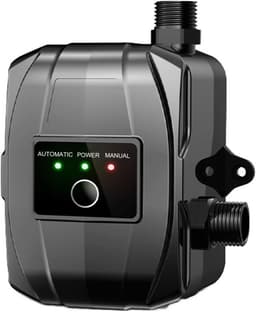
hzexun hzexun 220 V diaphragm

Best overall

hzexun hzexun 220 V diaphragm
10.0/10about £108
Gugxiom Gugxiom 24 V inline

Best value

Gugxiom Gugxiom 24 V inline
8.2/10about £38.99
Felenny Felenny 24 V inline

Alternative

Felenny Felenny 24 V inline
7.4/10about £29.99
On this page

Check the system before the spanner

A gravity system has a cold loft tank and a hot cylinder vented back to it. A combi, an unvented cylinder or a sealed circuit is a different job. Open the tap first. If it is dead, a pump will not invent water. If you cannot tell positive head from negative head, call a plumber. Salamander, writing for their own pumps, call it positive head when more than about 600 mm separates the cold-tank base from the highest outlet and about 1 litre comes out in 30 seconds. That test is not on these listings. Which machine matches the pipe is the buying guide.

Direction, valves and where not to mount it

Fit the pump so the arrow points towards the tap, not back towards the cylinder. Backwards, the motor can run and the tap can stay weak. Do not fit it on the open vent between the cylinder and the loft tank. That vent is how the cylinder breathes. Isolate both sides and drain from a lower tap until the joint runs dry, then fit isolating valves. Keep the body dry, off the vent, and not above a socket or the 24 V adapter. A European plug, where a Felenny review found one, does not belong in a UK socket. Outdoors, use a 30 mA RCD. The supply-pipe notice is the mains or break tank page.
hzexun hzexun 220 V diaphragm

Testsieger

hzexun hzexun 220 V diaphragm
10.0/10about £108

What the boxes actually include

Gugxiom lists a pump, a power supply, a threaded hose, a manual and fixings. That is not a pair of isolating valves. Ruiqas lists the pump. Topiky’s included-components line says no. Felenny’s page contradicts itself: one bullet lists a pipe, an adapter and a screw kit, and the components line says the pump only. Assume you still need valves and olives. hzexun lists hose fittings, which suit a hose more than a 15 mm gravity pipe. A 24 V body still uses a mains adapter. If the plug is the European pattern a Felenny reviewer reported, stop before any joint is closed.

First run, then stop

Open the isolators slowly, with the outlet tap open, and watch every new joint before you leave the cupboard. A Ruiqas review reports streams of water after five days and no seal between the sections. That is a return, not more tape. Keep the Gugxiom connector out of the drip path. Do not treat IP56 as a licence to hose the body. If it keeps spinning against a closed tap, switch it off. Stop for a combi, an unvented cylinder, the rising main, a joint over electrics, or a head you cannot judge. A broken earth pin is a return. Outdoor hose checks are the garden hose page.

Common questions

Which way round does the pump go?
Follow the arrow on the body so it points towards the tap you want to boost. If there is no arrow you can read, do not guess from the cable entry. A pump fitted backwards can run and leave the flow unchanged. Shower Power Booster’s gravity note makes the same point for their own pump. These listings do not replace that check with a photo you can trust.
Do I have to drain the cylinder?
You have to get the water out of the pipe you are cutting. Isolate the feed and drain from a lower tap until the joint runs dry, with a towel under the cut. You do not have to empty a cylinder onto the landing if the isolators hold. If there are no isolators, fitting them is part of the job. If the cylinder is unvented, stop and call a plumber rather than draining it from a forum method.
Can I fit this on the mains myself?
A supply pipe, and a pump that can draw more than 12 litres a minute from it, needs notice to the water undertaker before it is fitted. Most claimed flows in this set are above that line. This page does not give you that consent. Stuart Turner’s own guide also says their positive-head shower pump is not for the mains. Treat a combi and an unvented cylinder the same way: they are not a gravity cut.
The pump runs and nothing changes. What now?
Check the arrow, then the isolator on the inlet side, then whether the tap was already fed from the main. A booster only raises water that can reach it. If the hose or the rose is blocked, the pump can run hard and the spray can stay poor. If the direction is right and the flow is still a trickle, the unit may be the early failure already described in some Gugxiom reviews. Isolate it and use the return route.
When do I stop and call a plumber?
Call a plumber for a combi, an unvented cylinder, or a sealed circuit, for a pump on the main or on a tank that also feeds the kitchen, if a joint would sit over electrics, or if you cannot tell positive head from negative head. Also stop if the earth pin is broken or the plug will not fit a UK socket. Notice to the water company, where the flow can exceed 12 litres a minute on a supply pipe, comes before the fitting, not after the first leak.

Related pages

Sources

Public UK sources used for the notice rules, garden electrics and hosepipe bans. Shelf prices, stars and review counts are the amazon.co.uk figures captured for these eleven listings. Last checked 22 October 2026.

  1. Water Supply (Water Fittings) Regulations 1999 (retrieved 22 October 2026)
  2. Scottish Water, helping you comply with the water byelaws (retrieved 22 October 2026)
  3. Water Supply (Water Fittings) Regulations (Northern Ireland) 2009 (retrieved 22 October 2026)
  4. Installer Online, how to increase water supply pressure (retrieved 22 October 2026)
  5. Electrical Safety First, garden electrical safety (retrieved 22 October 2026)
  6. Flood and Water Management Act 2010, section 36 (retrieved 22 October 2026)
  7. Ofwat, hosepipe bans (retrieved 22 October 2026)
  8. Salamander Pumps, installing a shower pump on a gravity-fed system (retrieved 22 October 2026)