How often to water garden borders: check the soil
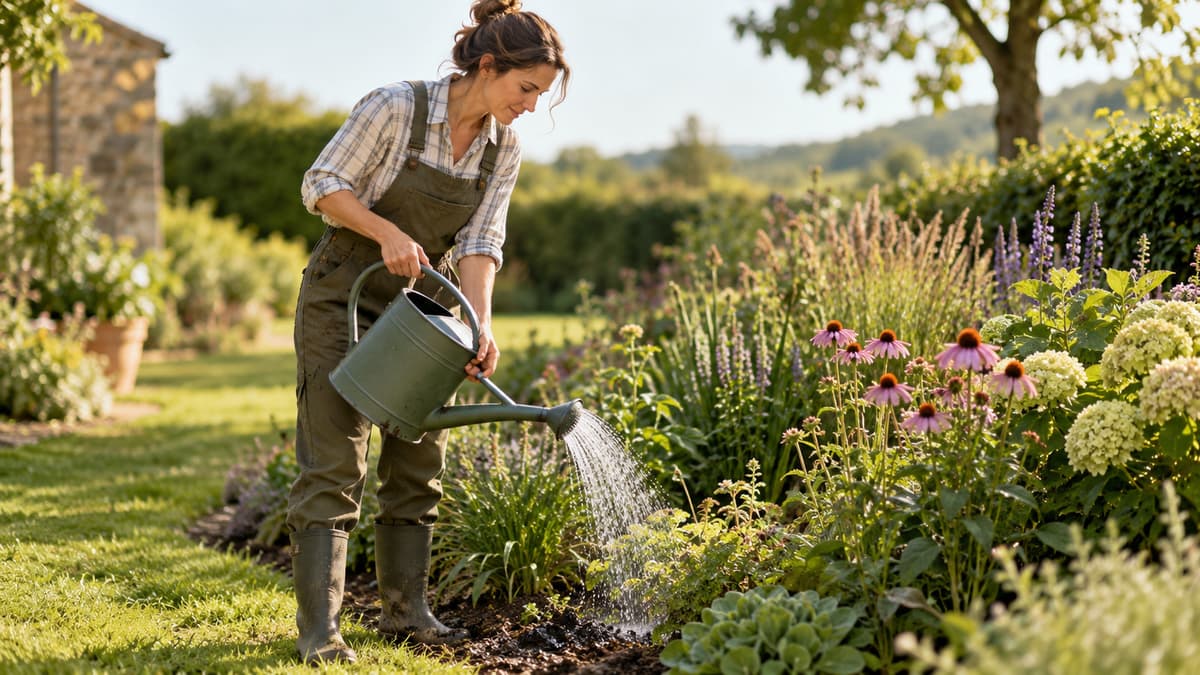
Check the soil about 15 cm down before you water a garden border. New shrubs, pots, drought and a hosepipe ban all change how often that bed needs water.
On this page

A border can look dry on top a day after rain while remaining moist where its roots are working. That is why how often to water garden borders has no honest answer such as every Sunday or twice a week. The useful answer depends on the moisture below the surface, whether the plants are established, and whether the soil can hold the water you apply.
Prices and star ratings in the sidebar come from the amazon.co.uk spray hose comparison. Amazon links are affiliate links. A qualifying purchase can earn a commission at no extra cost to you.
In short
Do not water an established border on a fixed weekday. Check the soil around 15 cm down and water slowly only when that root zone is dry. Give newly planted shrubs closer attention in dry spells, and check containers separately because they dry much faster.
Why a weekly watering day does not work
Rainfall is only one part of the calculation. A windy, sunny week draws moisture quickly, while a cool, cloudy week can leave the root zone damp after the surface has lightened. Clay holds water longer but may take it slowly when baked hard. Sandy soil drains more freely. Mulch, shade and competition from hedges or mature trees change the answer again.
Make a small inspection hole with a trowel away from the plant's crown and feel the soil at about 15 cm. If it is cool and moist, leave an established border and check again later. If it is dry and crumbly at that depth, water the root zone thoroughly. The colour of the surface is a poor guide.
Plants offer clues, but interpret them carefully. Some leaves droop temporarily in hot afternoon conditions even when the soil contains moisture. Drooping that remains early in the morning is a stronger warning of drought stress. Yellowing, poor growth or leaf loss can have several causes, including waterlogging, so do not respond automatically by adding more water.
Established borders and new planting need different care
An established border should use moisture already held deeper in the ground. Trees, shrubs and perennials there often need extra water only in prolonged dry weather. Frequent light sprinkling keeps roots near the surface. A slower, thorough watering, then another soil check, is the better pattern.
New planting is different because the roots are still concentrated around the original root ball. In dry spells, check newly planted shrubs and trees through their first year. The border beside them may feel moist while the root ball is dry, especially if peat-free compost has shrunk and water runs around its edge. Water over and just beyond that root area, then check that it has soaked in.
Large transplanted specimens may need inspection for up to three summers. That is not an automatic watering rota for three years. Smaller perennials establish faster, but their young roots can still dry before those of mature neighbours.
Prioritise rather than soaking everything equally. New trees and shrubs come before long-established, drought-tolerant plants. Recently divided perennials and anything showing genuine morning stress also move up the list. Mulch moist soil, kept away from stems and trunks. It slows evaporation. It does not replace water in a dry root zone.
If you need a practical delivery set-up for a larger bed, the spray hose comparison explains the trade-offs between common hose attachments. The nozzle changes control and spray pattern, not the amount of water a plant actually needs.
Containers and annuals dry out first
Do not put pots on the border's schedule. Compost in a container is a small reservoir, and wind dries it quickly. In the growing season, check pots daily and water when the compost is dry about 2–3 cm down. Small pots and hanging baskets in sun usually need water before a large shaded pot.
Water until the whole root ball is moistened and excess can drain. If water races down the gap between shrunken compost and the pot, apply a little, pause, and return so the compost can absorb it. Never leave a plant permanently standing in water unless its needs specifically call for boggy conditions.
Bedding and annuals in a border often have shallower roots than established shrubs and may need more frequent checks while they are flowering. Do not let a thirsty pot convince you that the soil a metre away is dry as well.
How to water the root zone properly
Aim for moist soil around active roots, not shiny leaves. Use a gentle rose or hose pattern at the base, slowly enough for the soil to accept it. On a slope or a baked surface, wet the area lightly, let it settle, then return. A fine mist does not replace water at depth.
Afterwards, use a trowel to check whether moisture has reached about 15 cm. There is no reliable universal number of minutes or litres per plant because hose flow, soil, slope and root area differ. A five-minute burst from one system may deliver less useful water than a slower application from another. The inspection hole gives you evidence from your own border.
A watering can is precise around new shrubs and small borders. A hose is more practical across a long border, but it is easy to wave it over the surface and move on too soon. Follow a consistent route and check the result below ground. Our guide to using a spray hose covers pattern choice, positioning and shut-off.
Avoid spraying foliage as your default. Water on leaves is easily lost and does little for the root zone, while wet foliage left overnight can favour some diseases. A spray gun's jet, shower or mist setting only controls delivery. It cannot make a dry root ball absorb water instantly, and it does not turn a hose into a watering can under local restrictions.
Morning or evening watering
Early morning is a sound default because evaporation is lower than at midday, plants have moisture available as the day warms, and accidentally wetted leaves can dry. Evening is a reasonable alternative if morning watering is impractical. Aim at the soil and leave enough time for water to soak in rather than rushing across the surface.
Midday watering is less efficient during hot, windy conditions, but a plant in genuine distress should not be left until tomorrow merely to obey a timing rule. Give urgent water at the root zone, then review whether the plant needs shade, mulch or a better watering method. Timing improves efficiency. It does not override visible need.
A short shower may only darken the topsoil, especially under dense foliage. Check at depth before you decide. Do not water after meaningful rain just because a hot day is forecast. A saturated root zone can exclude air.
You can find the relevant equipment routes from the garden watering hub, but the soil test should still control when you use it.
What to do during a hosepipe ban
A trigger gun, fine rose or mist attachment does not change the equipment. When it is attached to a hosepipe, it remains hosepipe use. Read the current terms from the water company that serves your area.
A hosepipe ban outranks your normal watering routine. If the rules prohibit watering a domestic garden by hose, switch to a watering can or bucket where the published terms allow them.
Prioritise newly planted shrubs, trees, containers and plants showing genuine drought stress. Established ornamentals can often wait, even if the surface looks untidy. Stored rainwater can help, but use it where it protects the most vulnerable roots rather than spreading a token amount everywhere.
Pause new planting, move pots out of harsh afternoon sun, and mulch while the soil is moist. Do not feed drought-stressed plants in the hope of reviving them. Forced growth raises demand when the roots are already struggling.
Common questions
Should I water my garden border every Sunday?
How can I tell whether an established plant needs water?
How deep should the soil be moist after watering?
How long do newly planted shrubs need regular watering?
Are pots on the same watering schedule as a border?
Is a hose better than a watering can?
Is morning or evening better for watering?
Can I use a spray gun during a hosepipe ban?

Peter F. is the editor for DIY & tools at productscompared.co.uk. Comparisons in this category are checked against amazon.co.uk listings, review evidence and public UK sources.
Related articles
Hosepipe ban: what can I water legally?
What you can still water in an English hosepipe ban, and why a spray gun is not a loophole.

Hose spray pattern for seedlings: water without damage
Choose a gentle hose pattern for seedlings so you do not flatten stems or wash seed away.

Water butt or hosepipe: which should you use?
When rainwater from a butt beats a mains hose, and when pressure and a ban decide it.